How are smaller addiction treatment centres outranking yours on Google when you have more experience, more accreditations, and better outcomes?
It is not reputation. It is not facility quality. It is a search strategy. Google treats addiction treatment content as YMYL (Your Money or Your Life), applying its strictest ranking standards to every page a rehab centre publishes. The centres at the top of search results have built their visibility around compliance, credibility, and content depth that crisis searchers actually trust.
In this article, we cover exactly what effective seo for drug rehab looks like in 2026 and how to build a search strategy that connects the right patients to your programs.
What Is SEO for Drug Rehab?
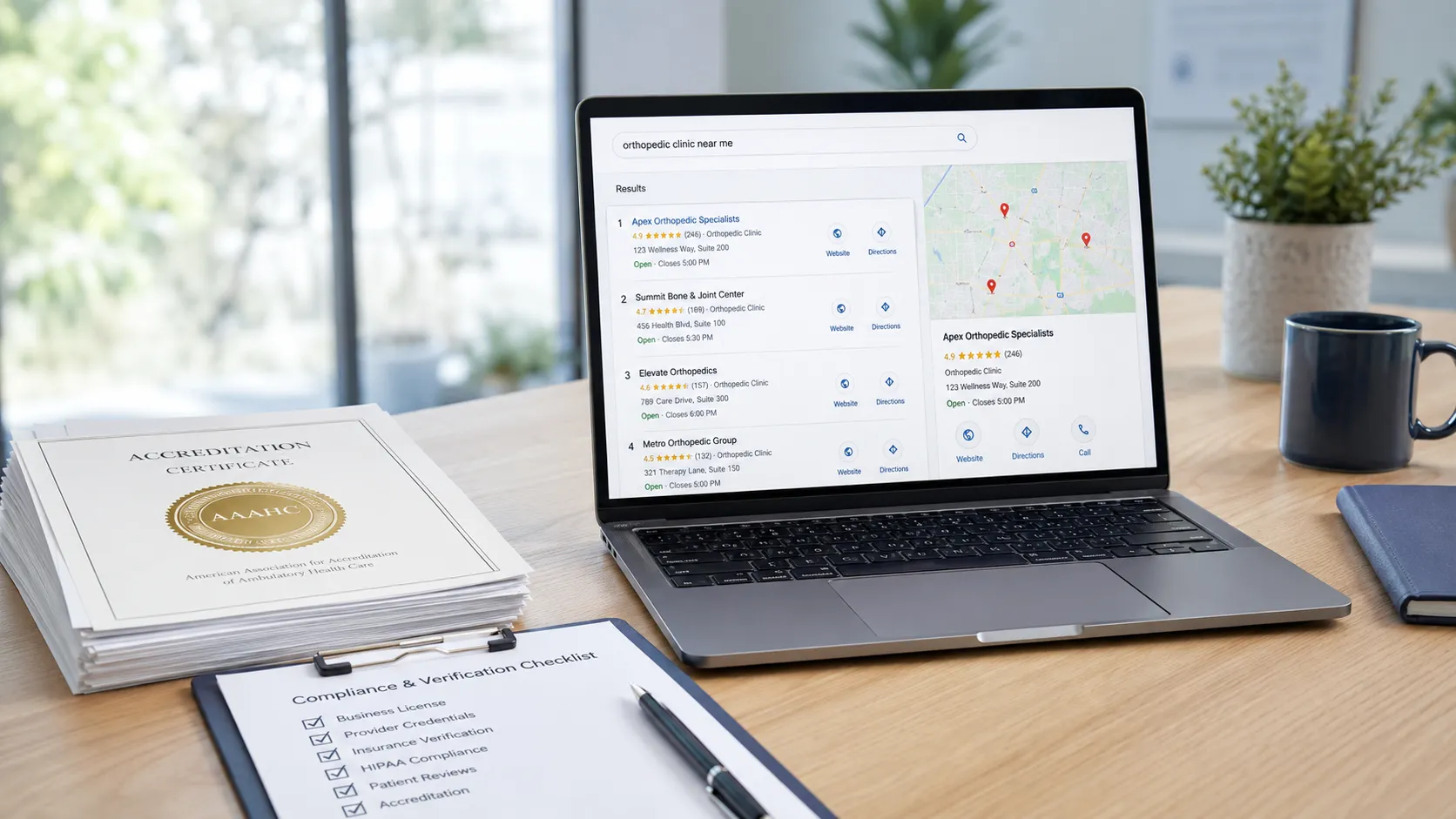
SEO for drug rehab is the process of optimising an addiction treatment centre’s website to rank for high-intent searches like:
- “detox centre near me”
- “Inpatient alcohol rehab accepting insurance”
- “medication-assisted treatment programs”
The goal is not website traffic. The goal is qualified admissions inquiries from individuals and families actively searching for help. This vertical sits at the intersection of:
- YMYL classification
- HIPAA compliance
- LegitScript certification
- FTC rules on outcome claims
Standard SEO approaches built for e-com or local services will fail here. Drug rehab SEO requires a strategy built specifically for a regulated healthcare environment.
Why Google Treats Rehab Content Differently
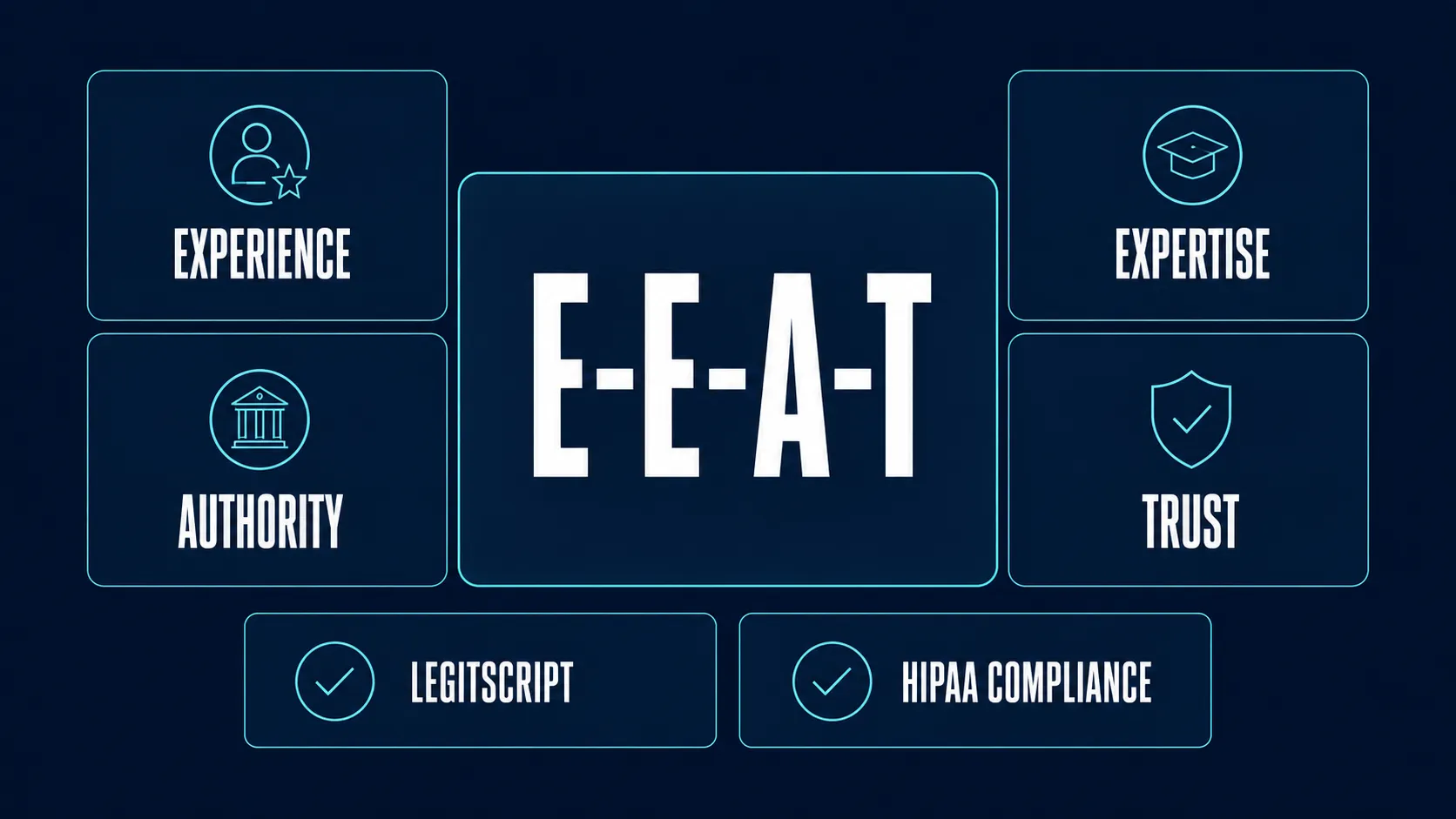
Google classifies addiction treatment content as YMYL, meaning the stakes of bad information are considered life-affecting. Pages that rank in this category are subject to stricter quality evaluation across E-E-A-T signals:
- Experience
- Expertise
- Authoritativeness
- Trustworthiness
According to SAMHSA’s 2024 National Survey on Drug Use and Health, 48.4 million Americans aged 12 and older had a substance use disorder in the past year. That scale of need is why search engines take YMYL enforcement seriously in this category.
Two compliance factors directly affect organic rankings for drug rehab centres.
1/ LegitScript Certification
LegitScript certification was created after Google removed all addiction treatment ads in 2017 following widespread patient brokering and deceptive lead generation in the space. When ads returned in 2018, LegitScript certification became mandatory.
Today, LegitScript certification affects organic trust signals too. Centres that maintain active certification and document it in their schema markup and on-page content carry stronger entity authority with Google’s algorithms.
2/ HIPAA Compliance
HIPAA compliance shapes what you can put on your website. Patient tracking pixels, form data, and identifying case details all carry HIPAA implications.
A HIPAA-compliant SEO strategy for healthcare restricts certain conversion tracking approaches but also sets a trust floor that search engines reward.
Treatment centres that ignore these two factors are not just leaving rankings on the table. They are exposing themselves to Google manual actions for E-E-A-T failures specific to this vertical.
What Searchers Actually Need When They Look for Rehab
Effective seo for drug rehab starts with matching content to the real intent behind each search. Addiction recovery searches fall into three distinct categories.
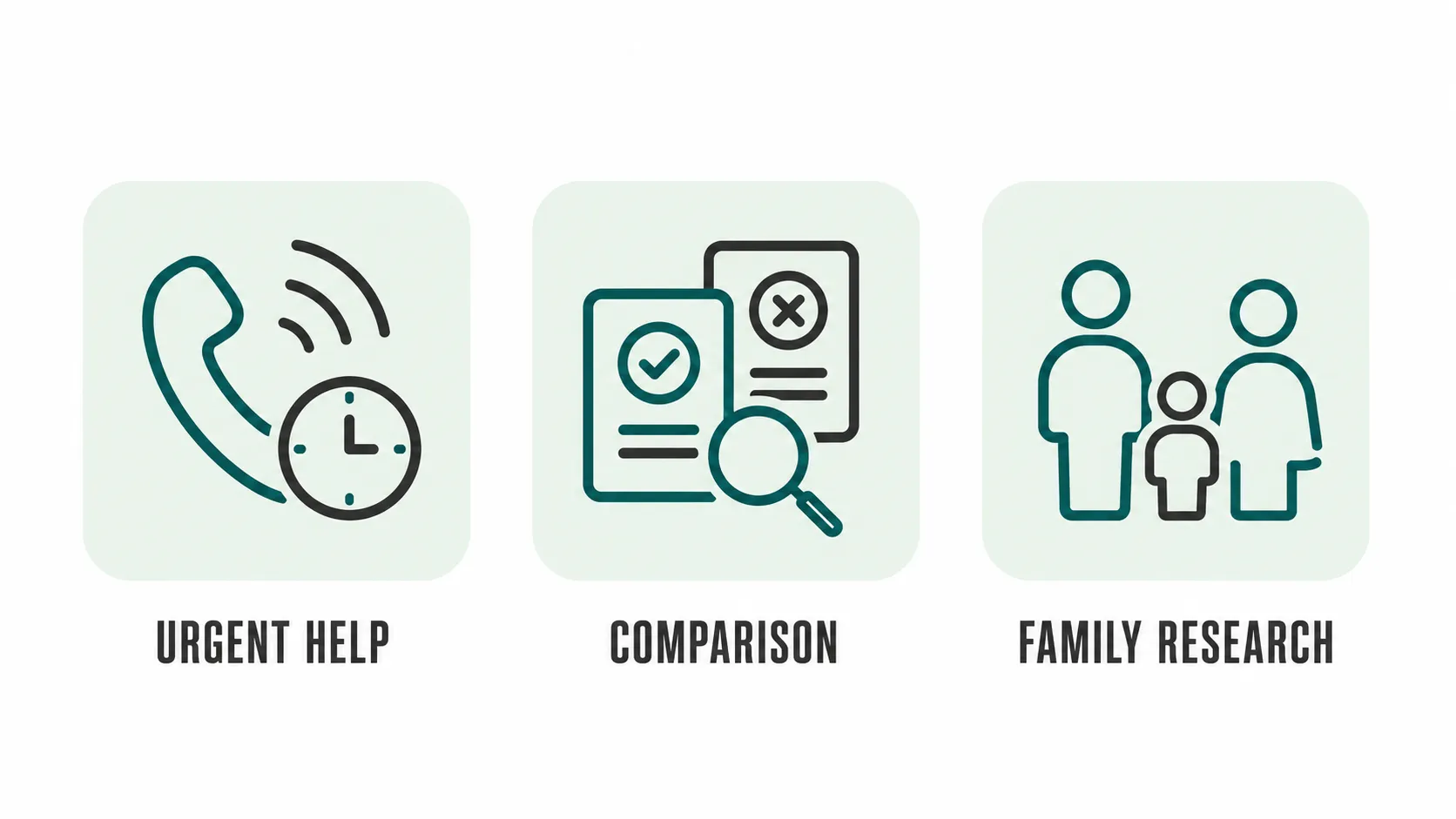
1/ Urgent Help Intent
Urgent help intent comes from people in immediate crisis. Queries like “24-hour detox centre for heroin addiction” or “same-day admission rehab centre, Florida” have minutes to spare.
Pages targeting this intent need:
- Admissions information
- Detox process explanations
- Insurance verification options
- A visible phone number above the fold
2/ Treatment Comparison Intent
Treatment comparison intent comes from users evaluating options before committing. “Inpatient vs outpatient addiction treatment” or “best residential rehab programs for alcohol” signal that someone is researching, not panicking.
These pages need to explain:
- Treatment modalities
- Program duration (30, 60, 90 days)
- Therapy types
- What makes one program better suited to specific situations
3/ Family Research Intent
Family research intent often drives the first search. Parents, spouses, and adult children search “how to help someone addicted to opioids” or “signs of drug addiction in adults” before the patient ever searches for treatment.
Educational content built around this intent positions a treatment centre as a credible, trustworthy source before a family is ready to call.
Understanding which intent each page targets determines its structure, its keywords, and its call to action.
Paid Ads vs. SEO for Drug Rehabs: What to Know
Paid advertising for addiction treatment is heavily restricted. LegitScript certification is required for Google Ads in this vertical, and even certified centres face keyword-level restrictions, ad copy rules, and landing page compliance requirements.
The table below shows how organic SEO and paid ads compare for addiction treatment centres:
| Factor | Organic SEO | Google Ads (PPC) |
| LegitScript required | Recommended for trust signals | Mandatory to run ads |
| Avg. cost per click | None (traffic is earned) | Up to $185 per click in competitive markets |
| Timeline to results | 3–6 months for meaningful traction | Immediate visibility |
| Long-term ROI | Compounds over time | Stops when budget stops |
| HIPAA tracking risk | Lower with proper configuration | Higher with pixel-based remarketing |
| Best for | Sustainable patient acquisition | Filling short-term capacity gaps |
Organic SEO builds the kind of authority that paid ads cannot buy, including E-E-A-T signals, topical authority across addiction treatment content, and the trust that families feel when a centre ranks naturally rather than appearing with an “Ad” label.
On-Page SEO for drug rehabs: What Every Rehab Page Needs
On-page SEO for drug rehab centres covers five non-negotiable elements.
1/ Title tags and meta descriptions
They must include the target keyword and a geographic modifier where relevant. “Inpatient Alcohol Rehab in Phoenix, AZ” tells Google exactly what the page covers and who it serves.
2/ Heading structure
It should reflect real patient questions. H2s like “What Does Medical Detox for Alcohol Involve?” or “How Long Is Residential Opioid Treatment?” are both search-intent aligned and structured for featured snippet extraction.
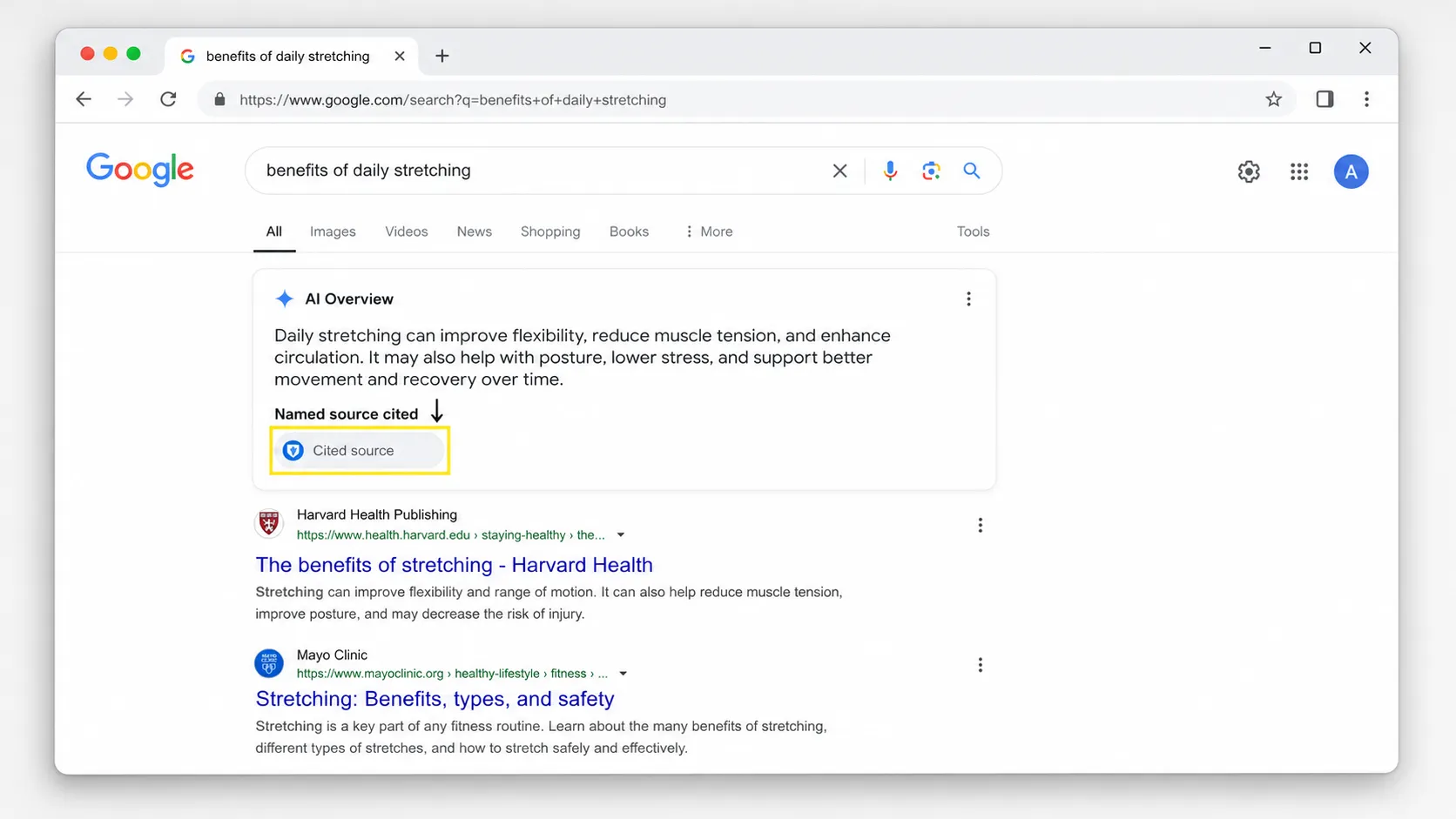
3/ Answer capsules
It matters for AI search visibility. In 2026, AI Overviews from Google increasingly cite treatment centre content with clear named authorship and direct answers. Every H2 section should open with a 30–60 word self-contained answer before expanding into detail.
4/ Substance-specific and program-specific pages
A single page targeting “drug rehab” will not compete with centres that have built separate pages for alcohol detox, opioid treatment programs, dual diagnosis, PHP, IOP, and MAT. The specificity is what matches high-intent searches.
Treatment centres that need support building compliant, intent-matched content can learn from approaches used in local SEO for medical professionals more broadly, but the YMYL constraints in addiction treatment require vertical-specific care.
Off-Page SEO for Drug Rehabs: Authority Building for Rehab Centres
Domain authority in addiction treatment is earned through a specific set of credibility signals.
1/ Healthcare Directory Listings
Healthcare directory listings are the foundation. SAMHSA’s treatment locator, Psychology Today, and NAMI are high-authority sources that pass genuine topical relevance. Submissions to these directories build both citation consistency and link authority in the right context.
2/ Accreditation Signals
Accreditation signals carry weight. Joint Commission (JCAHO) and CARF accreditation should be referenced in on-page content and built into schema markup. These signals tell both search engines and families that a facility meets measurable clinical standards.
3/ Online Reviews
Online reviews are a direct local ranking factor. For organisations helping families understand reputation management for doctors and healthcare providers, the same principles apply to addiction treatment centres. A steady flow of verified Google reviews from families and alumni (with privacy respected) strengthens both Google Business Profile rankings and conversion rates for organic visitors.
4/ Backlinks From Neutral Healthcare Publishers
Backlinks from neutral healthcare publishers carry more weight than generic directory links. NIDA, SAMHSA, and peer-reviewed clinical references are the sources that AI Overviews and Google’s quality evaluators trust. Getting cited by those sources, or citing them correctly, builds both external authority and E-E-A-T signals.
5/ Ethical Constraints on Backlinks
Mental health providers face similar ethical constraints around backlinks. The same approach that works for SEO for mental health therapists applies directly to drug rehab authority building.
Local SEO for Drug Rehab Centres
Most rehabilitation searches include a geographic modifier. “Drug rehab centre Austin, TX,” “detox clinic near Denver,” and “luxury rehab facility Malibu, California” are not broad searches. They are location-specific purchase-intent queries.
Local SEO for treatment facilities requires:
- Optimised Google Business Profile with services, program types, photos, and verified contact details
- City and state landing pages built for each service area or facility location
- Consistent name, address, and phone number (NAP) across all healthcare directories
- Patient and family reviews are managed actively on Google and condition-specific directories
Each location page must go deeper than a generic description. Admissions process, insurance coverage in that state, program types offered, and facility-specific details are what differentiate a location page from thin duplicate content.
For centres with multiple locations, a franchise-style local SEO structure with a hub page and individual location subpages provides the right crawl architecture. This mirrors approaches used across local SEO for home services franchise businesses and applies equally well to multi-site treatment networks.
Topic Clusters That Build Authority in Addiction Recovery
Search engines favour websites that cover a topic deeply, not broadly. A treatment center that publishes one page on “drug rehab” will always lose to a center that has built a content cluster covering every related question a patient or family might ask.
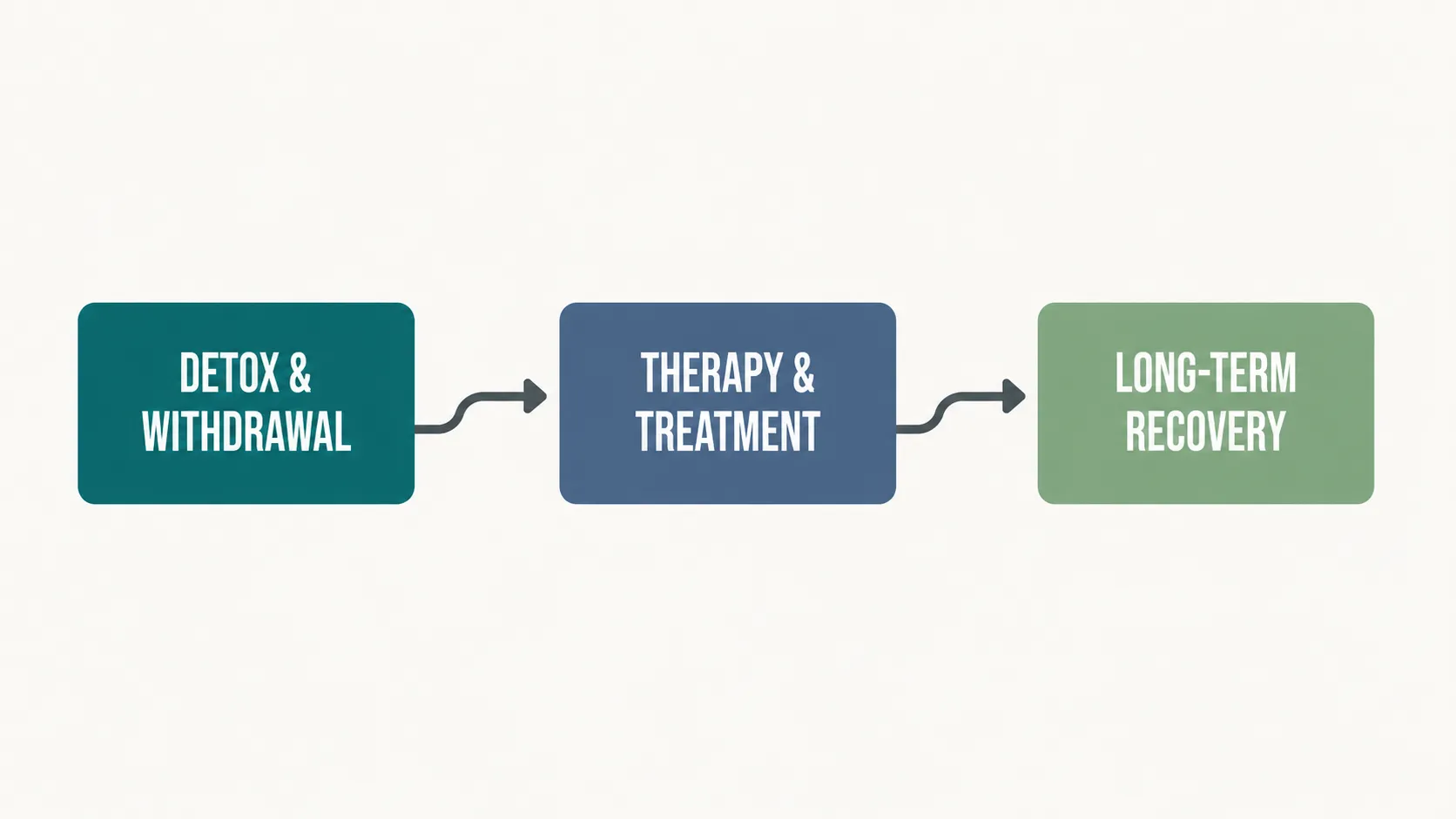
The three core topic clusters for drug rehab SEO:
1/ Detox and withdrawal
Covers alcohol detox process, opioid withdrawal timelines, medication-assisted treatment explained, benzo detox risks, and medical supervision during detox. These are the highest-urgency informational searches and the gateway to admissions.
2/ Therapy and treatment methods
Covers cognitive behavioural therapy for addiction, group therapy in recovery programs, trauma-informed addiction treatment, dual diagnosis treatment, and relapse prevention therapy. Families evaluating centres want to understand what happens inside the program.
3/ Long-term recovery
Covers sober living programs after rehab, relapse prevention strategies, family therapy in recovery, alumni programs, and recovery support groups. These articles build authority for the long tail and serve patients well past the initial admission.
Mission-driven healthcare organisations, including those applying ethical frameworks similar to seo strategy for charity and non-profits, benefit from this cluster approach because it signals genuine topical depth rather than transactional intent.
Ethical SEO Standards That Addiction Treatment Centres Cannot Skip
Addiction recovery marketing carries regulatory exposure that most industries do not face.
The FTC enforces rules on outcome claims. Phrases like “guaranteed sobriety,” “cure addiction,” or unsubstantiated success rate statistics are not just bad marketing. They are enforcement targets. Content must be medically accurate, outcome-realistic, and built around transparent program descriptions.
LegitScript’s audit cadence increased across 2025 and now ties directly to organic authority signals. A centre with an active, well-documented LegitScript certification carries stronger trust signals than one treating it as a one-time checkbox.
Patient testimonials require careful handling. Identified patient stories need proper consent. Anonymous case descriptions must protect identity completely. Both HIPAA and state confidentiality laws apply.
Every page should highlight:
- Licensed and credentialed clinical staff
- Evidence-based treatment modalities
- Insurance acceptance and verification process
- Privacy policy aligned with HIPAA requirements
Once a centre has the right content and on-page signals in place, healthcare landing page CRO principles help convert that traffic into actual admissions inquiries.
How CometRank Handles SEO for Drug Rehab Centres
Executing seo for drug rehab properly means managing YMYL compliance, LegitScript documentation, substance-specific landing pages, local SEO across multiple locations, and a content cluster covering every phase of the recovery journey. Most treatment centres cannot run this in-house, and most agencies move too slowly and lack the healthcare-specific expertise to avoid compliance errors.
We’re an AI SEO agency that runs this entire workflow for clients using CometRank, our proprietary SEO software. CometRank deploys six AI agents: the Analyst, Strategist, Creator, Optimiser, Authority Builder, and Quality Guardian. A human SEO Captain reviews every deliverable before it goes live to ensure medical accuracy and ethical standards are met. If you’re looking for an AI SEO agency for healthcare services, this is what compliant, credibility-first SEO execution actually looks like at scale.
To see how CometRank handles this for your treatment centre, book a demo, and we’ll map out your search opportunity and show you exactly what we’d build for your programs.
Conclusion
The purpose of seo for drug rehab is not a higher position in a ranking report. It is a family finding your facility at the moment they are ready to make a call.
That means building pages that answer the right questions, establishing the credibility that YMYL standards demand, and maintaining the ethical and compliance standards that protect both patients and your facility’s standing with search engines.
Centres that approach search with this framework do not just rank. They build the kind of organic authority that continues generating qualified admissions inquiries long after competitors’ paid ad budgets run dry.
Drug Rehab SEO: Frequently Asked Questions
1/ What is seo for drug rehab, and why does it matter?
SEO for drug rehab is the process of optimising a treatment centre’s website to rank for high-intent addiction treatment searches on Google and AI platforms. It matters because most individuals and families begin their search for treatment online, and centres that do not appear in those results miss the opportunity to connect with people actively seeking help.
2/ What is LegitScript, and how does it affect drug rehab SEO?
LegitScript is a third-party certification body that vets addiction treatment centres for clinical licensing, billing practices, and operational standards. Originally required only for Google Ads in this vertical, LegitScript certification now functions as an organic trust signal. Centres with active, documented certification carry stronger E-E-A-T authority with Google’s algorithms, particularly for YMYL content.
3/ How does HIPAA compliance affect a rehab centre’s website?
HIPAA restricts how patient data is collected, stored, and used on healthcare websites. For SEO, this means being cautious with tracking pixels, contact forms, and case study content. A properly configured HIPAA-compliant website can still support full SEO tracking, but requires specific technical setup to avoid violations that could expose the facility to regulatory risk.
4/ How long does drug rehab SEO take to show results?
Most addiction treatment centres see meaningful local visibility improvements within 3 months from technical fixes and GBP optimisation. Organic ranking improvements for competitive keywords typically begin at 6 months, with strong admissions-generating authority building over a 12 to 18-month horizon in competitive markets.
5/ What keywords should a drug rehab centre target?
Priority keywords combine substance type, program type, and geography: “alcohol detox centre Phoenix AZ,” “inpatient opioid treatment accepting Medicaid,” “30-day residential rehab near Denver.” Informational keywords like “how long does heroin withdrawal last” and “what is medication-assisted treatment” also build topical authority and serve families in early research.
6/ Is local SEO or national SEO more important for addiction treatment?
Both matter, but local SEO drives faster admissions results. Most treatment-seeking searches include a geographic modifier or use “near me” phrasing. Local optimisation through Google Business Profile, location pages, and consistent directory citations should be the foundation. National content authority through topic clusters supports both organic rankings and AI search citations over time.