
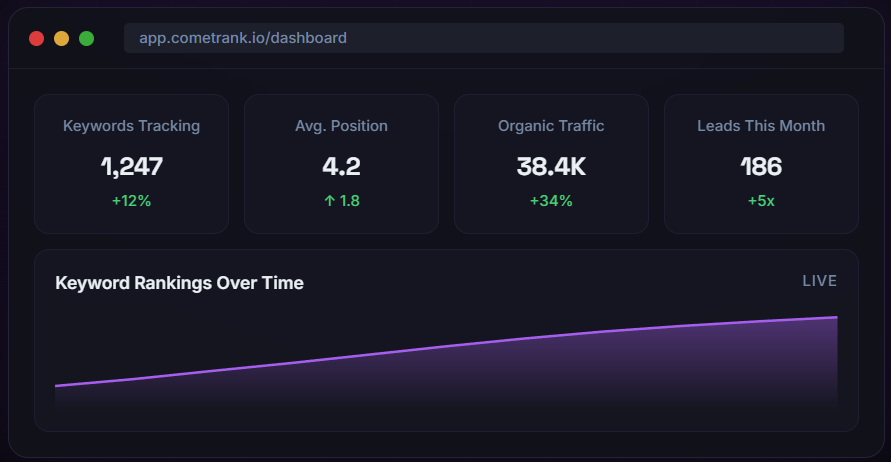
Where does a parent go the moment they notice their toddler isn’t talking yet?
Straight to Google. Not to a pediatrician’s referral list, not to a Facebook parenting group first. They type “speech therapist near me” or “speech delay treatment” and click on whatever shows up first.
Adults searching for post-stroke rehab or caregivers looking for an SLP who takes their insurance behave the same way. They search once, scan three or four results, and pick fast. If your practice isn’t one of those results, that inquiry goes to a competing clinic that simply shows up more often, not one that provides better care.
In this article, we cover how to do SEO for speech therapists so your practice becomes the one that shows up first.

Why Most Speech Therapy Practices Don’t Show Up on Google
The search happens the moment the need is felt.
- Parents want help for a child with a speech delay
- Adults need support after a stroke
- Caregivers are looking for an SLP who takes insurance in their area
These aren’t casual browsers. They’re ready to book.
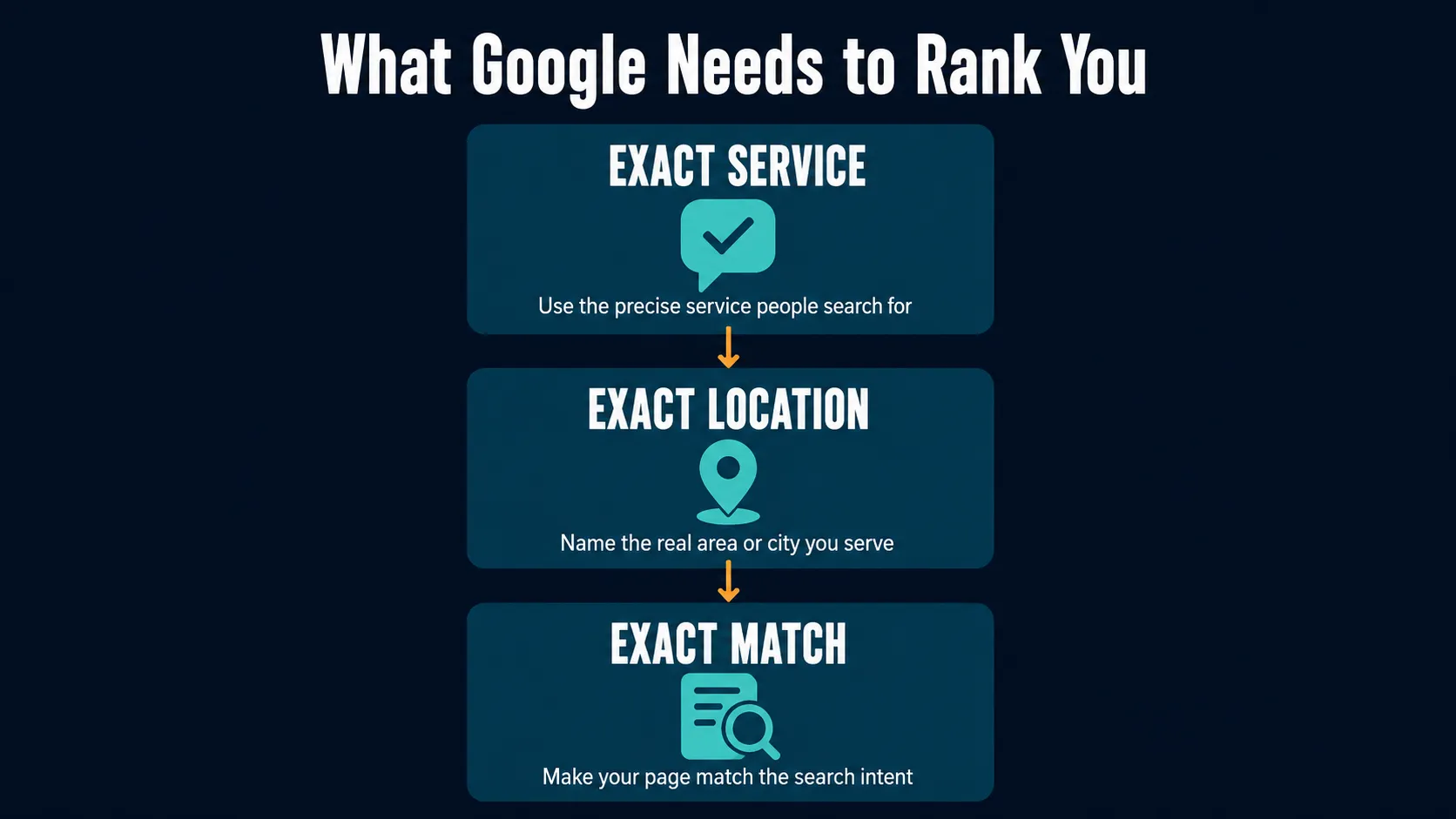
The problem is that most speech therapy websites were built to look credible, not to rank. They have a homepage, a services page, and an About section. That’s not enough to compete in local search.
Google needs specific signals to decide who ranks. Your site needs to reflect the exact services people are searching for, in the exact location they’re searching from. Without that, even a well-designed website stays invisible.
What Keywords Do Speech Therapists Actually Need to Target?
Not all searches are equal. Some bring in curious browsers. Others bring in parents ready to book a session this week.
Focus on high-intent, location-specific searches.
| Keyword Type | Example | Why It Works |
| Service + Location | “speech therapist in Austin TX” | Buyer is searching with clear intent |
| Condition + Location | “speech delay treatment Chicago” | Parent has a specific problem to solve |
| Demographic + Location | “adult speech therapy Houston” | Narrow audience, high conversion rate |
| Insurance-based | “speech therapist that accepts Medicaid” | Filters out non-buyers automatically |
Each of these deserves its own dedicated page. Not a paragraph buried in your homepage. A standalone, optimised page that answers what Google needs to know.
- Who you are
- What you treat
- Where you’re located
Trying to rank a single homepage for all of these searches at once rarely works. Google rewards specificity, and a page built around “speech delay treatment Chicago” will consistently beat a general services page trying to cover everything at once.
How Local SEO for Speech Therapists Drives Actual Phone Calls
For speech therapists, local SEO is where most new clients come from.
Three signals drive local rankings.
| Signal | What to Do |
| Google Business Profile | Claim it, complete every field, add service areas and photos |
| NAP Consistency | Name, address, and phone number must match across every platform |
| Reviews | Ask satisfied families to leave a Google review after each session |
When someone searches “speech therapist near me,” Google surfaces a local pack of three businesses before any organic results show up at all. If your practice isn’t in that pack, you’re invisible to a huge share of local searchers before they even scroll.
This is where a lot of practices leave the easiest wins on the table.
- A profile that’s only half filled out
- A phone number listed differently on your website than on your Facebook page
These small inconsistencies quietly work against you every day. Getting local SEO for medical professionals right is often less about new content and more about fixing what’s already inconsistent. Optimizing your Google Business Profile with accurate categories, service areas, and regular photo updates is one of the fastest ranking improvements a practice can make.
Is Your Website Actually Built to Rank?
A website can look professional and still be invisible to Google.
Two things matter here that most practices overlook.
- Page speed
- Mobile experience
Over half of all website visits now happen on a phone, and a site that loads slowly or looks cramped on a small screen loses visitors before they read a word. Google also uses your site’s mobile version, not your desktop version, to decide how you rank.
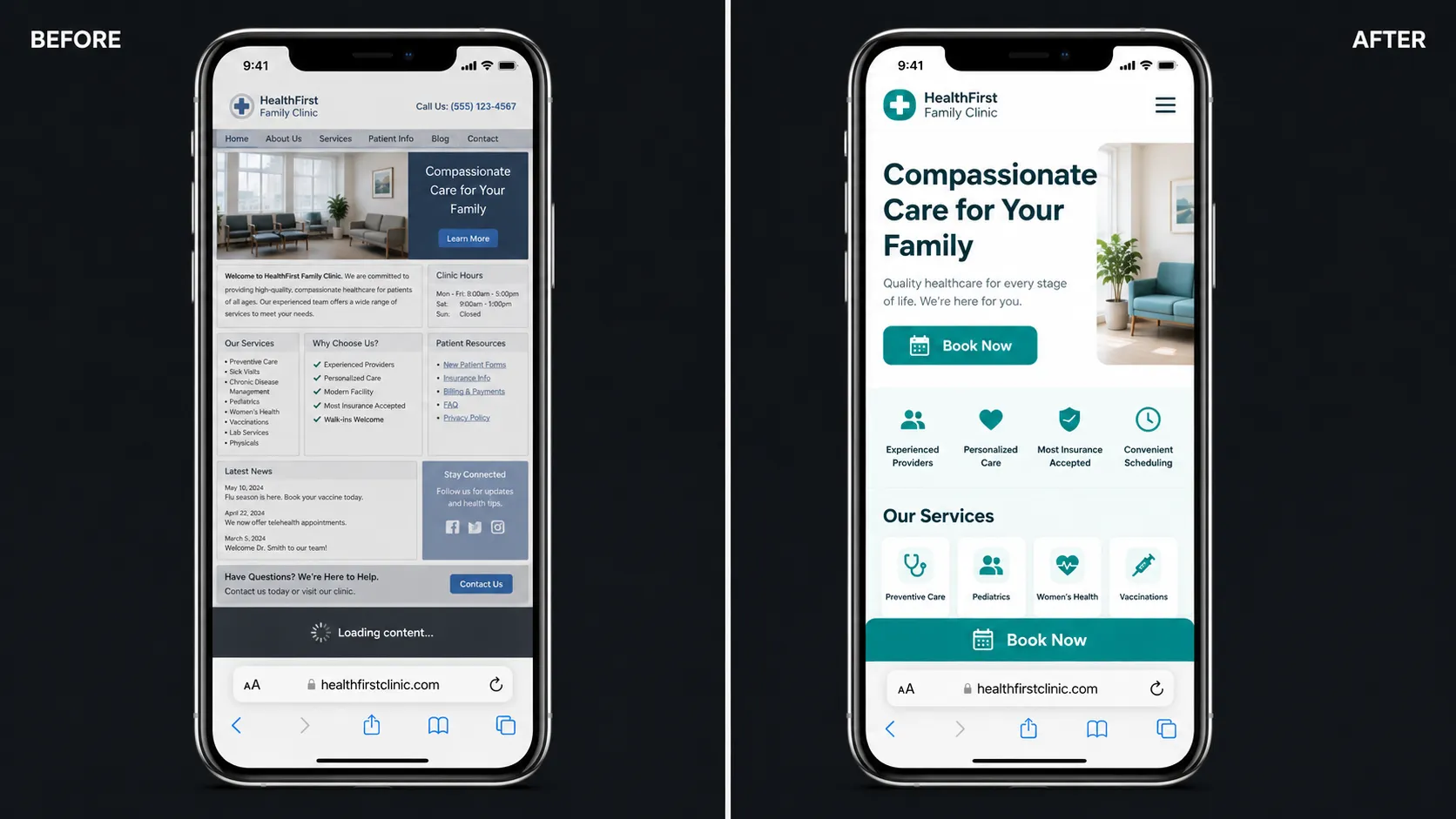
None of this requires a full redesign. It usually means compressing images, cutting unnecessary plugins, and testing how your booking form actually looks on a phone screen.
A parent who can’t easily find your phone number or fill out a contact form on mobile will simply leave and call the next practice on the list. Getting your site’s conversion path from visitor to booked patient working smoothly matters just as much as getting traffic there in the first place.
Content That Builds Trust Before the First Call
Families researching speech therapy take time before contacting anyone. They read, compare, and check credentials. Your content has to meet them at that stage.
What to write.
- “Signs my toddler needs speech therapy”
- “How to prepare for a speech therapy evaluation”
- “Speech therapy for stuttering in adults”
- “What to expect from an SLP assessment”
Each piece of content is a ranked entry point into your practice. Each one brings a different type of searcher to your site. The more entry points you have, the more inquiries you generate over time.
This compounding logic is what separates practices that grow steadily from those that rely entirely on referrals. It’s the same approach practices use for SEO for mental health therapists, where consistent, specific content outperforms occasional generic posts.
According to the American Speech-Language-Hearing Association, early identification of speech and language delays significantly improves outcomes. That’s exactly why parents search urgently, and why ranking for these terms matters so much.
Backlinks: The Signal Most Speech Therapy Practices Skip
Backlinks tell Google that other credible sites vouch for yours. For a healthcare practice, the wrong kind of link building can do more harm than good, so it’s worth knowing the difference.
Helpful Backlink Sources
- Local business directories and chamber of commerce listings
- Guest posts on parenting or healthcare publications in your area
- Partnerships with pediatricians, ENTs, and schools who can link to your resources
- Sponsorships or community event pages that link back to your site
Harmful Backlink Sources
- Paid link farms or bulk directory submissions
- Irrelevant sites with no connection to healthcare or your local area
- Reciprocal link schemes that exist only to trade links
Building SEO citations at scale the right way takes longer than buying a link package. But it’s the difference between a backlink profile that helps your rankings and one that eventually gets penalized.
AI Search Visibility for Speech Therapists
Google is no longer the only place people search. ChatGPT, Perplexity, and Google AI Overviews increasingly answer questions like “what does a pediatric speech evaluation involve” directly, sometimes without the person ever clicking through to a website.
These AI engines favor content that answers questions clearly and directly.
- Direct answers in the first sentence or two of a section
- Clear service and location details stated plainly, not buried
- Structure that avoids long paragraphs of preamble before the point
A page that buries the answer under setup and context gets skipped in favor of one that states it plainly.
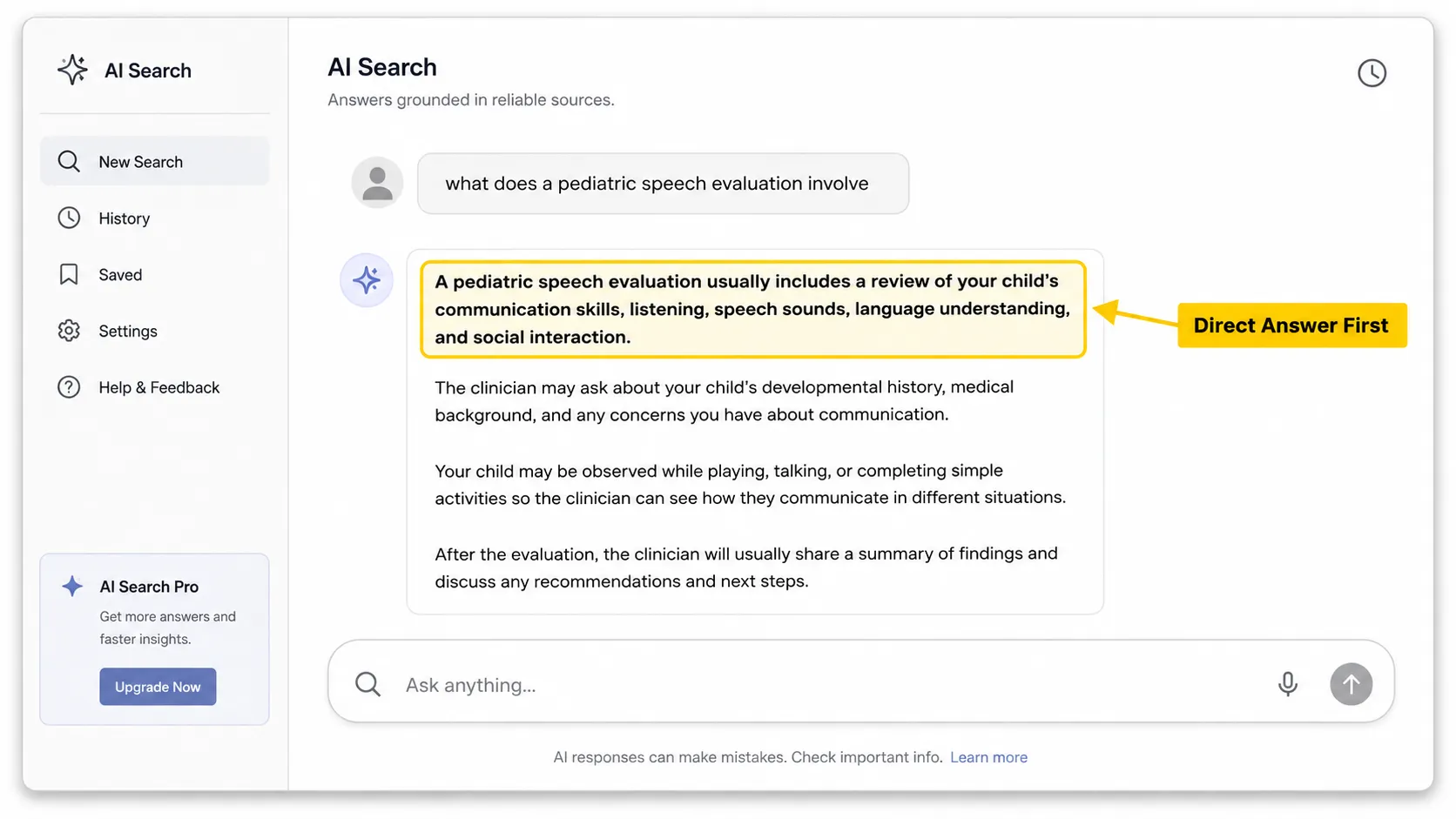
Checking your AI search visibility is a good way to see whether your practice already shows up when someone asks an AI assistant for a local recommendation, and where the gaps are if it doesn’t.
How Long Does SEO Take to Work for Speech Therapists?
SEO for speech therapists is not instant.
- A brand-new page typically takes a few weeks before Google even indexes it
- Several months of consistent signals, content, reviews, and backlinks are needed before it climbs toward the first page
Most practices start seeing meaningful movement in local pack visibility within three to four months, with steady growth continuing as more location and condition pages get built out.
Practices that treat SEO as a one-time project rather than an ongoing effort tend to plateau quickly. Competitors who keep publishing and refining will eventually overtake a site that stalls.
How CometRank Handles SEO for Speech Therapist
Everything above, intent-mapped pages, local SEO, backlinks, AI visibility, reviews, works. But building and maintaining all of it by hand is a full-time job most speech therapy practices don’t have room for.
We’re an AI SEO agency that runs this entire workflow for clients using CometRank, our proprietary SEO software. Six AI agents handle it.
- Analyst: studies your practice and market
- Strategist: maps parent and patient search intent
- Creator: builds the pages
- Optimizer: keeps everything internally linked and formatted right
- Authority Builder: runs backlink outreach to healthcare-relevant sources
- Quality Guardian: checks every output against your standards before it goes live
A human SEO Captain reviews the work at every stage, so nothing publishes without a person checking it first.
If you’re weighing this against other options, our AI SEO for healthcare providers page shows how this applies across specialties, or book a demo to see it working on your own market.
Conclusion
The practices ranking in your city right now are pulling further ahead every month. They’re adding pages, collecting reviews, and showing up in the map pack for every high-intent search in your area.
Start simple. Pick the highest-intent keyword in your city, build a dedicated page for it, and complete your Google Business Profile today. SEO for speech therapists isn’t complicated, but it compounds fast. The longer you wait, the harder the gap is to close.
Frequently Asked Questions About SEO for Speech Therapists
1. How long does SEO take to work for a speech therapy practice?
Most new pages take a few weeks to get indexed by Google, with meaningful local ranking improvements typically appearing within three to four months of consistent work on content, reviews, and citations.
2. What’s the difference between SEO and paid ads for a speech therapy practice?
SEO builds long-term, ongoing visibility that keeps generating inquiries without an ongoing per-click cost, while paid ads deliver immediate visibility that stops the moment the budget runs out.
3. How many location or condition pages does a speech therapy practice need?
The right number depends on the practice’s service area and specialties, but each distinct service, condition, and location combination generally performs best as its own dedicated page rather than being combined into one general page.
4. Does a speech therapy practice need to blog regularly for SEO to work?
Regular content publishing supports SEO by giving Google more indexed pages to rank and by answering the specific questions families search before booking, though the highest-priority pages are usually the service and location pages themselves.
5. Can a small, single-location practice compete with larger clinics in search results?
A small practice can compete effectively in local search because Google’s local pack rewards proximity, profile completeness, and review activity, factors that don’t require a large marketing budget to get right.