
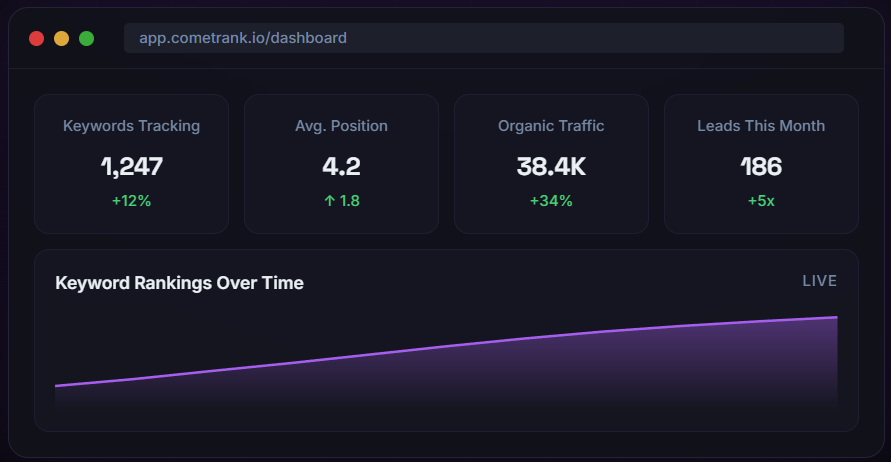

Strong SEO captures clients at the exact moment they are searching for a recruiter.
How does a new orthodontic practice with zero reputation outrank yours on Google?
It’s not authority. It’s not ad spend. And it’s definitely not because they’re better at orthodontics than you. But every day, patients in your area are choosing them over you, without ever knowing you exist.
In this article, we break down exactly how SEO for orthodontists works and what the practices that dominate local search are doing differently.
What Is SEO for Orthodontists & Why Does It Work Differently?
SEO for orthodontists is the process of structuring your website so it ranks when patients search for specific treatments, locations, and problems. Not just “orthodontist near me.” The full range of searches that signal a patient is ready to book.
Here’s why it’s different from general dental SEO. A patient searching for a dentist might want a cleaning next week. A patient searching for an orthodontist is evaluating a $5,000 to $8,000 treatment decision. Before they ever call, they’re:
- Comparing treatment options (Invisalign vs braces, clear aligners vs traditional)
- Reading reviews and checking before-and-after results
- Looking up costs and financing options
- Searching by location to shortlist practices near them
The intent is higher. The research phase is longer. And the practice that shows up across all of that research wins the case. Most orthodontic websites treat SEO like dental SEO: one services page, a location, a phone number. That’s not enough. Orthodontic SEO requires dedicated pages for every treatment, every location, and every question a patient asks on the way to booking.
The Three Ways Patients Search Before They Book an Orthodontist
Orthodontic SEO works best when pages match the patient’s search intent.
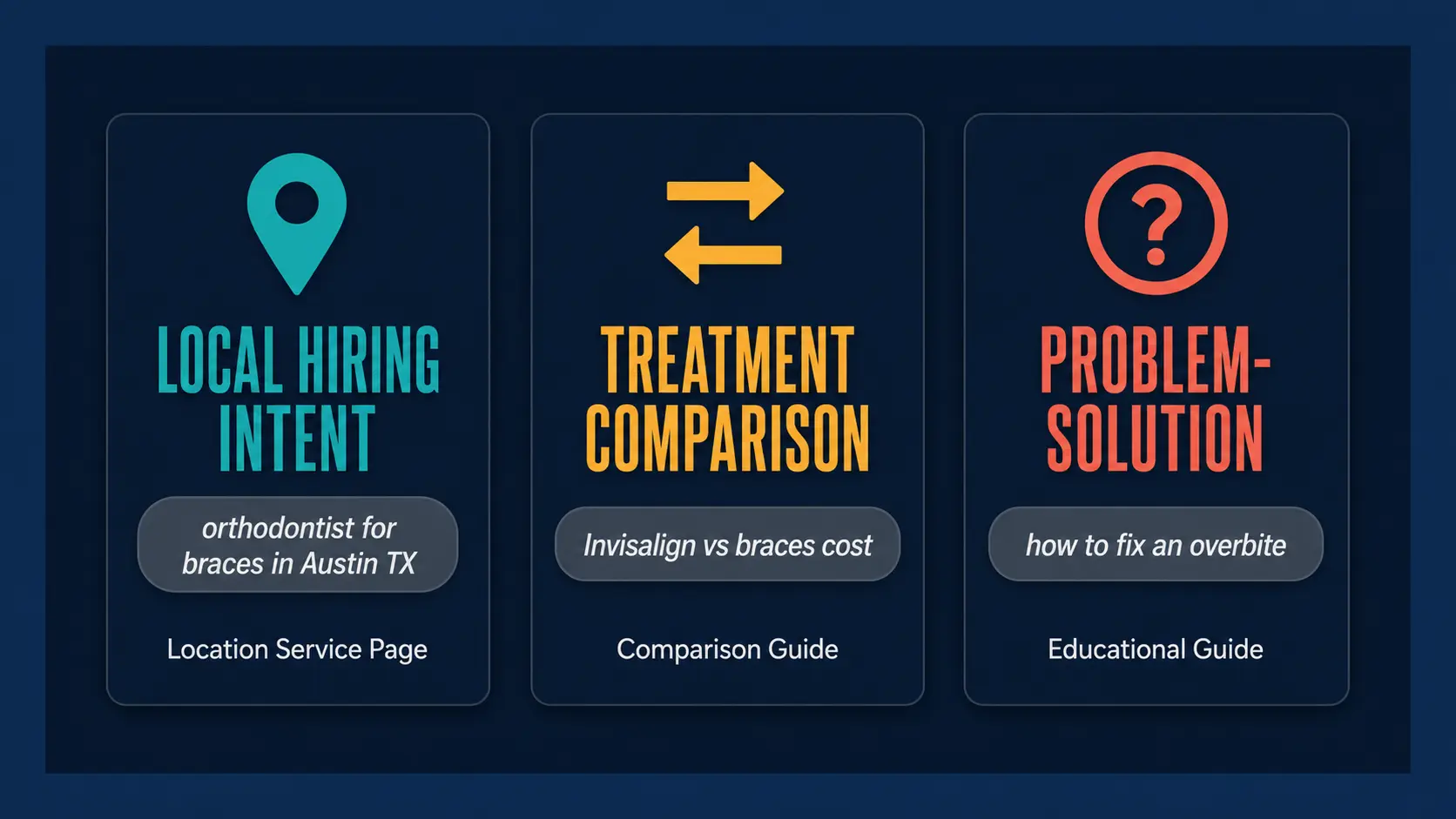
1/ Local hiring intent
These patients are ready to choose a provider. They search “orthodontist for braces in Austin TX” or “best-rated orthodontist near me.” The right page is a location service page: one city, one treatment, with credentials, testimonials, cost ranges, and a booking form.
2/ Treatment comparison intent
These patients are still evaluating options. They search “Invisalign vs braces cost” or “best braces for adults.” A dedicated comparison guide that covers cost, comfort, duration, and ideal patient type captures them and moves them toward booking.
3/ Problem-solution intent
These patients search based on a concern, not a treatment. Searches like “how to fix an overbite” or “why are my teeth crowded” belong in an educational guide. These pages also tend to rank in featured snippets and Google AI Overviews because they answer questions directly.
Most orthodontic websites have one generic “Our Services” page that tries to cover all three intents. It captures none of them.
Keyword Research for Orthodontists: How to Find the Searches That Actually Bring Patients
Most orthodontists target keywords that are too broad to win or too generic to convert. The fix is simple: go long-tail, treatment-specific, and location-specific.
“Invisalign orthodontist” is too broad. “Invisalign orthodontist in Tampa FL” ranks and converts. Use Google Keyword Planner, Ahrefs, or SEMrush to find these combinations in your service area. A patient booking a $6,000 case changes the math even on 50 monthly searches.
Build pages around:
- Treatment plus location (“clear aligners orthodontist in Denver CO”)
- Treatment comparison (“Invisalign vs braces cost comparison”)
- Problem plus treatment (“how orthodontists fix overbite”)
- Patient type plus treatment (“adult orthodontics clear aligners”)
- Cost queries (“how much do braces cost near me”)
Your local SEO for medical professionals strategy should map each keyword type to its own dedicated page.
On-Page SEO for Orthodontists: What Every Orthodontic Service Page Needs
Getting a page to rank means giving Google exactly what it needs to understand what the page is about and who it’s for. Most orthodontic pages fail this at the basics.
1/ Title Tags, H1s, and Meta Descriptions
These are the first signals Google reads. Lead your title tag and H1 with the primary keyword. “Invisalign Orthodontist in Tampa, FL” outranks “Our Invisalign Services” every time. Keep your meta description between 150 and 160 characters, include the keyword, name one patient benefit, and end with a soft CTA like “Book a free consultation today.”
2/ Treatment Page Structure
Every treatment needs its own page. Not a tab. Not a section on a services page. Its own URL. Each page should cover what the treatment is, who qualifies, what the process looks like, and realistic cost expectations. Patients search cost questions constantly. A page that answers them earns longer time on site and more trust.
Add a before-and-after section with real patient photos. Add testimonials on the page itself, not just a link to Google Reviews. Close with one clear booking CTA. Practices that build dedicated treatment pages across Invisalign, braces, clear aligners, adult orthodontics, and retainers consistently rank for dozens of local queries at once.
3/ Internal Linking and Schema Markup
Link treatment pages to each other where relevant. A patient reading your Invisalign page should be one click away from your Invisalign vs braces comparison guide. Add FAQPage and MedicalBusiness schema to every service page so Google can surface your ratings, hours, and treatment types directly in search results without the patient needing to click through first.
Technical SEO for Orthodontists: The Foundation Most Orthodontic Websites Skip
Great content on a slow, broken website doesn’t rank. Technical SEO is where most orthodontic ranking gaps actually live.
1/ Site speed
Compress before-and-after photos, which are usually the heaviest assets on orthodontic sites, and test with Google PageSpeed Insights.
2/ Mobile-first design
Google ranks based on the mobile version of your site. If it isn’t clean and fast on a phone, your desktop version is irrelevant.
3/ HTTPS
Patients sharing personal health information won’t book on an unsecured site, and Google penalises HTTP pages in rankings.
4/ XML sitemap
Make sure Google can find and index every treatment and location page. An uncrawled page cannot rank.
Pro-Tip:
Your technical setup needs to align with HIPAA-compliant SEO practices so your forms and patient data handling don’t create compliance exposure.
Local SEO for Orthodontists: How to Win the Map Pack
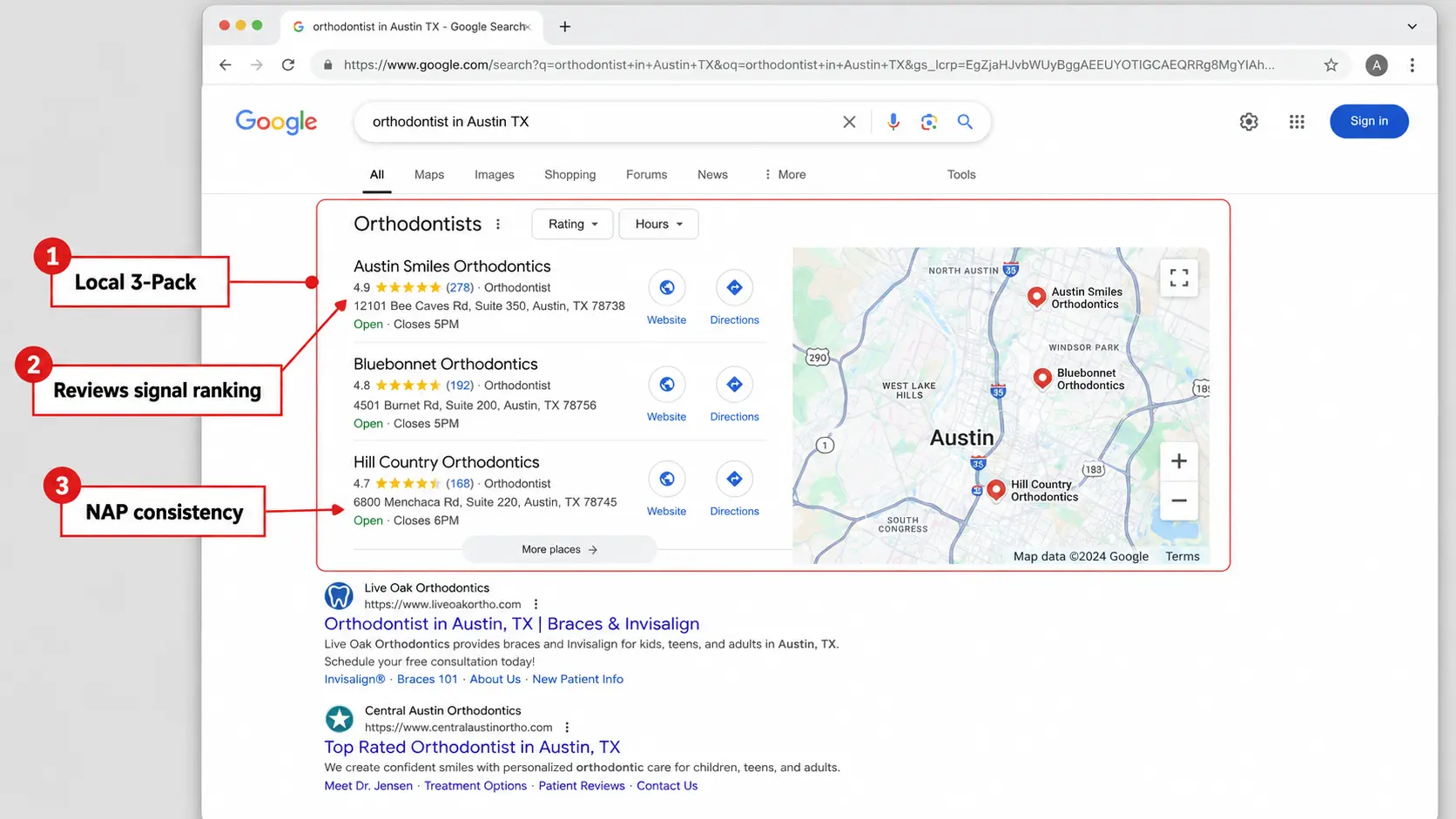
Reviews, location signals, and NAP consistency influence local orthodontic visibility.
The Google Maps pack drives a significant share of orthodontic consultations. If you’re not in those three local listings, you’re losing patients to whoever is.
1/ Google Business Profile optimisation
Your GBP is the most important local SEO asset you have. Keep your name, address, and phone number consistent across every listing. Add photos regularly. Optimising your Google Business Profile for local SEO can move you from page two to the map pack faster than almost any other tactic.
2/ Patient Reviews
Google weights the volume and recency of reviews heavily. Ask every satisfied patient for a review at checkout via a direct text link. Respond to every review. Managing your online reputation is an SEO strategy, not just a brand one.
3/ Local Citations
Keep your practice name, address, and phone number consistent across Healthgrades, Yelp, Vitals, Zocdoc, and the AAO directory. Inconsistencies suppress local rankings.
4/ Location-specific Pages
Each city or suburb you serve needs its own page. A page targeting “orthodontist in Scottsdale AZ” and one targeting “orthodontist in Mesa AZ” rank independently. One combined page targeting both ranks for neither.
The local SEO strategy used by dental practices applies directly here. Same mechanics: GBP, citations, reviews, and location pages.
Off-Page SEO for Orthodontists: Building the Authority That Makes Rankings Stick
On-page and technical SEO get your site ready to rank. Off-page SEO is what pushes it there and keeps it there. For orthodontists, this comes down to three sources of authority.
1/ Professional and Industry Links
Getting listed or cited by the American Association of Orthodontists, your state dental association, or local dental schools carries real authority weight. These are exactly the kind of high-trust, niche-relevant sources Google uses as credibility signals for healthcare practices. Prioritise these before chasing volume.
2/ Local Directory & Community Links
Beyond Healthgrades and Yelp, local business directories, chamber of commerce listings, school district health pages, and community health networks all pass local authority signals to Google. The more your practice appears in the local digital ecosystem, the more Google treats you as an established, trusted local business.
3/ Content That Earns Links Naturally
Treatment guides, cost comparison pages, and orthodontic care FAQs attract links from parenting blogs, school newsletters, and health media without outreach. A patient transformation story picked up by a local news outlet carries more authority than dozens of low-quality directory submissions. Create content worth citing and the links follow.
How to Rank on ChatGPT, Perplexity, and Other AI Platforms
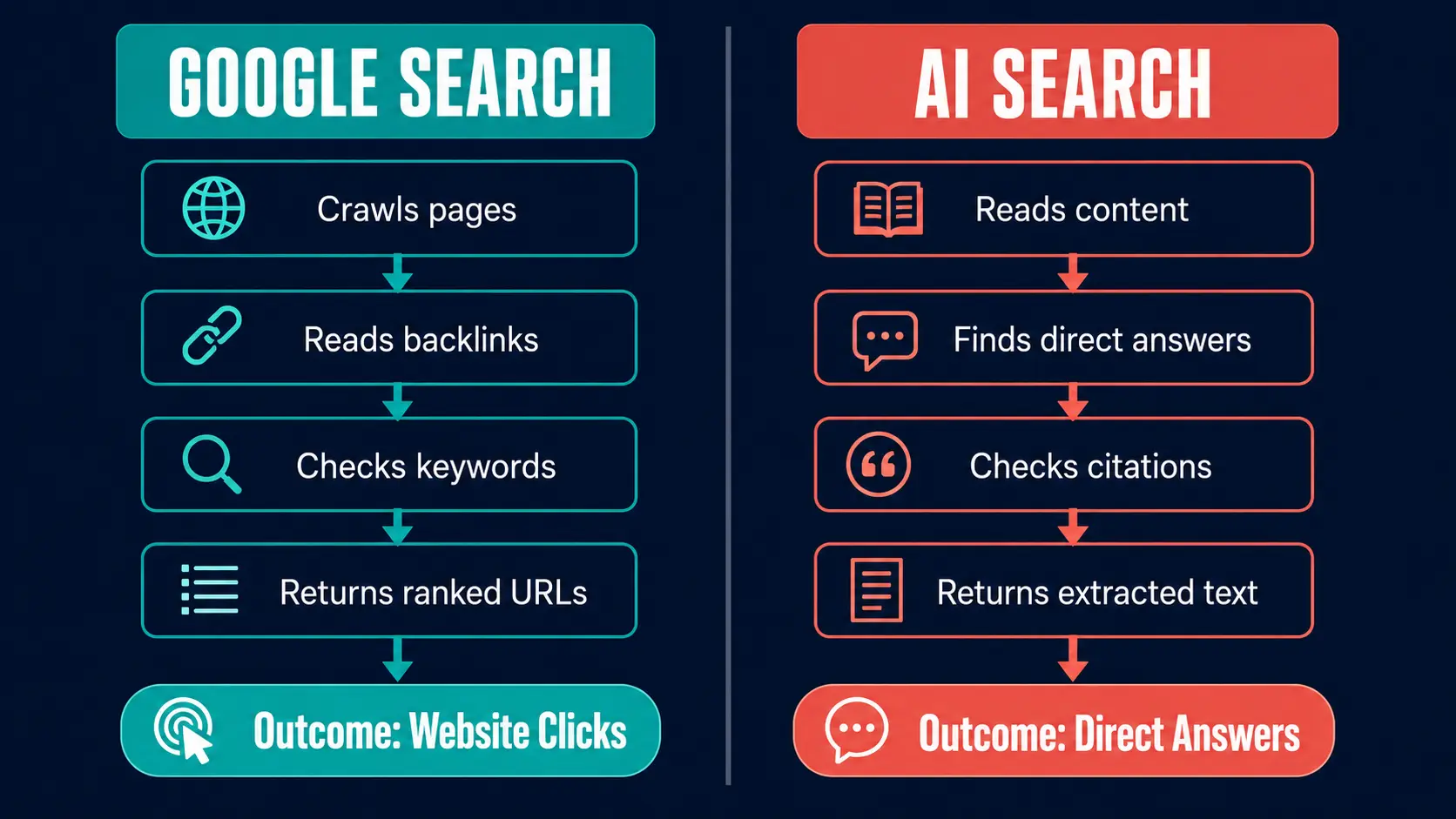
SEO now needs to support both ranked search results and AI-generated answers.
AI search engines don’t rank pages the way Google does. They pull from content that is structured, specific, and easy to extract answers from. Here’s what that means practically:
1/ Answer-first content
Every page should open with a direct answer to the question it targets. AI engines pull these as citations.
2/ FAQs on every treatment page
Questions formatted as “What does Invisalign cost in [city]?” get surfaced directly in AI responses.
3/ Schema markup
FAQPage and MedicalBusiness schema signal to AI crawlers exactly what your page covers and who it serves.
4/ Consistent citations
Practices mentioned consistently across Healthgrades, Yelp, AAO, and local directories get referenced more frequently by AI engines as trusted local sources.
The orthodontic practices that will dominate search over the next few years are the ones building for both Google and AI platforms right now.
How AI SEO of Orthodontic Helps Practices Scale This System
Executing all of this manually is the real bottleneck. Most practices don’t have the time or team to build out 20 treatment and location pages, optimise their GBP, run review systems, and maintain a citation profile simultaneously.
We’re an AI SEO agency that runs this entire workflow for healthcare practices using CometRank, our proprietary SEO software. Here’s how it works for orthodontists:
- The Analyst maps treatment searches, patient intent types, and competitor gaps in your market.
- The Strategist identifies every treatment and location keyword worth targeting, sorted by conversion potential.
- The Creator builds dedicated service pages, comparison guides, and educational content optimised for patient search intent.
- The Optimizer handles internal linking, page structure, and on-page signals so every page is ready to rank and convert.
- The Authority Builder runs the citation and backlink strategy using sources Google and AI engines already trust.
- The Quality Guardian checks every piece of content before it goes live.
If you’re an orthodontic practice tired of losing patients to competitors you’ve never heard of, this is what a done-for-you system looks like. We work with healthcare practices across specialties through our AI SEO for healthcare services program.
Want to see what this looks like for your specific market? Book a demo and we’ll walk you through exactly what we’d build for your practice.
The Answer to Orthodontic SEO Is Specificity
Most orthodontic websites fail at SEO for one reason: they’re too generic. One services page, a few blog posts, no local pages, no structure around what patients actually search.
The practices that book consistently through search do the opposite. Dedicated pages for every treatment and location, a maintained GBP, systematic reviews, and earned authority.
When a patient searches for an orthodontist, they’re ready to book. The only question is whether your SEO for orthodontists is strong enough to put you in front of them at that exact moment.
SEO for Orthodontists: Frequently Asked Questions
How is orthodontic SEO different from general dental SEO?
Orthodontic SEO targets long-cycle, high-value treatments like Invisalign, braces, and clear aligners, rather than routine dental services. Patients searching for orthodontic care are comparing treatment options and providers over weeks or months, so the content strategy focuses more on comparison guides, treatment-specific pages, and local authority than general dental SEO does.
How long does SEO take to work for an orthodontic practice?
Most orthodontic practices start seeing meaningful movement in local rankings within three to six months, with stronger results at the six to twelve month mark as authority builds. New sites or practices in highly competitive markets may take longer. The key is building the right pages first: treatment pages and location pages convert faster than blog content.
What keywords should orthodontists target?
Focus on long-tail, location-specific, treatment-specific phrases like “Invisalign orthodontist in [city],” “braces for teens in [city],” and “adult orthodontics clear aligners near me.” Also target comparison queries (“Invisalign vs braces cost”) and problem-based searches (“how to fix an overbite”). These convert better than broad terms like “orthodontist” because patients searching with specificity are further along in the decision process.
Do orthodontists need a Google Business Profile?
Yes. Your Google Business Profile is the primary driver of map pack visibility, which accounts for a significant share of local orthodontic bookings. An optimised, regularly updated GBP with consistent NAP information, photos, and recent reviews is one of the highest-ROI SEO activities an orthodontic practice can do.
How do patient reviews affect orthodontic SEO?
Reviews influence both your Google map pack ranking and your conversion rate. Google’s local algorithm considers the volume, recency, and rating of your reviews when deciding where to rank your practice. More recent reviews from genuine patients consistently outperform a larger but older review base. Building a system to ask every satisfied patient for a review is as important as any other SEO tactic.