
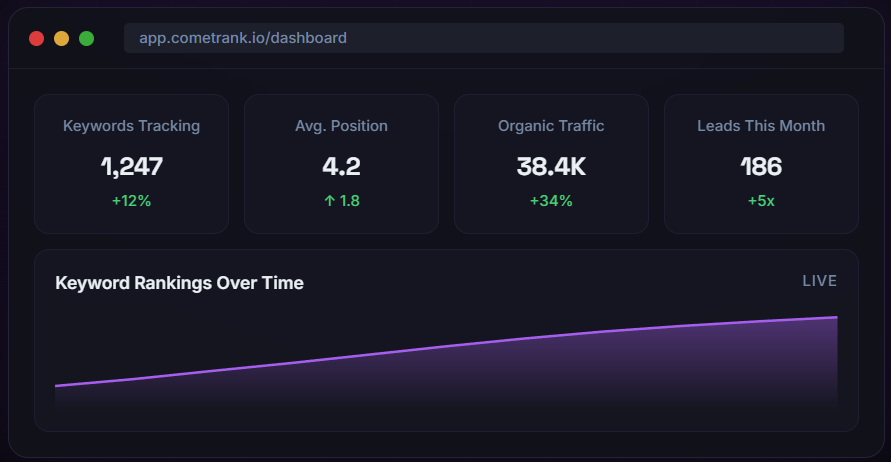
Why do some dealerships fill their showroom every month while others burn through ad budgets and still wait for the phone to ring?
The difference usually comes down to one thing:
- Search visibility, not sales talent or inventory size
- Buyers researching on Google and AI platforms like ChatGPT and Perplexity long before they pick a lot
- Dealerships that show up first capturing that demand for free
In this article, we cover how to build SEO for car dealerships that turns search traffic into actual showroom visits, not just clicks.
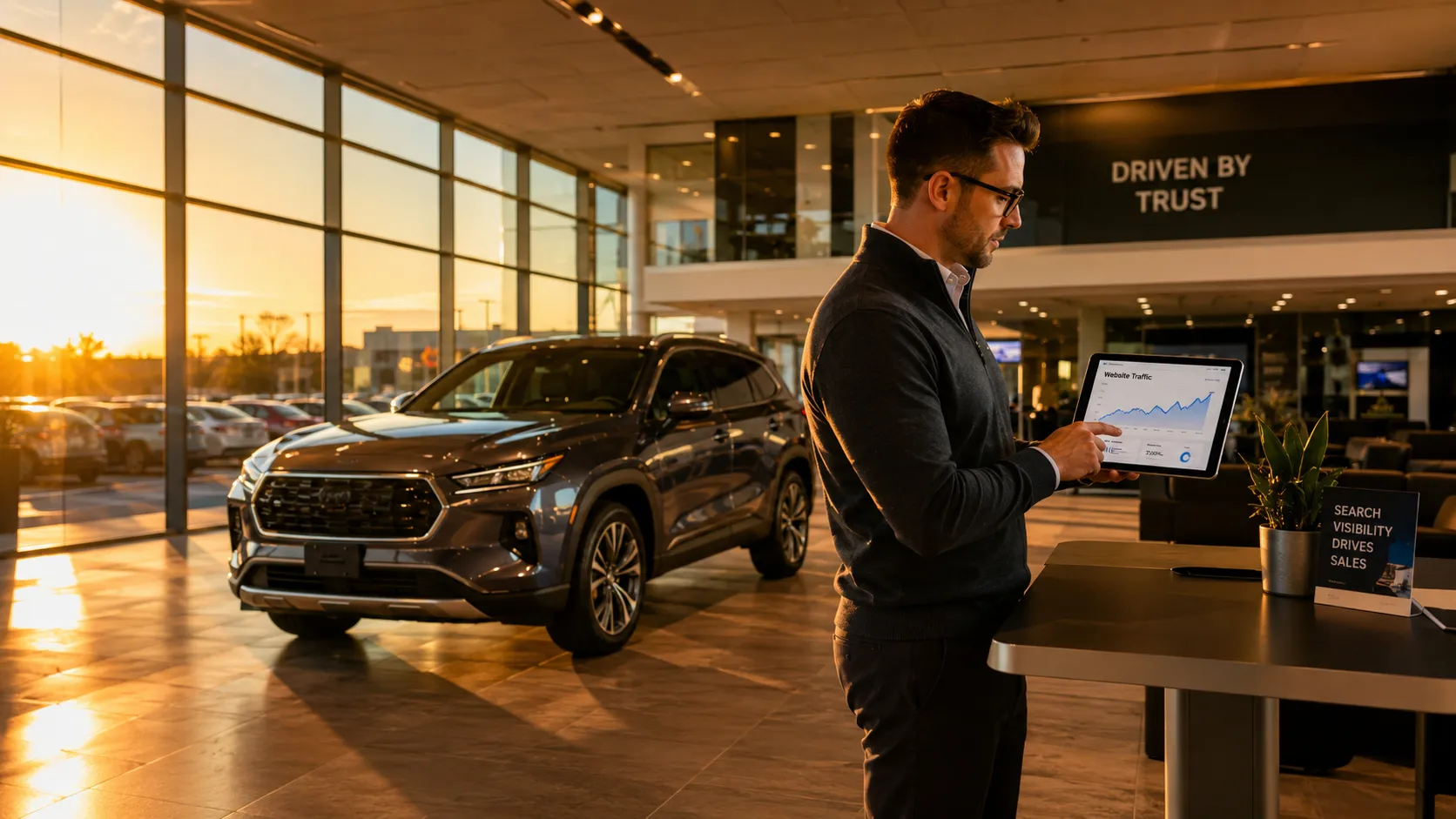
Why SEO for Car Dealerships Works for Ready-to-Buy Shoppers
Car buyers follow a predictable search journey before they ever walk into a dealership. They move from broad research, to side-by-side comparison, to a final dealer search once they know roughly what they want.
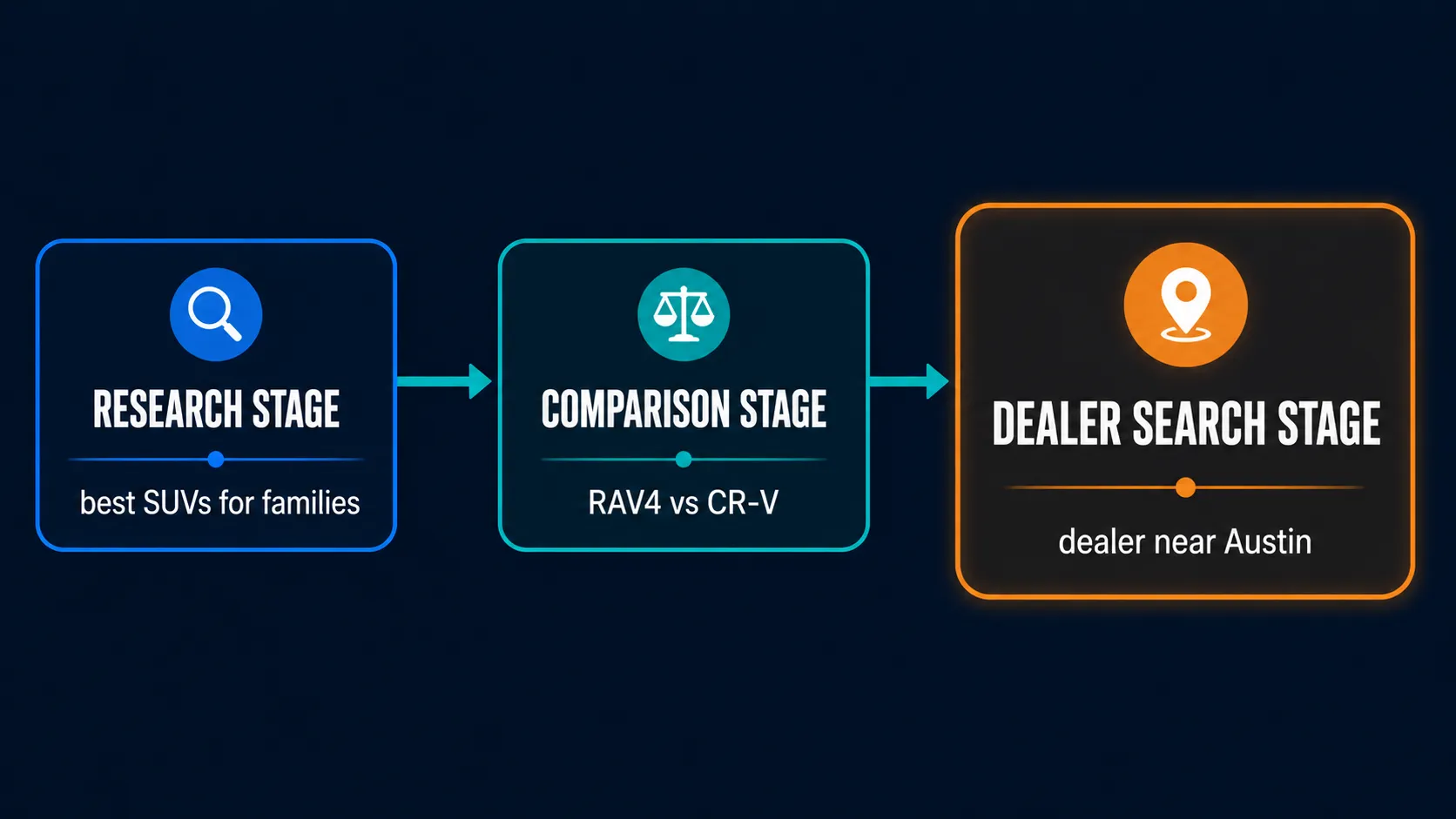
A typical path looks like this:
- Research stage: “best SUVs for families under 40k”
- Comparison stage: “Toyota RAV4 vs Honda CRV reliability”
- Dealer search stage: “Toyota dealership near Austin TX”
This works because dealership SEO places your inventory pages, financing content, and local listings at every one of these stages, not just the last one.
Optimize for only the last stage, and here’s what happens:
- You miss every buyer who’s still comparing models two weeks earlier, the moment when trust is actually built
- Win the research and comparison stages instead, and you’re already the trusted answer by the time they search for a dealer near them
That’s the compounding advantage paid ads can’t replicate, since the visibility stays even after the campaign budget runs out. Most dealership websites only build for that final stage, so a buyer typing “best SUVs for families under 40k” lands on a generic homepage instead of an answer, bounces back to Google, and clicks a competitor instead. Closing that gap earlier in the journey is most of the work.
Build Dealership Pages That Match Buyer Intent
Most dealership websites rely on one generic inventory page to cover every kind of search, which is exactly why they struggle to rank.
Effective SEO for car dealerships means building dedicated pages for each buyer intent instead:
- Vehicle category pages
- Financing pages
- Vehicle comparison pages
Here’s what each one needs, with a structure that matches what that buyer wants to see before they’ll book a test drive:
| Page Type | Example Keyword | What the Page Needs |
| Vehicle category page | “used hybrid SUVs dealership in San Jose CA” | Available hybrid models, fuel efficiency comparison, warranty coverage, current inventory, test drive CTA |
| Financing page | “bad credit car financing dealership in Orlando FL” | Approval process, minimum credit requirements, required documents, down payment options, apply for financing CTA |
| Vehicle comparison page | “Toyota RAV4 vs Honda CRV reliability and price” | Reliability comparison, safety ratings, fuel economy, price analysis, view inventory CTA |
Pages built this way rank better and convert more visitors into booked test drives, because the visitor lands exactly where expected and doesn’t have to dig through an inventory grid to find the answer.
Off-Page SEO for Car Dealerships: Build Backlinks That Actually Increase Rankings
Backlinks tell Google your dealership is a trusted local business, not just another inventory feed. Most dealerships ignore link building entirely, which leaves an easy ranking advantage on the table for any competitor willing to do the work.
Backlink Sources Worth Pursuing
Local sponsorships are the strongest backlink source for a dealership. Sponsoring a youth sports team, a school fundraiser, or a chamber of commerce event almost always earns a link from that organization’s website, signaling local authority no directory listing can match.
Other sources to pursue:
- Manufacturer and OEM co-op pages
- Local news features from charity drives or community events
- Citations from directories and review platforms
- Dealer-specific review platforms like DealerRater and Cars.com reviews
Each one signals to Google that this dealership is real, local, and active in its community, not a thin storefront chasing rankings. The review platforms add extra legitimacy as industry-recognized sources buyers and search engines already trust.
Backlink Sources to Avoid
These shortcuts put your domain at risk:
- Paid link networks and private blog networks, risking a Google penalty that takes months to fix
- Generic directory submissions irrelevant to automotive or your area, adding volume without authority
- Links bought in bulk through marketplaces, violating Google’s guidelines outright
A handful of relevant, earned links from your own community will outperform hundreds of spammy ones every time, and won’t put your rankings at risk later.
Local SEO for Car Dealerships: Why It’s Critical
Local visibility is the backbone of SEO for car dealerships, because almost every buyer searches with a location attached, even if they don’t type the city name. Searches like “car dealer near me” trigger Google’s map pack before any standard website result appears, and most “near me” searchers visit or call a dealership within 24 hours, making that map pack one of the highest-intent placements a dealership can hold.
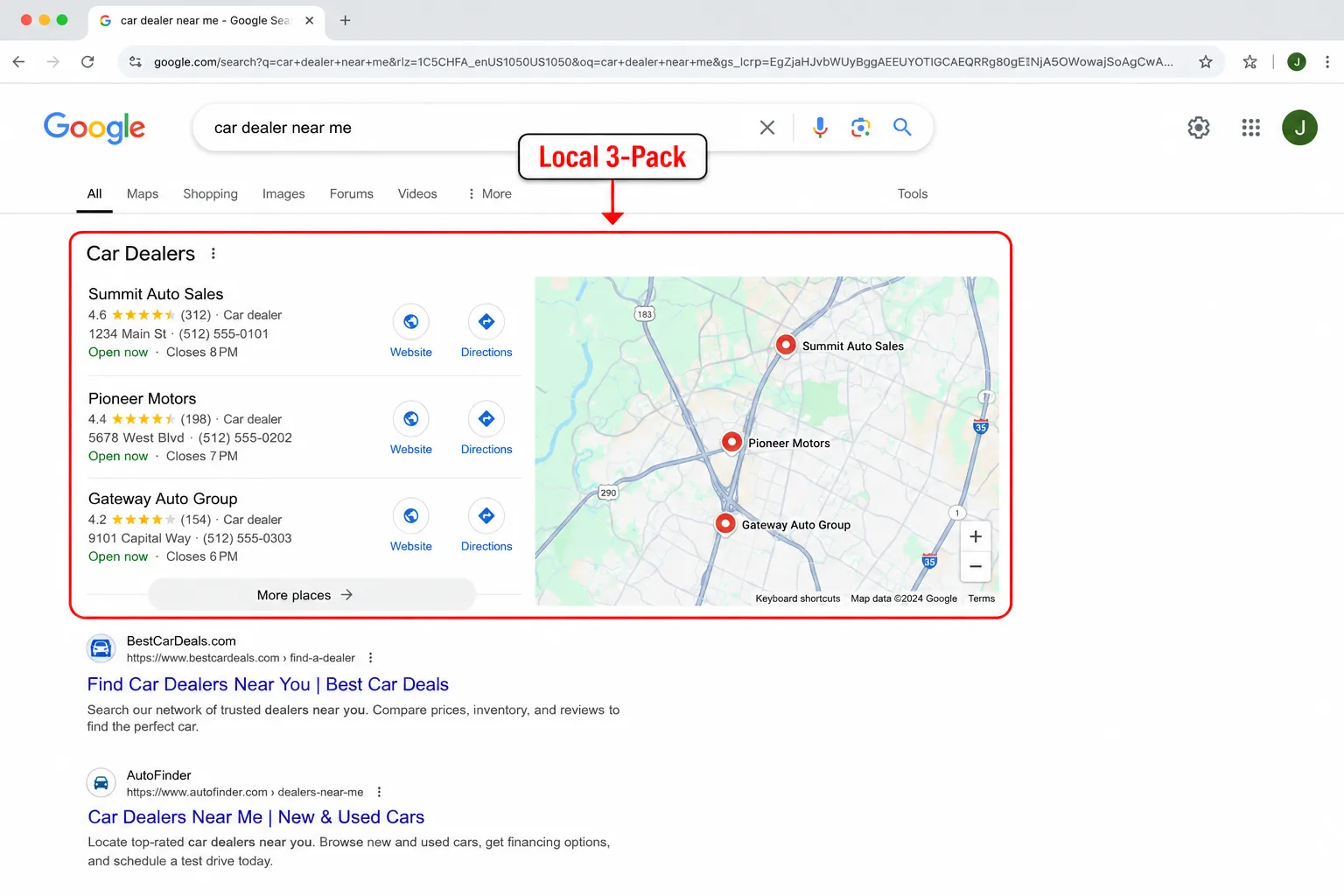
Reviews carry more weight here than most dealerships realize:
- Five-star ratings capture the large majority of attention in the local map pack
- Ratings under four stars see consideration drop sharply
- Responding to every review, especially negative ones, signals an active, trustworthy business to buyers and Google’s ranking systems
Video content adds another layer most dealerships skip entirely, like:
- A short walkaround of a new arrival
- A 15-second customer testimonial
- A quick answer to a common financing question
Posted to your Google Business Profile, each one signals to Google and AI platforms that your dealership is active and trustworthy, beyond just text on a page.
A fully optimized Google Business Profile should include accurate categories, updated inventory photos, current financing information, and consistent posting. Beyond the profile itself, local automotive SEO strategies like neighborhood-specific landing pages and local citation consistency push dealerships further into the map pack, where the bulk of car buyer clicks happen.
Why Most SEO for Car Dealerships Efforts Fail
Most dealerships that attempt SEO for car dealerships end up chasing traffic instead of buying intent, and traffic alone never fills a showroom.
The most common reasons rankings stall before they ever generate a lead:
- Thin inventory pages
- Broad keyword targeting
- Weak internal linking between vehicle pages
Many dealerships also default to paid search the moment organic results don’t show up in the first few weeks, usually a budget mistake. A fair Google Ads vs SEO for car dealerships comparison shows that paid traffic disappears the moment spend stops, while pages built around real buyer intent keep generating leads for years after they’re published. Modern dealership SEO needs faster content production, deeper keyword coverage, and tighter intent mapping than most in-house teams or agencies can sustain month after month.
How AI Search Visibility Fits Into SEO for Car Dealerships
A growing share of car buyers now ask ChatGPT, Perplexity, or Google’s AI Overviews directly instead of clicking through a list of links. According to Cox Automotive’s 16th annual Car Buyer Journey Study, 19% of all vehicle buyers and 25% of new-vehicle buyers used AI websites or AI-generated overviews during their purchase process, and those buyers reported the highest satisfaction of any group surveyed.
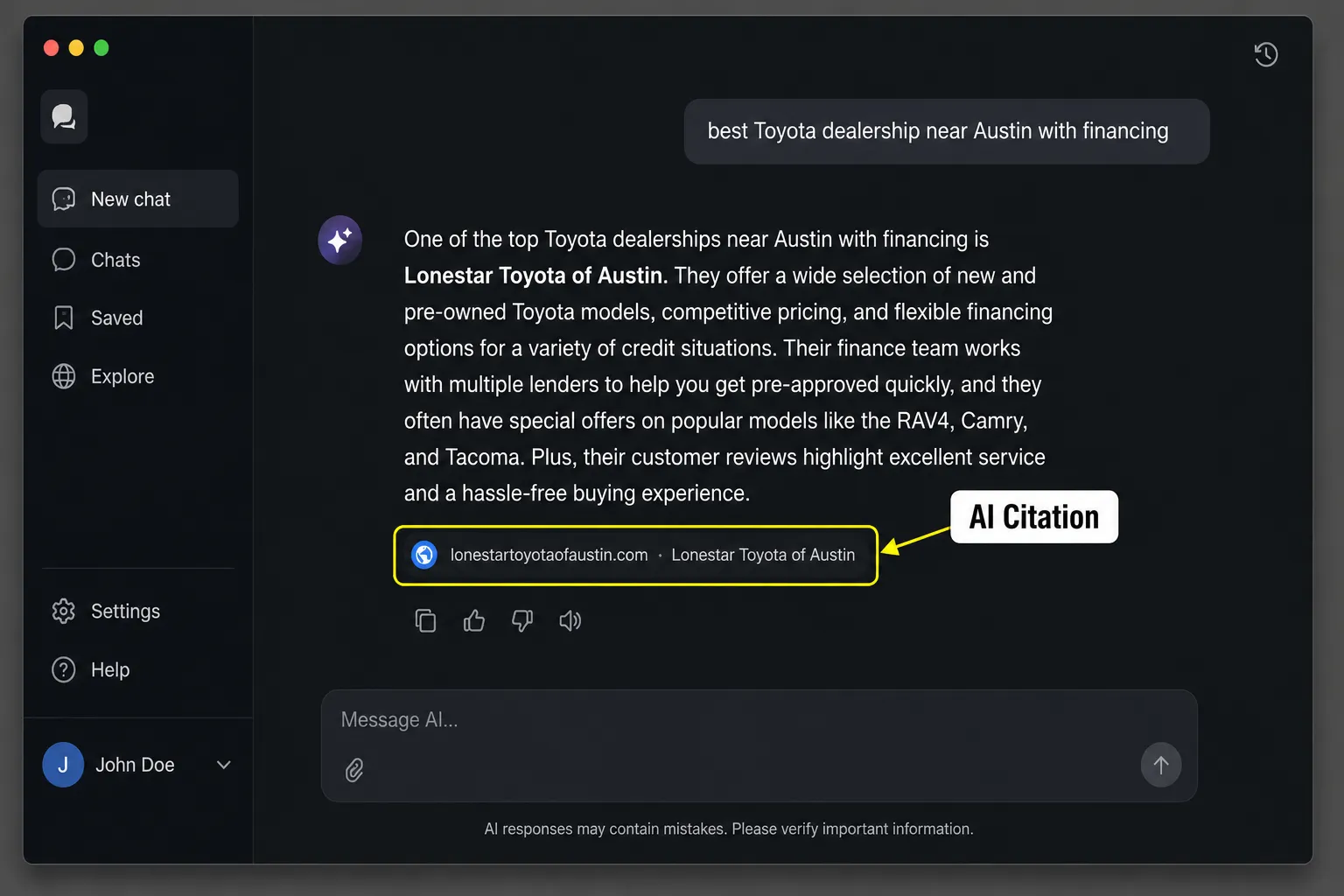
AI platforms don’t rank pages the way Google does, they synthesize a single answer from the content they trust most, which is why SEO for car dealerships now means earning that answer, not just a spot on page one. Your pages need to open with a direct, specific response to the buyer’s question before going into supporting detail, the same way a good salesperson answers a customer on the floor instead of talking around it. This matters even without a click, since being named in the answer still builds brand recognition for the next search.
Structured data plays a bigger role here than most dealerships assume:
- Vehicle listing schema for accurate price, mileage, and availability
- FAQ schema that AI platforms can extract and cite directly
Skip this, and platforms either guess or skip your dealership for one with cleaner data. Dealerships that want a deeper breakdown of how generative engine optimization differs from traditional SEO can see exactly what AI platforms reward differently from Google’s classic ranking signals, since the two are no longer the same game.
Scaling SEO for Car Dealerships With AI Agents
Everything covered above, vehicle category pages, financing pages, comparison pages, local citations, and AI-ready content, adds up to dozens or hundreds of pages a competitive dealership group needs to stay ahead. Producing that volume manually, month after month, is where most in-house teams and traditional agencies fall behind, and exactly where an AI SEO agency like ours fits in.
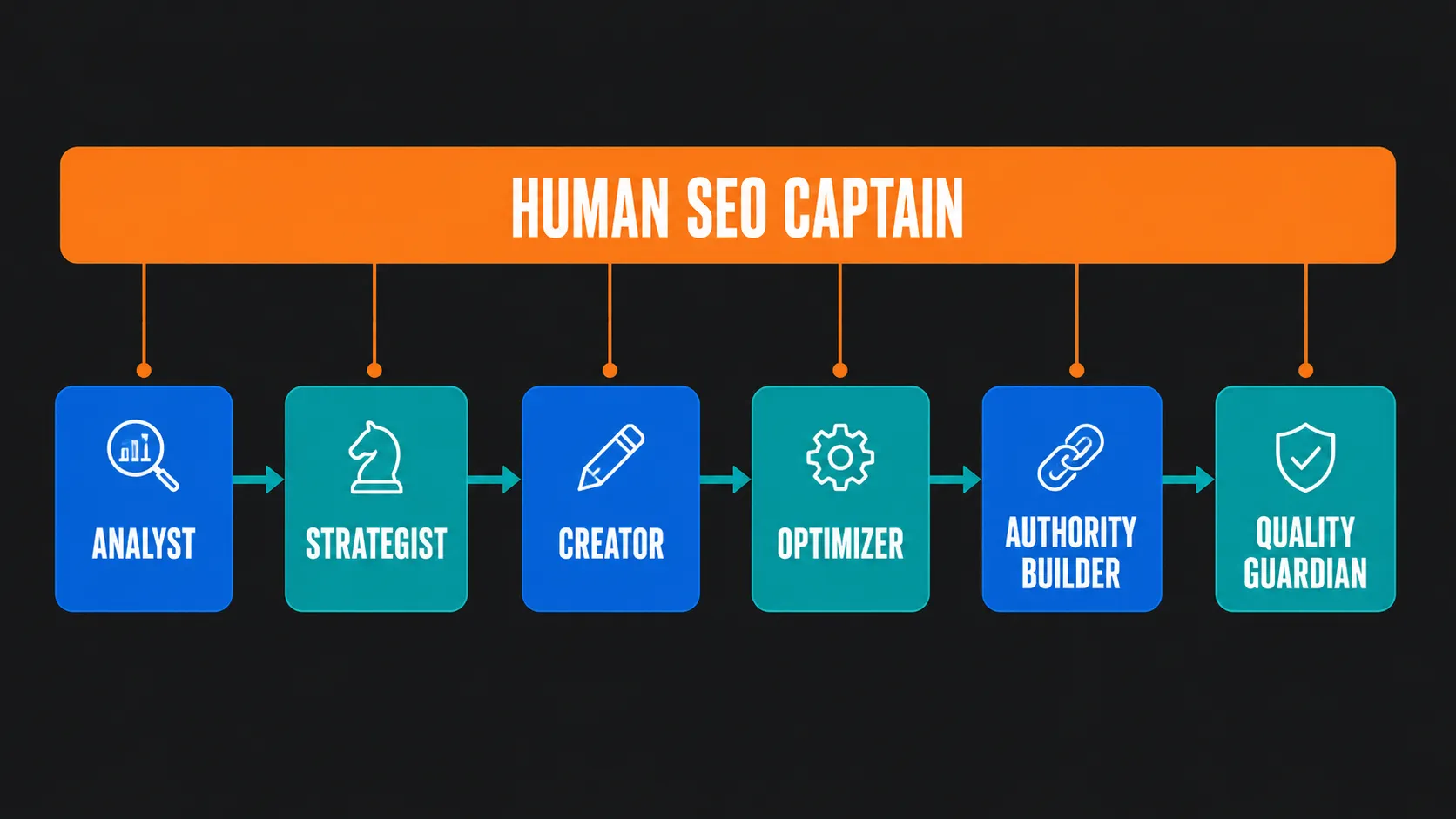
We’re an AI SEO agency that runs this entire workflow for dealerships using CometRank, our proprietary software. Six AI agents handle research, intent mapping, page creation, and backlink outreach:
- Analyst
- Strategist
- Creator
- Optimizer
- Authority Builder
- Quality Guardian
A dedicated human SEO Captain reviews every page before it goes live. If you want to see what that looks like for your own dealership, you can book a demo.
Conclusion
The dealerships that win the next decade won’t be the ones spending the most on ads. They’ll be the ones that show up first, whether a buyer is typing into Google or asking ChatGPT where to buy. That’s the real promise of SEO for car dealerships: a lead engine that keeps generating showroom visits long after the ad budget runs out. Start with one page type from this guide, build it properly around a real buyer question, and let it compound from there.
Frequently Asked Questions about SEO for Car Dealerships
1/ How long does SEO take to work for a car dealership?
Most dealerships start seeing measurable movement in rankings and traffic within three to six months, with stronger results building over the following six to twelve months as pages accumulate authority.
2/ How much does SEO cost for a car dealership?
Independent consultants and small agencies typically charge $1,500 to $5,000 a month, while AI-driven platforms that produce significantly more pages can cost less per page while moving faster.
3/ Does AI search actually send traffic to a dealership’s website?
Yes. AI Overviews and chatbot answers often include a direct link or recommendation, and buyers who use AI tools during research report higher satisfaction and trust in the dealerships they end up choosing.
4/ Do online reviews really affect dealership search rankings?
Yes. Review volume, star rating, and response rate are all factored into local map pack rankings, and dealerships with five-star ratings consistently capture more clicks than those rated under four stars.
5/ What’s the difference between traditional SEO and GEO for dealerships?
Traditional SEO targets ranking positions on a results page. GEO, or generative engine optimization, targets being cited directly inside AI-generated answers from tools like ChatGPT and Google AI Overviews. Dealerships need both.
6/ Should a dealership focus on new pages or fixing existing ones first?
Fix high-traffic existing pages first, especially inventory and financing pages with thin content, since improving a page Google already indexes is usually faster than waiting for a new page to rank from scratch.