
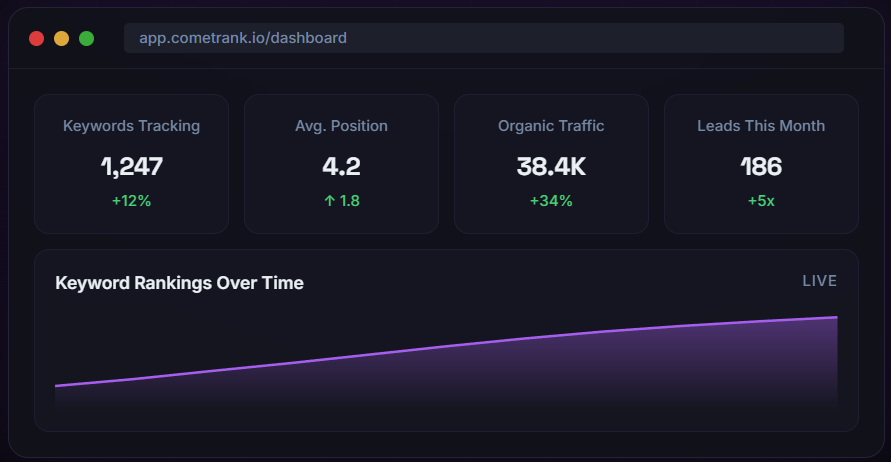
Why do newer ecommerce brands keep outranking stores that have been open for years?
It is not better products. It is not a bigger budget. It is structure. The stores winning search built product pages that answer buyer questions before checkout, fixed the technical issues that block crawlers, and started showing up in ChatGPT and Google AI Overviews before their competitors caught on. In this article, we cover the SEO best practices for ecommerce sites that actually move revenue, so you stop losing sales to stores that simply did the fundamentals right.

What Actually Counts as an SEO Best Practice for Ecommerce Sites?
SEO best practices for ecommerce sites are the tactics that get product and category pages in front of buyers who are ready to purchase, not just people browsing. That means:
- Keyword targeting built around purchase intent
- Technical fixes that let search engines crawl thousands of pages without breaking
- Content that earns trust with both Google and AI search tools
Skip any one of these and the rest lose their power. A perfectly optimized product page still will not rank if your site architecture buries it five clicks deep, and a fast, well-structured site still will not convert if the product pages themselves say nothing useful.
Target High-Intent Keywords Instead of Generic Terms
Most ecommerce sites chase broad terms like running shoes or wireless headphones. These keywords carry huge search volume and huge competition, and the traffic they bring rarely converts.
Long-tail commercial keywords work better because they match a buyer closer to purchase. Someone searching womens waterproof trail running shoes size 8 already knows what they want. Build a product or category page around that exact phrase, covering:
- Waterproofing details
- Terrain fit
- Size availability
- Shipping information a buyer needs before checkout
This approach reduces competition and puts your pages in front of people who convert, not people who are still deciding what to search for next.
Run this same exercise across every product line before you write a single page. Group the long-tail variations by product type, then map each group to one page instead of splitting them across several thin pages that compete against each other. A single well-built page targeting a cluster of related searches will always outrank three shallow pages fighting over the same buyer.
Turn Product Pages Into Pages That Rank and Convert
Product pages are the biggest missed opportunity on most ecommerce sites. Too many stores publish a title, a two-line description, a price, and a photo, then wonder why the page never ranks.
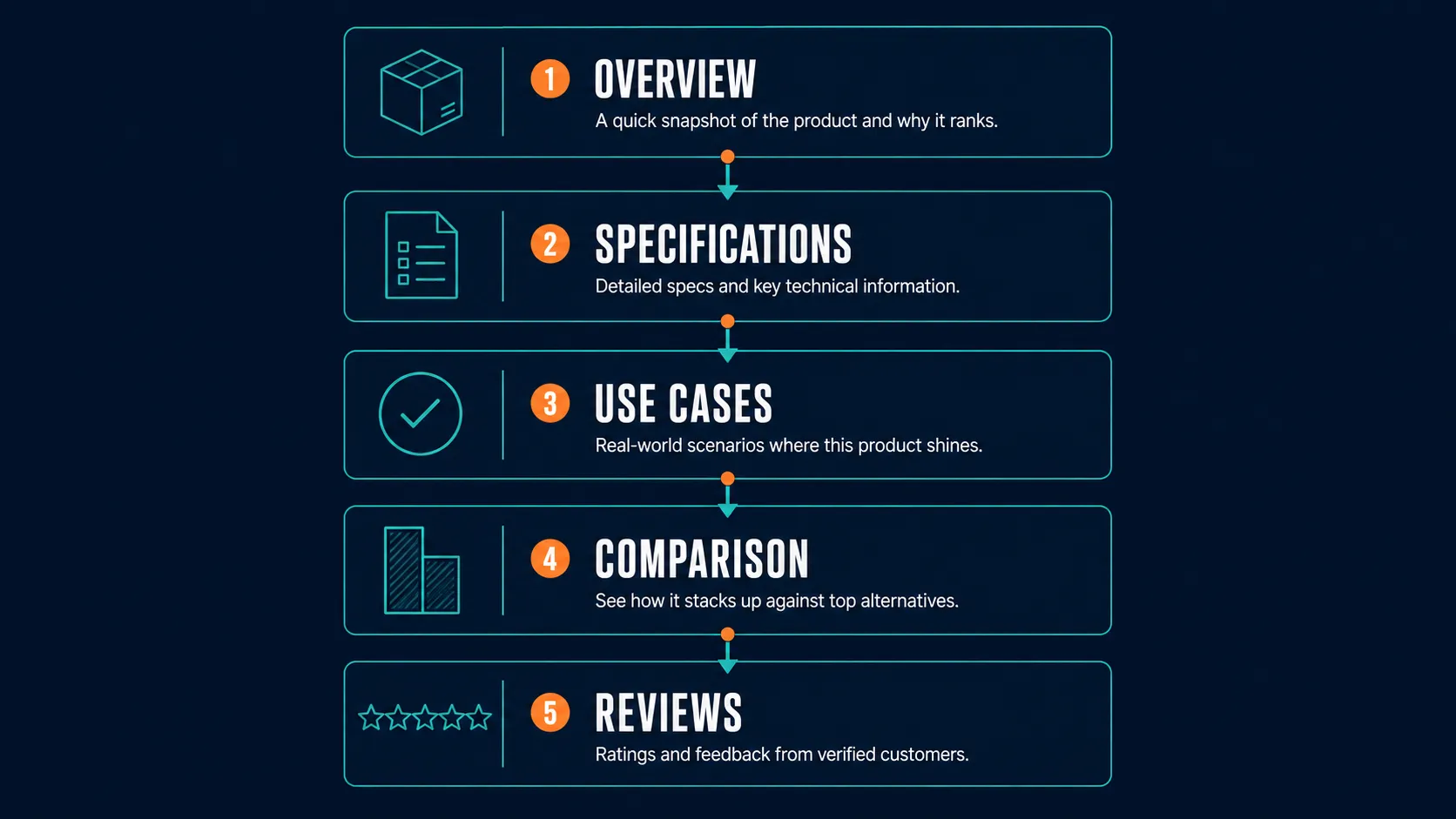
Search engines need more to work with. A product page that ranks covers:
- Product overview
- Key specifications
- Real use cases
- A comparison against similar models
- Genuine customer reviews
Our guide to SEO for ecommerce product pages breaks down exactly which sections drive both rankings and conversions.
Product images matter here too. Descriptive file names and alt text help pages show up in image search, which is a channel most stores ignore entirely. Our image SEO guidelines for ecommerce products cover the specifics of naming and tagging images so they pull in extra traffic instead of sitting invisible to search engines.
Reviews deserve their own line here. A product page with a handful of genuine reviews gives search engines fresh, unique text that updates on its own, and it gives buyers the social proof they need to stop comparing and start checking out. Stores that skip reviews are asking every visitor to trust a page with no evidence behind it.
Build Category Pages Around Real Search Demand
Category pages capture buyers who are comparing options, not just searching for one specific product. That makes them some of the highest-value pages on an ecommerce site.
A page titled simply Laptops rarely ranks for anything competitive. A page built around best gaming laptops under $1500 has a real shot, especially when it includes:
- An intro that explains the use case
- A curated product selection
- A short buying guide
- A comparison table
- Customer ratings
Category pages done this way rank for the high-volume searches that product pages alone cannot reach. They also give buyers who are not sure exactly which product they want a reason to stay on your site instead of bouncing back to Google to keep comparing.
Fix the Technical SEO Foundations Most Ecommerce Stores Skip
Content and keywords only work if search engines can actually crawl and understand your site. This is where most ecommerce SEO breaks down, because technical issues are invisible until they start costing you rankings.
Four fixes matter most for revenue.
Ecommerce Technical SEO Priority Checklist
| Fix | What It Does | Why It Matters for Revenue |
| Clean URL structure | Groups products under logical categories | Helps Google and AI crawlers understand your catalog fast |
| Mobile-first design | Matches the version of your site Google actually indexes | Most shoppers browse and buy on their phones |
| Product schema markup | Feeds price, stock, and reviews into search results directly | Rich snippets pull in clicks before a shopper even opens your page |
| Page speed under three seconds | Cuts load time on product and category pages | Slow pages lose sales before checkout even loads |
Google’s own ecommerce SEO documentation confirms that sharing clean data and site structure is what lets Google discover and parse ecommerce content correctly, which is the foundation every other tactic on this list depends on.
If you are unsure where your site stands, our guide on how to conduct a technical SEO site audit walks through the exact checks to run first. Platform choice matters here too. Our comparison of whether WordPress or Shopify is better for ecommerce SEO covers which platform handles these technical basics out of the box.
None of this needs to happen all at once. Fix URL structure and mobile rendering first, since those affect every page on your site at once. Schema markup and page speed can follow once the foundation is solid.
Earn Backlinks That Build Real Ecommerce Authority
Backlinks Worth Earning From Suppliers and Distributors
If you resell products, real backlink opportunities are already sitting close by:
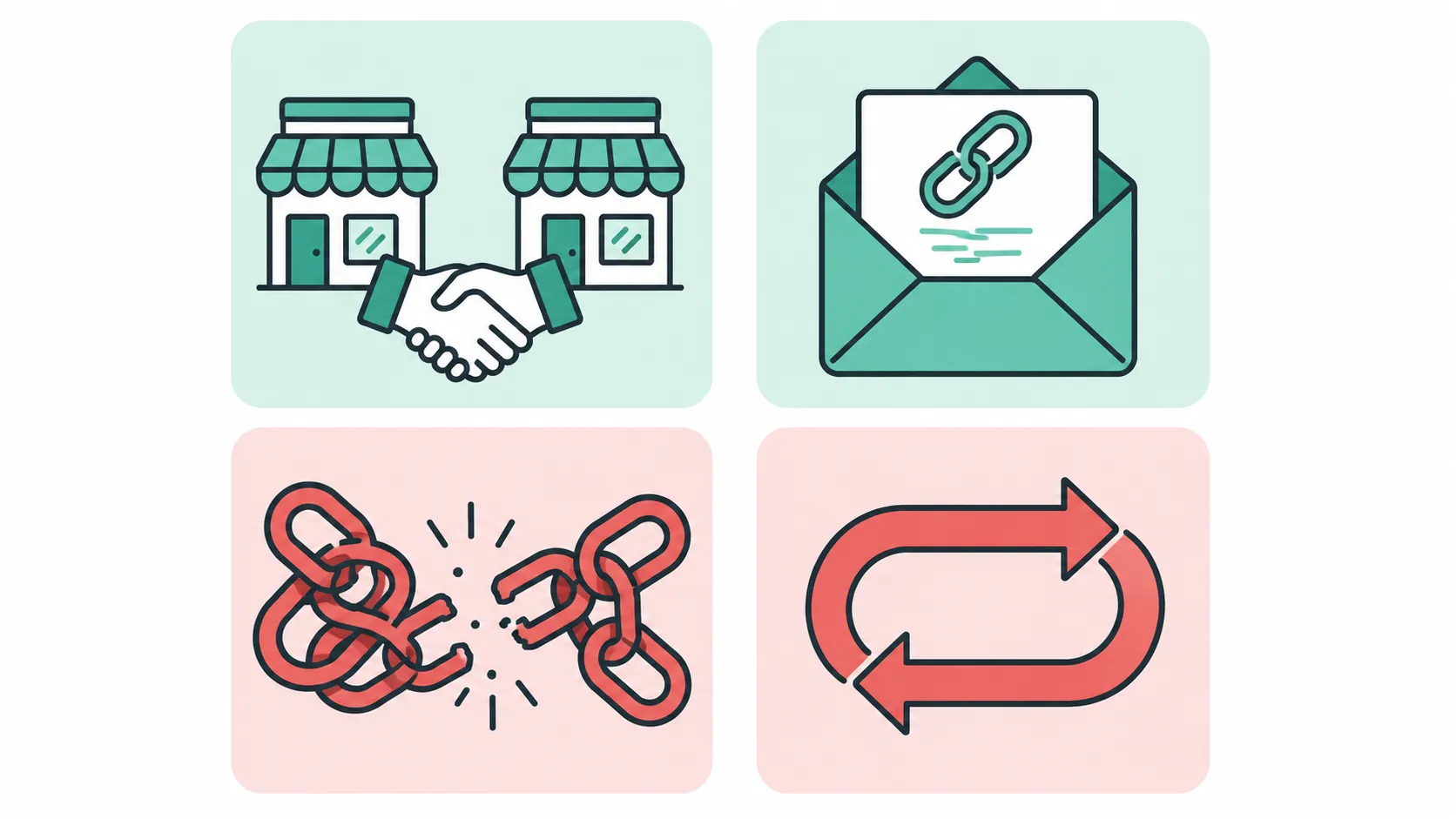
- Ask suppliers and distributors to list you as an official reseller with a link back to your store
- Reach out for unlinked brand mentions, since a quick email asking a site to add the link often works when the relationship already exists
These links come from relevant, trusted sources and tell Google your store is a legitimate part of that industry, not a random storefront.
Paid Link Networks That Put Your Rankings at Risk
Some shortcuts do the opposite of what you want:
- Buying links in bulk from link farms or unrelated directories, which Google can detect and penalize
- Link exchanges where two unrelated stores swap links purely to inflate numbers
These schemes are easy to spot because the linking sites have nothing to do with your products, and the penalty often costs more traffic than the scheme ever brought in.
Building citations from real, relevant sources is a slower path, but it is the only one that holds up. Our breakdown of what citations in SEO actually are explains how to build this kind of authority without risking a penalty
Make Sure ChatGPT, Perplexity, and Google AI Overviews Can Find Your Store
Buyers no longer start every search on Google. A growing share of product research now happens inside ChatGPT, Perplexity, and Google AI Overviews, and these tools pull their answers from the same structured, well-organized content that ranks in traditional search:
- Detailed product specifications
- Real customer reviews
- Comparison tables
- FAQ sections
Vague descriptions and thin pages give these tools nothing to work with, so your store gets left out of the answer entirely.
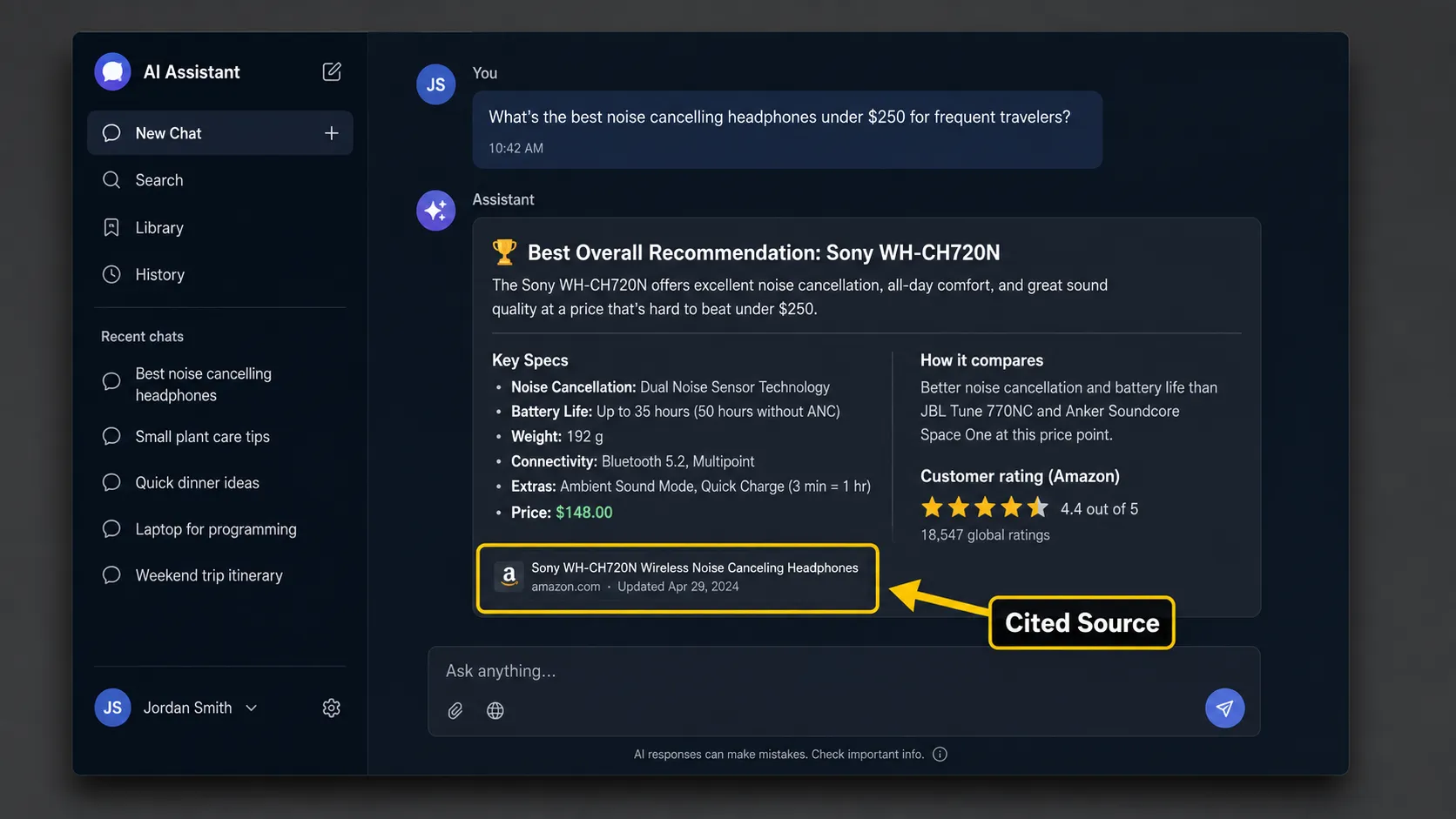
Our roundup of the best rated AI tools for ecommerce SEO and AI visibility covers how to track whether your store is actually showing up in these results, so you are not guessing whether the work is paying off
How CometRank Handles SEO for Ecommerce Brands
Executing everything above at once, product page rebuilds, technical fixes, backlink outreach, and AI search optimization, is more than most ecommerce teams can manage alongside running the store itself. Most agencies only tackle one or two of these at a time, which is why results take so long to show up.
We’re an AI SEO agency that runs this entire workflow for clients using CometRank, our proprietary SEO software, powered by six AI agents:
- Analyst: It studies your business, competitors, and customer pain points
- Strategist: It maps search intent and researches keywords
- Creator: It builds product, category, and blog pages
- Optimizer: It formats pages, adds internal links, and makes them conversion-ready
- Authority Builder: It runs backlink and citation outreach
- Quality Guardian: It checks quality, formatting, and accuracy before anything publishes
A human SEO captain reviews everything before it goes live. To see how CometRank handles this for your store, book a demo, and we will map out exactly what we would fix first.
Conclusion
SEO best practices for ecommerce sites are not about doing one thing well. It is about closing every gap at once, from keyword targeting down to whether ChatGPT can even find your product pages. Stores that treat SEO as a system, not a checklist, are the ones pulling ahead in search right now. Start with the technical foundation, since nothing else on this list works until search engines can actually crawl your site properly.
Frequently Asked Questions
1. What are the most important SEO best practices for ecommerce sites?
The most important practices are targeting high-intent keywords, building out full product and category pages, fixing technical issues like site speed and mobile design, earning real backlinks, and making sure AI search tools like ChatGPT and Google AI Overviews can find your products. Skipping any one of these limits how far the others can take a store.
2. How is ecommerce SEO different from SEO for other websites?
Ecommerce SEO has to work across thousands of product and category pages instead of a handful of pages, which makes technical issues like duplicate content and broken links far more common. It also has to balance keyword targeting with actual buying intent, since most ecommerce searches are commercial or transactional rather than informational.
3. Should product pages or category pages get SEO priority first?
Category pages usually deserve priority first because they capture higher search volume and rank for broader terms buyers search before they know exactly what they want. Product pages still matter for specific, high-intent searches, but a strong category page structure supports every product underneath it.
4. How long does it take to see results from ecommerce SEO?
Most ecommerce stores start seeing measurable ranking movement within three to six months, with stronger revenue impact building over six to twelve months. Sites with existing technical issues or thin product content usually take longer, since those problems have to get fixed before new content can rank.