
Ecommerce product pages often fail to rank because they are treated like catalog entries instead of search landing pages. Many stores rely heavily on ads for traffic, but long-term growth comes from organic visibility.
A well-optimized product page can capture high-intent searches such as “wireless noise cancelling headphones with 40 hour battery” or “waterproof hiking backpack 30L lightweight.” These queries represent buyers close to purchasing.
Understanding why seo is important for ecommerce helps explain why product page optimization directly impacts revenue, not just traffic.
Below are five SEO principles that consistently improve rankings and conversions for ecommerce product pages.
1. Target High-Intent Product Keywords (Not Just Product Names)
Many ecommerce sites only optimize for product names like “Nike Air Zoom Pegasus 40.” That works for branded search but misses broader demand.
Map product pages to buying-intent queries
Instead of relying only on product titles, identify problem-driven search queries customers use before choosing a product.
Example keyword:
“lightweight waterproof hiking backpack for women”
A product page targeting this keyword should include sections like:
- weight and capacity comparison
- waterproof rating (IPX level)
- hiking use cases (day hikes, trekking, travel)
- material durability
- sizing guide
- shipping and returns
Tools listed in SEO tools for keyword research help identify these long-tail buying queries.
Why this matters
High-intent product keywords:
- convert better
- face lower competition
- bring ready-to-buy users
This is why organic traffic often delivers stronger ROI compared with paid ads, something explored in Meta ads vs SEO for Ecommerce websites.
2. Write Unique Product Descriptions That Match Search Intent
One of the biggest ecommerce SEO mistakes is copying manufacturer descriptions.
Duplicate content makes it difficult for search engines to determine which page should rank.
Structure descriptions around real buying questions
Example keyword:
“ergonomic office chair for lower back pain”
Your product page description should include sections such as:
Problem the product solves
- how lumbar support reduces back strain
Feature explanation
- adjustable lumbar depth
- seat tilt mechanism
- breathable mesh
Use cases
- remote work
- long desk sessions
- gaming setups
Specifications
- weight capacity
- height range
- materials
This structure aligns the page with informational + commercial search intent, increasing ranking potential.
3. Optimize Product Images for Search Visibility
Product images influence both user experience and SEO.
Search engines rely on image metadata to understand the content.
Implement proper image optimization
Example product:
“ceramic non stick frying pan 28cm induction compatible”
Instead of generic file names:
Use descriptive naming:
Add:
- descriptive alt text
- compressed images for faster loading
- multiple angle images
- lifestyle images
Example alt text:
“28cm ceramic non stick frying pan for induction cooktops”
This improves rankings in both Google Image search and standard search results.
4. Use Structured Data (Product Schema)
Structured data helps search engines understand product information and display rich results.
Adding product schema can show:
- price
- ratings
- stock availability
- review count
Example schema elements for a product page
For a keyword like:
“stainless steel insulated water bottle 1 liter”
Your product schema should include:
- Product name
- Brand
- Price
- Availability
- Review rating
- SKU
- Image
These structured signals increase the likelihood of appearing in rich results, which improves click-through rates.
5. Strengthen Internal Linking from Category and Blog Content
Internal linking helps search engines understand which pages matter most.
For ecommerce sites, product pages should be connected to:
- category pages
- buying guides
- comparison articles
Example internal linking structure
If you sell standing desks:
Create a blog post targeting:
“best standing desk for home office under $500”
Inside the article, link to specific product pages such as:
- adjustable electric standing desk
- compact standing desk for small spaces
This creates a topic cluster, strengthening the ranking ability of product pages.
Strong SEO foundations also help ecommerce businesses compete against larger brands, which is why many companies compare solutions in articles like Best SEO Companies for Small businesses.
Why AI-Driven SEO Is Changing Ecommerce Search
Modern ecommerce SEO requires:
- constant keyword discovery
- content updates
- internal linking optimization
- monitoring visibility across AI search platforms
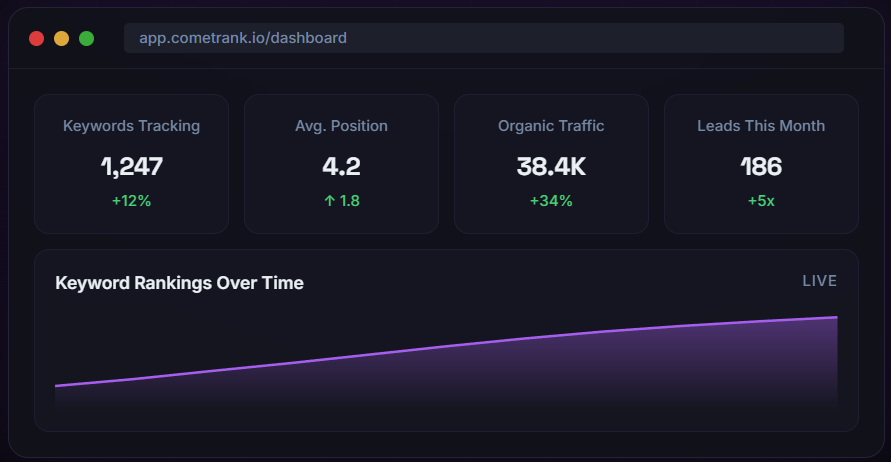
This is where Cometrank comes in.
CometRank acts as an AI SEO command center that:
- identifies high-intent ecommerce search opportunities
- generates optimized product and landing pages
- improves internal linking and rankings
- tracks visibility in Google and AI search engines
You can even measure your brand’s AI search visibility using the AI search grader.
The Future of Ecommerce SEO: Structured, Intent-Driven Pages
The ecommerce brands winning organic search today are not just listing products. They are building search-optimized product pages designed around buyer intent.
Winning stores focus on:
- long-tail product keywords
- detailed product content
- optimized images and schema
- strong internal linking
- continuous SEO optimization
As search shifts toward AI-driven discovery, structured product pages will become even more important for visibility and conversions.