
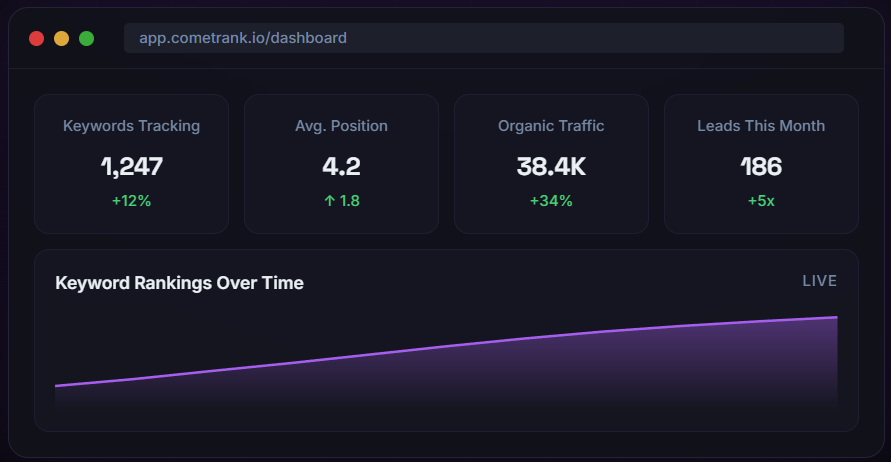
Why does a competing clinic show up first when a new patient in your city searches “audiologist near me”?
It’s not because they provide better care. Somewhere between your website and Google’s results, a signal is missing, and Google fills that gap with whoever sent the clearer one. Search interest in “audiologist near me” has grown 5x over the last few years, and most of those searchers never make it past the first three results. Every day that gap stays open, a patient who needed you finds someone else instead.
In this article, we cover how SEO for audiologists works, what actually moves a hearing clinic up the rankings, and how to close that gap before your next competitor does.
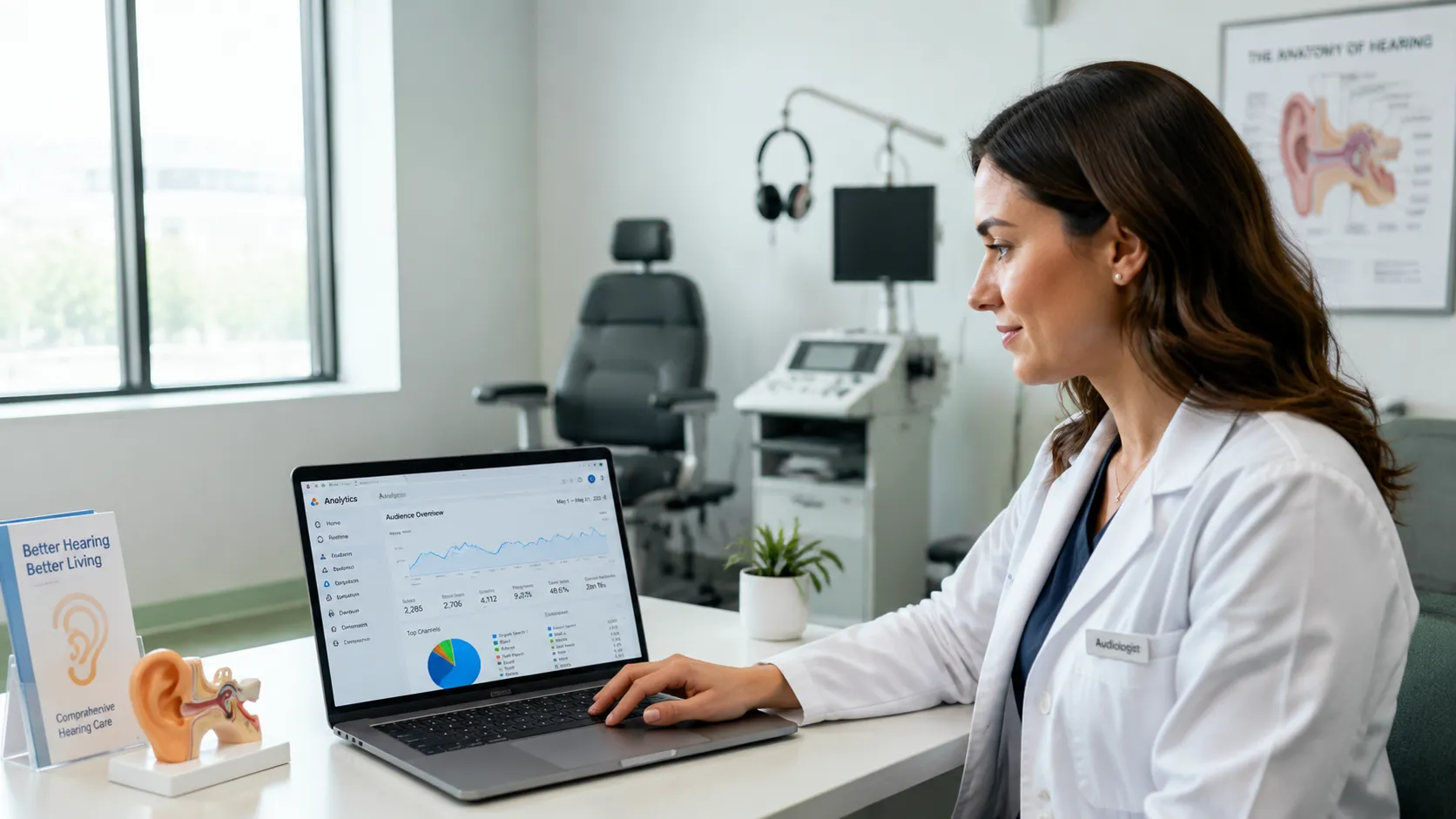
What SEO Keywords Actually Bring Patients to Audiologists?
When someone’s ready to book, they don’t search vague terms. They search with intent.
| Keyword Type | Example | Intent |
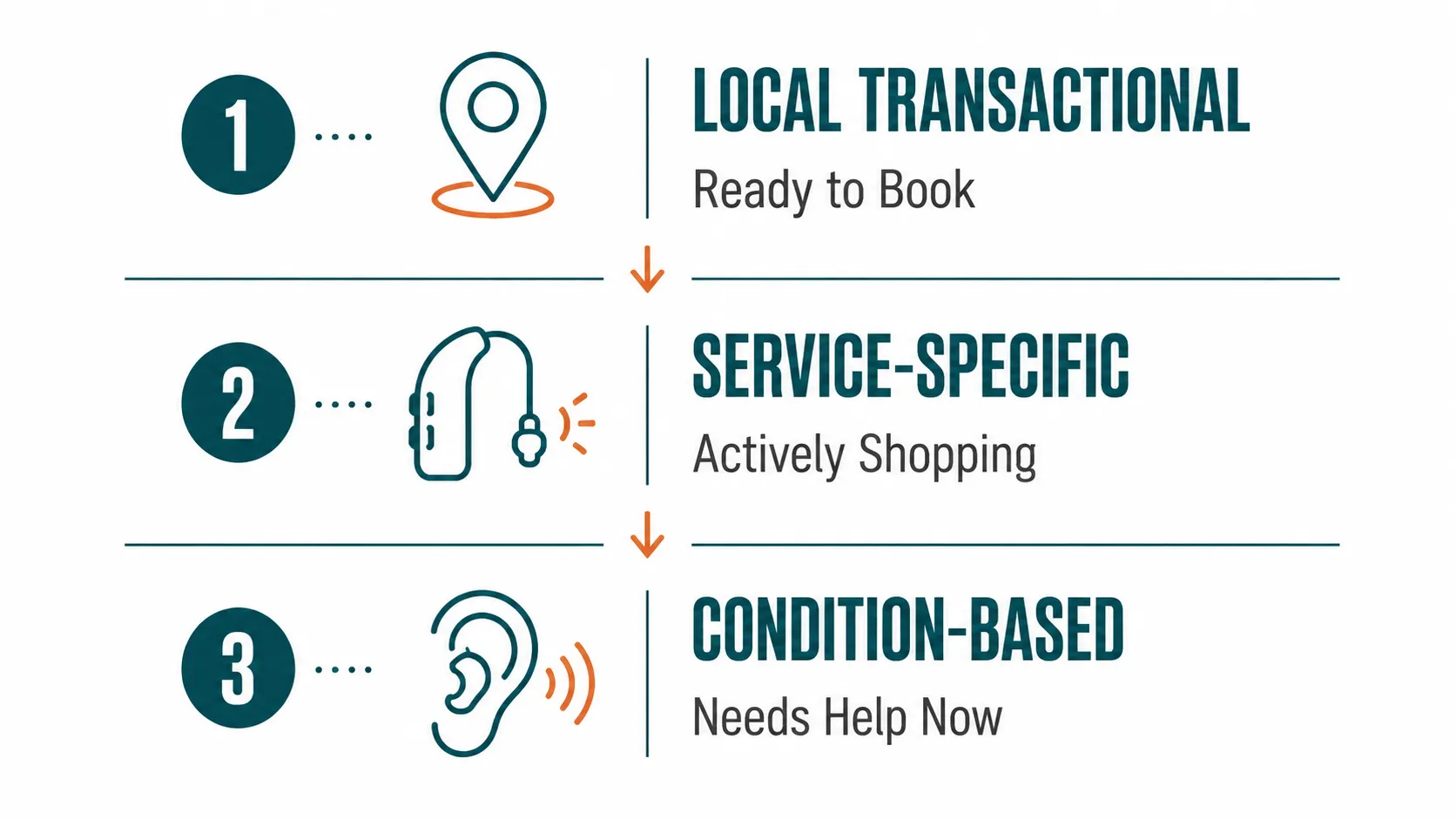
| Local transactional | “audiologist in Houston TX” | Ready to book |
| Service-specific | “hearing aid fitting near me” | Actively shopping |
| Condition-based | “tinnitus treatment specialist Dallas” | Needs help now |
| Comparison | “behind the ear vs in ear hearing aids” | Mid-decision |
| Urgent | “emergency hearing test same day” | High-intent, act immediately |
The first three rows are where your bookings come from.
Ranking for “what causes hearing loss” brings readers. Ranking for “audiologist in [your city] accepting new patients” brings patients. Most audiology websites rank for nothing in the service-specific or condition-based columns.
That’s the gap. And it’s the same gap that holds back most local medical practices, not just audiology.
Most audiology websites make the same mistake. They write about hearing loss in general terms, using broad language that reads well but never mentions a city, a specific service, or a specific condition. That content might bring in readers. It rarely brings in patients. The fix isn’t more content. It’s the right content, built around the exact phrases a patient types right before they pick up the phone.
Does Local SEO Actually Move the Needle for Audiologists?
Yes. For audiologists, it’s the highest-leverage thing you can do.
Eight in ten US consumers search for a local business online at least once a week. Audiology is hyperlocal by nature. Patients won’t travel 40 miles for a hearing test. They want the nearest good option.
Local SEO for audiologists rests on three pieces working together:
- Your Google Business Profile powers your Maps rankings
- On-page content puts your city and service names in the right places
- Consistent citations across directories build the trust signals Google checks before ranking you locally
A well-optimized Google Business Profile can boost your chances of appearing in Google’s Local Pack by 70%. That local pack sits above all organic results, and clinics in those three map spots capture most of the clicks. Start by optimizing your Google Business Profile before touching anything else on your site.
The mechanics here are no different from local SEO for dentists, with the same search behavior, the same local intent, and the same ranking levers.
One detail practices overlook is consistency:
- Your clinic’s name, address, and phone number need to match exactly across your website, your Google Business Profile, and every directory listing you appear on
- A mismatched suite number or an old phone number left on one directory is enough to confuse the algorithm and slow down how quickly you climb the local pack
The Three Pages Every Audiology Website Needs to Rank
Most audiology websites have a homepage, a services page, and a contact page. That’s not enough to compete. Each of those three pages tries to rank for everything at once, which means Google can’t tell what any single page is actually about. You need these three page types instead, and the same logic applies across local SEO for medical professionals more broadly, not just hearing care.
For a wider view of how this plays out across specialties, our AI SEO for healthcare services breakdown covers the same three-page model.
1/ Location Pages
One page per city or neighborhood you serve. Each page targets “[service] in [city].” A clinic serving five suburbs needs five location pages, not one “areas we serve” list.
2/ Service-Specific Pages
One page per service. Not “hearing services” as a catch-all. Build separate pages for hearing tests, hearing aid fittings, tinnitus treatment, and balance assessments. Each page targets the specific query a patient types when they need that service.
3/ Condition-Based Content
Pages targeting what patients search before they know they need an audiologist. “What to do if one ear feels blocked?” “Is tinnitus permanent?” These pages pull patients into your pipeline earlier, before they’ve even decided to book.
Off-Page SEO for Audiologists: Do Backlinks Still Matter?
Yes, but only the right kind. A handful of relevant, earned links do more for your rankings than a hundred spammy ones, and the wrong links can actively hurt you.
Most audiology practices either ignore backlinks entirely or hand the job to whoever offers the cheapest bulk-directory package. Both approaches waste time. Google cares about who is linking to you and why, not how many links you’ve collected. A single mention from a local ENT practice or a hearing health nonprofit carries more weight than fifty listings on directories nobody visits.
1/ Backlinks That Help: Directories, Referral Partners, and Local Press
- Listings in hearing health directories such as Healthy Hearing, the Hearing Loss Association of America, and ASHA ProFind
- Guest posts on local health and wellness sites that cover hearing health topics
- Partnerships with ENT practices, primary care offices, and pediatricians who refer patients
- Local press coverage, sponsorships, and community health event mentions
Each of these builds the kind of citation and authority signal Google uses to confirm your clinic is real, local, and trusted. Our guide on building citations at scale walks through how to do this without wasting time on low-value directories.
2/ Backlinks to Avoid: Paid Networks, Bulk Directories, and Link Swaps
- Paid link networks or bulk directory submissions with no relevance to healthcare
- Links from unrelated, low-quality sites purely for volume
- Reciprocal link schemes that exist only to trade links, not to genuinely refer patients
A handful of the right links beats a hundred of the wrong ones. Quality and relevance carry the weight here, not quantity.
Do Reviews Affect Audiology SEO Rankings?
Yes. Reviews function as both a ranking signal and a trust signal, and for a hearing clinic, they matter more than most local businesses.
Patients researching hearing care read reviews before they call. A steady stream of recent, detailed reviews tells Google your clinic is active and tells patients your care is reliable. Respond to every review, positive or negative, and keep the responses specific rather than generic.
Credentials matter here too. Naming your audiologists, their licensure, and their years in practice on your site builds the same kind of trust Google rewards in healthcare content. Our guide to reputation management for doctors covers exactly how to build this without it feeling forced.
Ask for a review right after a positive appointment, not weeks later when the memory has faded. A short text or email with a direct link to your Google review page removes friction and gets far more responses than a generic request buried in a monthly newsletter.
What Does a Realistic SEO Timeline Look Like?
Audiology SEO doesn’t work overnight. Here’s an honest picture of how it plays out.
- Month 1 to 2: Technical fixes, Google Business Profile optimization, and keyword mapping
- Month 2 to 3: New service and location pages go live
- Month 3 to 5: Rankings appear for lower-competition local terms
- Month 6 to 9: Competitive city keywords move, and leads increase
- Month 12+: Compounding traffic and consistent inbound bookings
Technical issues quietly kill rankings before content even gets a chance. Slow page speed, broken schema markup, and duplicate title tags all suppress where you appear. Fix those first, then build content.
The clinics that see the fastest results are usually the ones with the most broken technical basics to begin with. A single fixed redirect or corrected schema tag can move a page several positions within days, which is why technical work always comes before new content in a real audiology SEO plan.
AI Search Visibility: How Patients Find Audiologists Through ChatGPT and Google AI Overviews
Patients are no longer only typing into Google. They’re asking ChatGPT, Perplexity, and Google AI Overviews to recommend a hearing clinic near them, and that answer comes from a short list of sources, not ten blue links.
Getting named in that list rests on the same fundamentals as ranking, done more precisely:
- Your clinic’s name, address, and services need to read the same way across your website, your Google Business Profile, and every directory listing — AI engines cross-check this consistency before they’ll cite you
- Clear, answer-first content, where each page opens with a direct answer to the question in its heading, gives these engines something clean to quote
- Structured data and schema markup on your service and location pages give them something to parse
Reviews carry double weight here. They’re both a trust signal and a source of the language patients actually use to describe your clinic, which AI engines pick up on. You can check where your clinic currently stands with our AI search grader, built to show exactly what ChatGPT and Google AI already know about you.
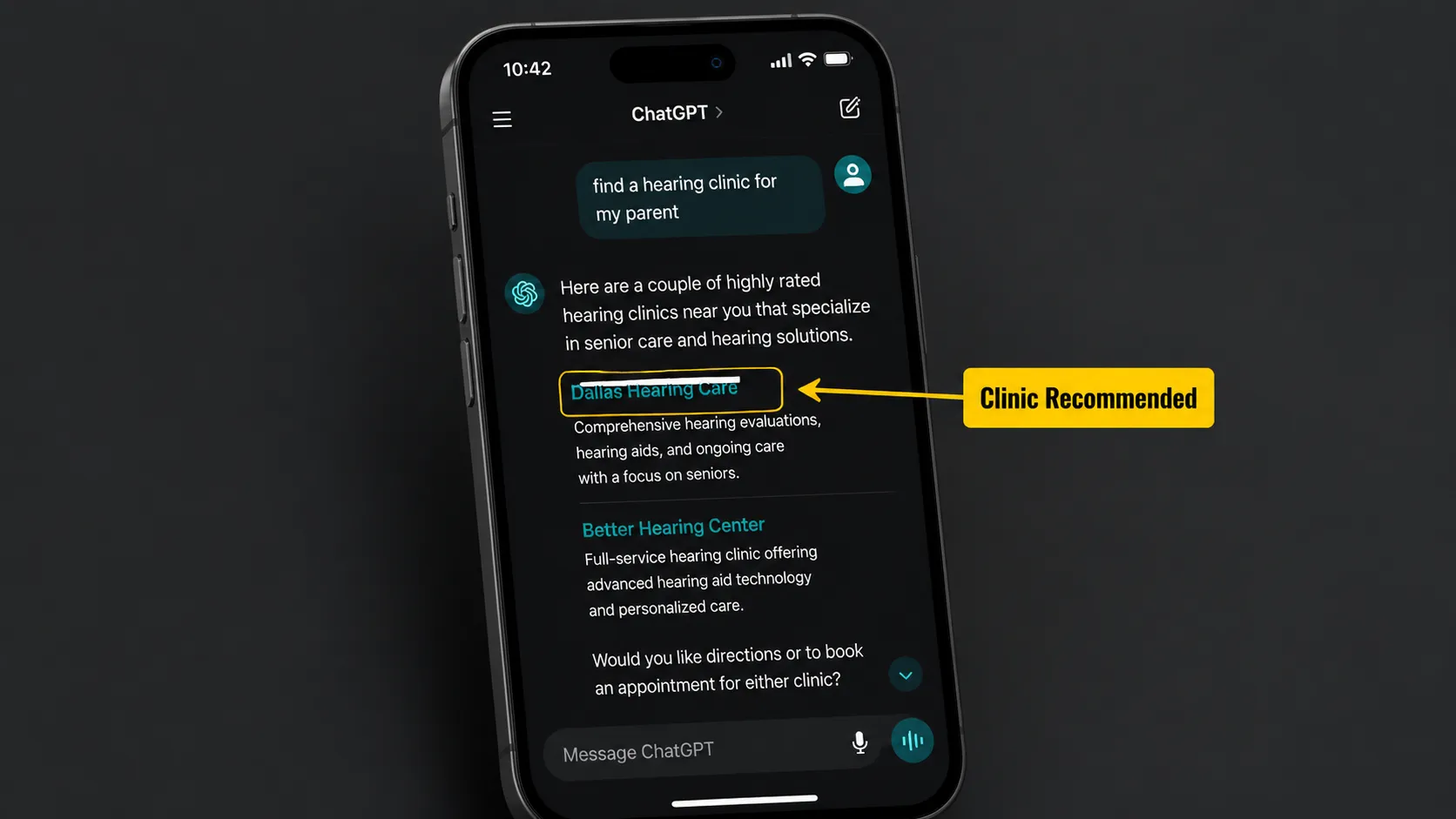
Picture a family member asking ChatGPT to find a hearing clinic for an aging parent:
- The assistant doesn’t return ten links, it names two or three clinics and explains why
- Practices with clean, consistent listings and clear service pages are the ones that get named
- Practices with thin or inconsistent information get skipped, even if they’d have ranked fine in a traditional Google search five years ago
How Comet Rank Handles SEO for Audiology Practices
Executing all of this consistently is where most clinics fall short. Writing location pages, building condition-based content, earning the right backlinks, and staying visible in AI search all at once takes more time than most practice owners have.
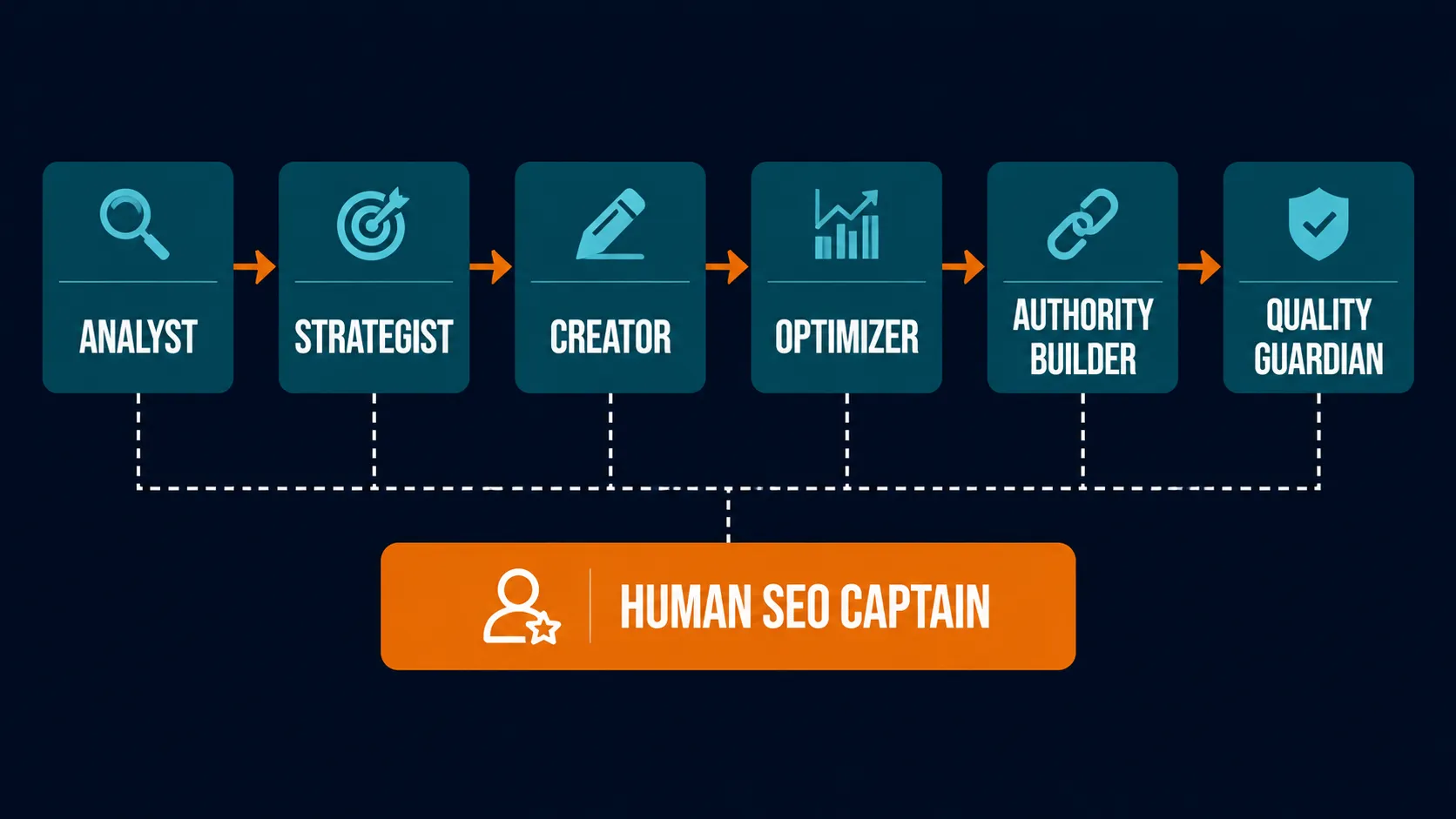
We’re an AI SEO agency using CometRank, our proprietary software, to run that workload for you. Six AI agents handle the work:
- Analyst maps the keywords your patients actually search, from local terms to condition-based queries like “tinnitus treatment near me”
- Strategist turns that map into a prioritized plan for which pages go live first
- Creator writes the location, service, and condition pages in a voice that reads like a real clinic
- Optimizer fixes the technical issues, page speed, schema, duplicate tags, that quietly suppress rankings
- Authority Builder earns the right backlinks and directory listings that build trust signals
- Quality Guardian checks accuracy and consistency across your site, listings, and AI search results before anything ships
A human SEO Captain reviews every piece of work before it goes live.
Where a traditional agency produces 4 to 10 pages a month, CometRank delivers up to 150. For a practice competing across multiple locations, that speed matters. See how our healthcare SEO services apply this to clinics like yours. If you’d rather see it on your own site first, you can book a demo anytime.
The Audiology Practice That Keeps Getting Missed
The practices losing patients aren’t inferior. They just aren’t visible at the moment someone decides to book. Start with your Google Business Profile and your top three service pages. Get those right. Then build location pages, then backlinks. That sequence alone will move the needle on SEO for audiologists before the end of the quarter.
SEO for Audiologists: Frequently Asked Questions
1/ How long does SEO take to work for an audiology clinic?
Most practices start seeing movement on lower-competition local keywords within 3 to 5 months. Competitive city-level terms take 6 to 12 months. Technical fixes can produce faster gains. One practice jumped 14 positions overnight after technical issues were resolved.
2/ What are the best keywords for audiologists to target?
Local transactional keywords like “audiologist in [city],” service-specific terms like “hearing aid fitting near me,” and condition-based searches like “tinnitus treatment [city]” drive patients who are ready to book, not just readers looking for information.
3/ Do I need a separate page for each location I serve?
Yes. A single “areas we serve” page won’t rank for city-specific searches. Each location needs its own page targeting that city and your services. Google treats each page as a separate ranking opportunity.
4/ Is Google Business Profile really important for audiologists?
It’s the most important single asset for a local audiology practice. A Google Business Profile determines whether a clinic appears in the Local Pack, and most patients booking a nearby audiologist click one of the top three map results.
5/ Do backlinks still matter for audiology SEO?
Yes, but only relevant ones. Listings in hearing health directories, referral partnerships with ENT and primary care practices, and local press coverage all build trust signals Google checks before ranking a clinic locally. Bulk or unrelated links can hurt more than help.
6/ Can a small independent audiology practice compete with large hearing aid chains on SEO?
Yes. Large chains often have thin, templated content across many locations. An independent practice with well-built location pages, genuine patient reviews, and condition-specific content can outrank them for the searches that actually bring patients in.