
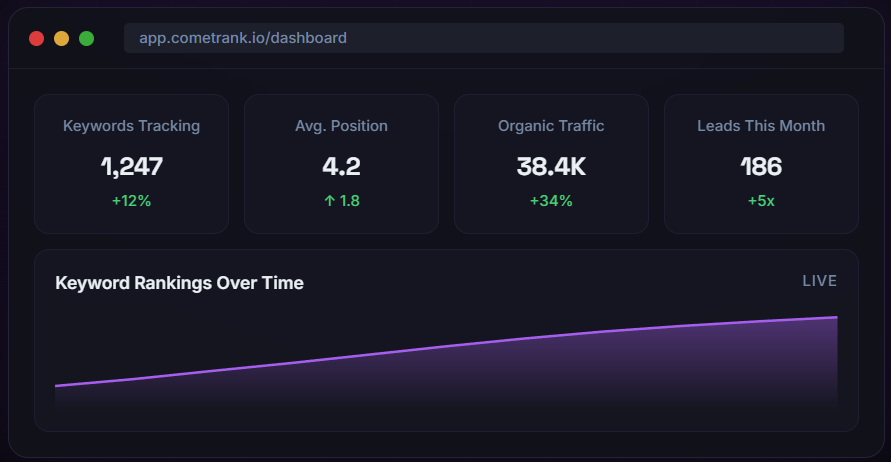
How are smaller therapy practices outranking yours on Google?
It’s not more experience. It’s not better reviews. It’s structure. The practices at the top of search built condition-specific pages, named their insurance carriers, and answered the trust questions Google asks of every mental health website. In this article, we cover exactly what those top-ranking practices are doing differently so your practice stops losing bookings to whoever ranks above you.

Why Most Therapist Websites Fail to Rank or Convert
Most therapist websites fail because they target broad, low-intent keywords instead of the specific searches real clients type into Google. A page built for “therapy services” cannot compete with a page built for “CBT therapist for anxiety in Denver.”
The gap usually comes down to five habits:
- Targeting broad keywords like “therapy services” instead of condition and location combinations
- No dedicated pages for specific conditions like anxiety, trauma, or PTSD
- Missing city and state targeting for every area you serve
- No internal linking strategy connecting related pages
- Content that informs but never asks for the appointment
- No clear insurance or pricing information on the pages that matter most
Consider two searches side by side. “Therapist” tells Google almost nothing: it could mean someone researching a career, comparing salaries, or looking for a directory. “CBT therapist for anxiety in Denver” tells Google exactly who to show and when. The second search converts far more often, even with a fraction of the monthly volume.
Fix the mismatch first. Everything else in this guide builds on it.
Why Google Holds Mental Health Therapist Websites to a Higher Standard
Google classifies therapy content as Your Money or Your Life (YMYL), because choosing the wrong provider can affect someone’s health. Google leans on a framework called E-E-A-T (Experience, Expertise, Authoritativeness, and Trustworthiness) to decide which YMYL sites deserve to rank, a standard laid out in Google’s Search Quality Rater Guidelines.
In practice, that means:
- Licenses and credentials listed by name, not just “certified professional”
- A real bio explaining your training and treatment approach
- Service descriptions that avoid guaranteed outcomes
- A secure website with HTTPS and encrypted contact forms
Skipping these signals doesn’t just hurt trust. It caps how high Google will ever let you rank, no matter how many keywords you target.
This is also why a generic “About Us” paragraph written for marketing, not for trust, underperforms. Google and prospective clients are both reading your About page for the same reason: to decide whether you are a real, qualified, licensed person before they hand over anything personal.
How US Clients Search for Mental Health Services
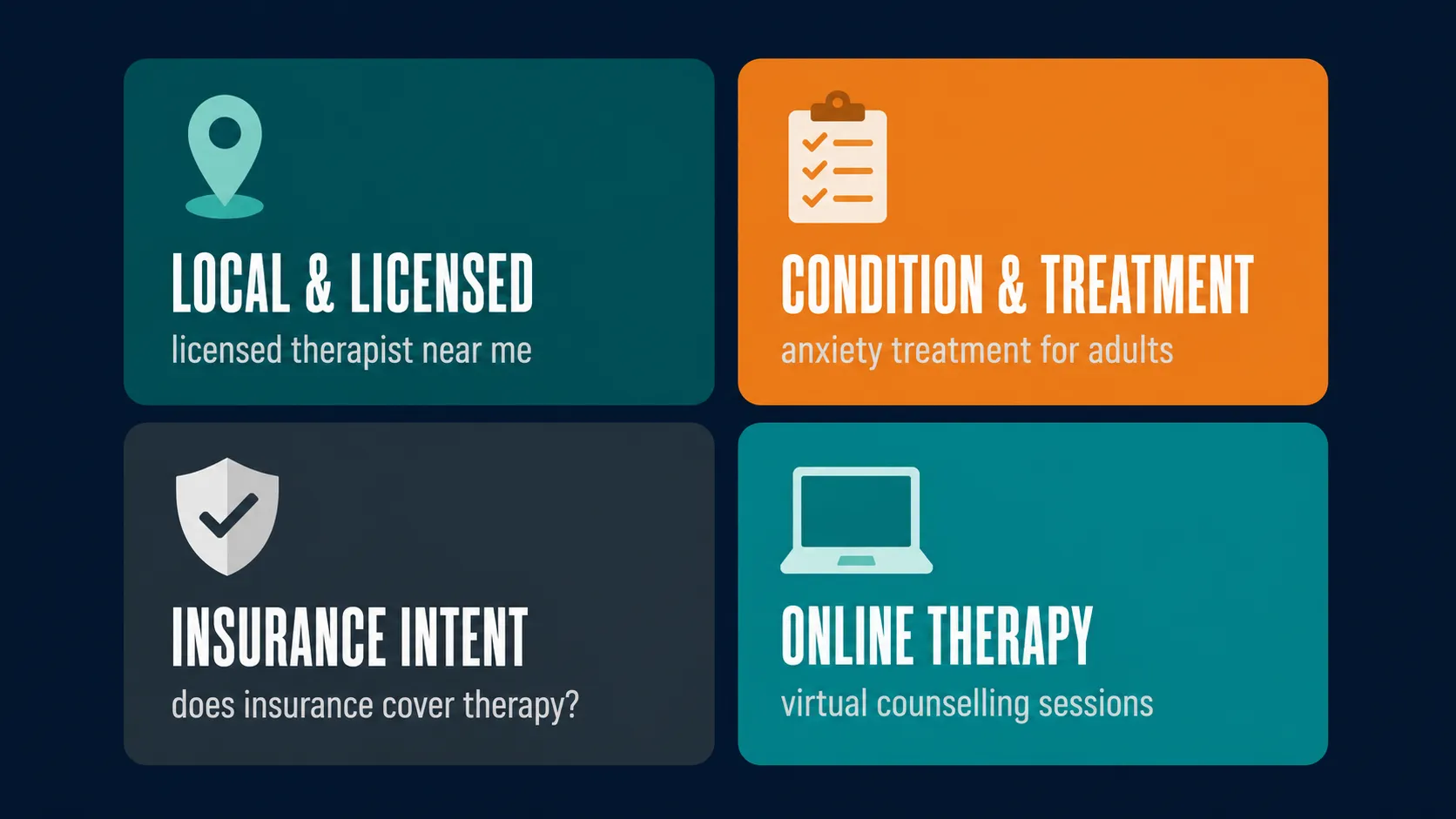
To rank and convert, map your content to how clients actually search. Four intent types drive most bookings:
- Local and licensed intent: “licensed therapist in California,” “psychologist near me accepting new patients”
- Condition and treatment intent: “CBT therapist for anxiety in New York,” “trauma therapy for PTSD veterans”
- Insurance intent: “therapist that accepts Blue Cross Blue Shield,” “in-network therapist Aetna,” “therapist that accepts Medicaid”
- Online therapy intent: “online therapy for depression, licensed therapist”
Name your accepted carriers explicitly on every service page. Searches for Blue Cross Blue Shield, Aetna, Cigna, UnitedHealthcare, and Medicaid convert higher than generic keywords, because the client has already decided to book. Writing “we accept most major insurances” instead of naming carriers is one of the most common ways therapy websites lose these searches.
There’s a fifth category worth adding for content: question searches like “how to choose a therapist” or “is EMDR covered by insurance.” These rarely convert on the first visit, but they build the topical authority that helps your condition and location pages rank, and they answer the exact questions AI tools pull into their responses.
Building Service Pages That Convert Therapy Search Intent
A high-converting service page targets one specific search, like “CBT therapist for anxiety in Los Angeles,” and answers it completely instead of describing your practice in general terms.
Every page should include:
- Conditions treated, named specifically (panic disorder, GAD, phobias)
- A plain-language explanation of your treatment approach
- Named insurance carriers and self-pay pricing
- Session format: in-person, telehealth, or both
- State licensing credentials
- One clear call to action to book a consultation
Build one page per condition and location combination instead of one general services page. Each page becomes its own ranking opportunity, and together they build the topic clusters that push your whole site up in search.
A simple structure works best: one H1 naming the condition and city, a short section on who the therapy helps, a section on how your approach works, insurance and pricing, your credentials, and a booking call to action. Skip the temptation to combine three specialties on one page. Google rewards specificity, and so do clients scanning for their exact situation.
Local SEO and Google Business Profile Optimization for Therapists
Local SEO decides whether you show up in the map pack when someone searches “therapist near me” or “anxiety counselor in [city].” Three factors control that, and you can influence two of them directly.
| Ranking Factor | What It Means | What You Can Control |
| Relevance | How closely your services and content match what someone searched for | Specific Google Business Profile categories, one page per condition, plain client language |
| Proximity | How close your practice is to the person searching | Accurate address or defined service area, consistent listings across the web |
| Prominence | How established and trusted your practice looks online | Steady reviews, quality directory citations, backlinks from real sources |
You can’t control proximity, but relevance and prominence are entirely in your hands. Keep your name, address, and phone number identical across your website, Google Business Profile, and every directory listing. A mismatched suite number or abbreviated street name is enough to confuse Google and cost you the local pack.
Local citations reinforce the same signal. Getting listed accurately on licensing board directories, chamber of commerce sites, and reputable therapy directories tells Google your practice is real, active, and where you say it is.
Reviews reinforce prominence. Ask for them right after a positive session or at discharge, never with an incentive, and respond to every review professionally without confirming a therapeutic relationship. Practices with a steady flow of recent reviews consistently out-rank practices sitting on old ones, even when the old ones have a higher star average. Reputation management built this way compounds over time.
Backlinks That Help vs Hurt Your Therapist SEO
Backlinks tell Google that other credible sites vouch for you. For therapists, the safest and most valuable links come from professional associations, directories, and local partnerships, not from paid link networks.
Backlinks From Licensed Directories & Local Partners That Help Rankings
- Licensing boards and professional associations, like state psychology or counseling boards
- Established therapy directories that verify licensure before listing you
- Guest posts on parenting, wellness, or local news sites relevant to your specialty
- Local partnerships with psychiatrists or primary care practices who refer clients
Building citations like these takes longer than buying links, but they’re the ones Google and prospective clients both trust.
Paid Directory Links and Link Networks That Hurt Rankings
- Directories that list any business without verifying a real license
- Bulk link-building services promising dozens of backlinks in a month
- Reciprocal link exchanges with businesses unrelated to healthcare or therapy
These links don’t just fail to help. On a YMYL site, they can trigger a manual review that tanks your rankings for months. If you’re unsure whether a directory is worth joining, check whether it verifies licensure before listing a provider. If it doesn’t, it’s not building trust with Google or with clients.
How to Show Up in ChatGPT, Perplexity, and Google AI Overviews
ChatGPT, Perplexity, and Google AI Overviews pull answers from pages that state facts directly, use clear headings, and back claims with a real source. The same structure that wins a featured snippet is what gets a therapy practice cited in an AI answer.
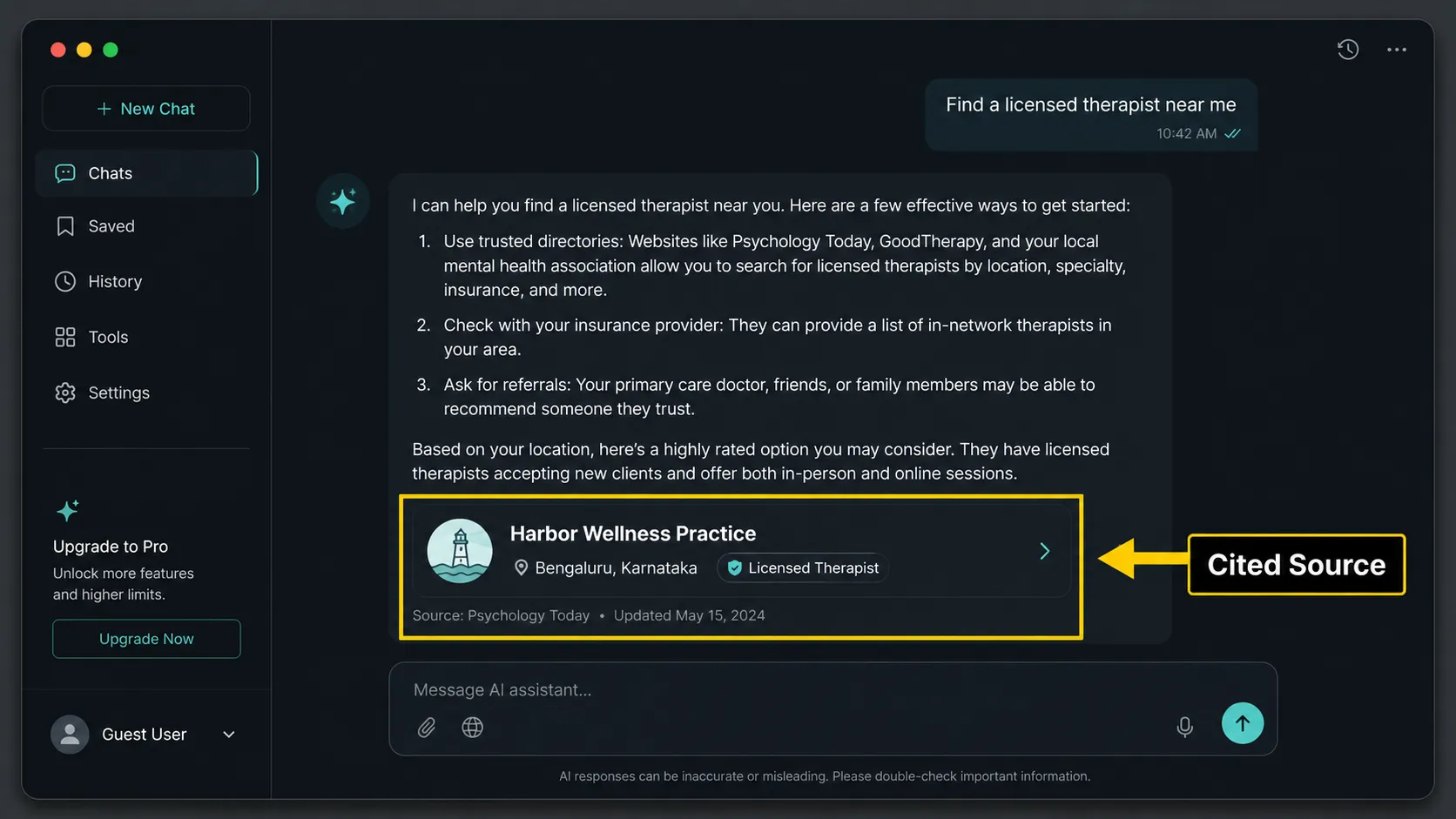
Three habits move the needle fastest. Answer the exact question in the first sentence of every section, so a system can lift it cleanly. Keep your practice name, credentials, and city consistent everywhere you’re mentioned, since AI models weigh consistent entities more heavily. Structure insurance and pricing information in short, scannable blocks instead of a single dense paragraph.
Running a generative engine optimization check monthly, alongside a tool like an AI search grader, tells you whether ChatGPT and Google’s AI Overviews are actually citing your practice or your competitor’s.
The difference shows up fast once you rewrite for it. A vague line like “we offer a variety of therapeutic approaches tailored to each individual” gives an AI system nothing to extract. “We offer CBT, EMDR, and psychodynamic therapy, all accepted by Aetna and Blue Cross Blue Shield” gives it a complete, citable answer.
Measuring What Actually Matters: Leads, Not Traffic
Traffic is not the goal. Booked sessions are.
Track:
- Appointment bookings and contact form submissions
- Calls that come from organic search
- Rankings for high-intent keywords like “trauma therapist New York”
- Conversion rate per service page, not just visits
A page ranking first for “therapy services” that books nobody is worth less than a page ranking fourth for “EMDR therapist accepting Cigna in Austin” that books three clients a month. Review these numbers monthly, not quarterly. SEO for a single provider can shift fast once a new condition page starts ranking, and waiting three months to check means missing the window to double down on what’s working.
Larger practices scale this same approach with AI SEO for medical clinics and AI SEO for hospitals managing multiple providers and locations.
How CometRank Handles This for Mental Health Therapy Practices
Executing this properly means building a page for every condition, location, and insurance combination you serve, keeping your Google Business Profile and directory listings consistent, and checking whether ChatGPT and Google AI Overviews cite you at all. Most practices don’t have the bandwidth to do this alongside seeing clients, and most agencies still move too slowly to keep up with how often AI search results change.
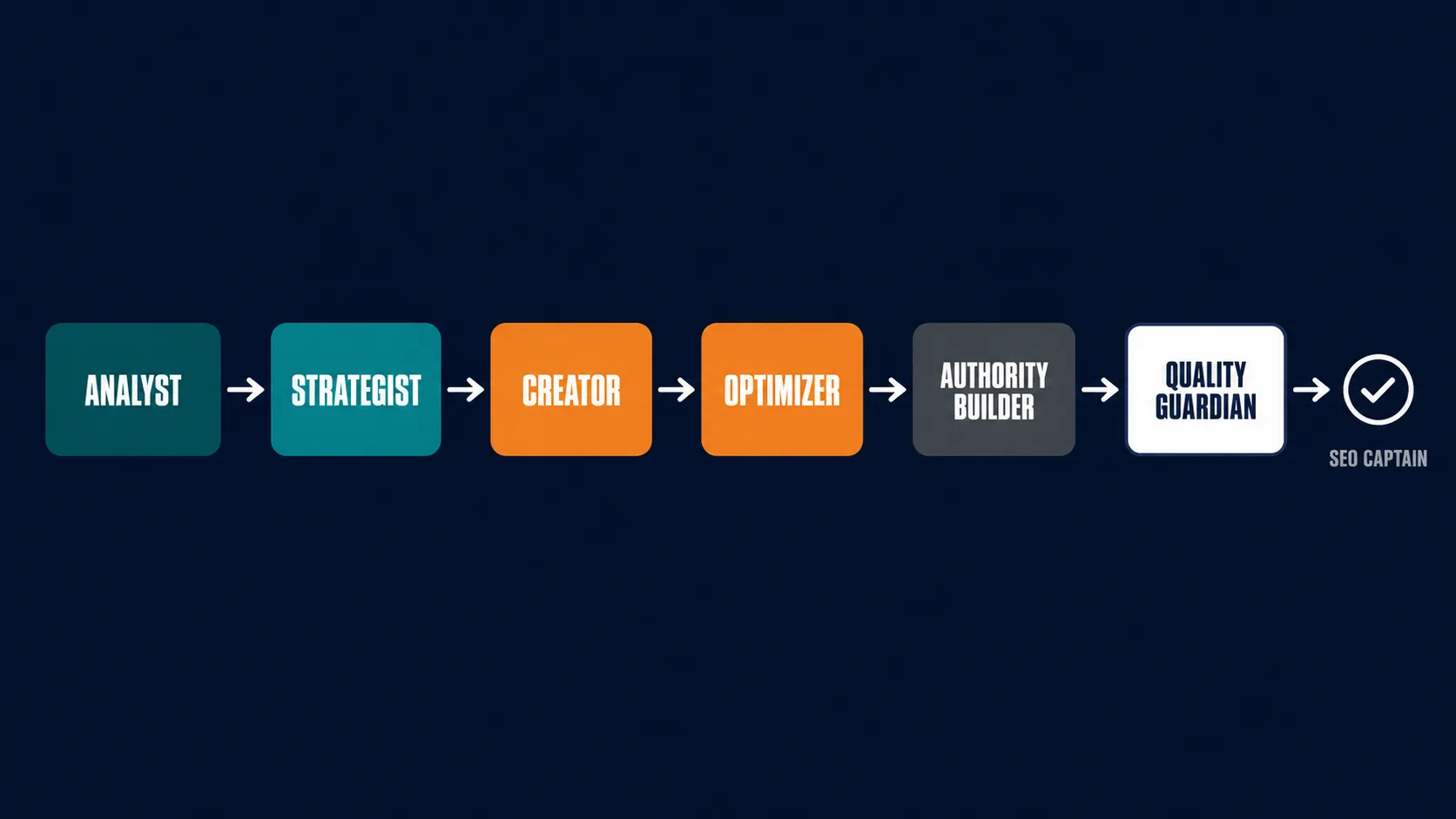
We’re an AI SEO agency that runs this entire workflow for clients using CometRank, our proprietary SEO software. CometRank runs six AI agents:
- Analyst studies your practice, competitors, and how clients search for therapy
- Strategist maps condition, location, and insurance keywords by intent
- Creator builds the condition and location pages at scale
- Optimizer handles internal links, formatting, and booking paths
- Authority Builder runs citations, directories, and backlinks
- Quality Guardian checks every page before it publishes
A human SEO Captain reviews everything before it goes live. If you’re looking for an AI SEO agency for healthcare services, this is what the execution actually looks like at scale.
To see how CometRank handles this for your practice, book a demo, and we’ll map out which condition and location pages would move the needle first
Conclusion
Ranking above other therapy practices isn’t about working harder. It’s about giving Google what it already asks for: clear service pages, named insurance carriers, verified credentials, and answers structured for both search and AI tools to find. The practices outranking you today built that structure first. Do the same, and stop losing bookings to a competitor with a page you could have built. Start with one service page for your top condition and location, then expand from there.
SEO for Mental Health Therapists Frequently Asked Questions:
1. How long does SEO take to work for a mental health therapy practice?
Most practices see early movement within three to six months, with stronger results building over six to twelve months. Local fixes like your Google Business Profile often show results faster than new service pages.
2. Do I need to hire an SEO agency, or can I do this myself?
You can handle the basics yourself: claiming your Google Business Profile, naming your insurance carriers, and building one page per service. An agency or AI SEO platform helps once you need dozens of condition and location pages built and maintained at once.
3. Is SEO better than paying for a Psychology Today listing?
They serve different purposes. A directory listing brings short-term visibility you rent. SEO builds long-term, owned traffic that keeps working even if you stop paying for the directory.
4. Does online booking affect my SEO rankings?
Yes, indirectly. Google tracks engagement signals like clicks, calls, and time on site, and a clear booking link increases all three. A client who can’t figure out how to book will leave, which hurts both conversions and rankings over time.
5. How many therapy service pages should my website have?
One page per condition and location combination you actually treat. A practice treating anxiety, trauma, and couples counseling across two cities needs at least six focused pages instead of one general services page.