Physiotherapy clinics face a common growth decision: run paid ads to fill the calendar quickly or invest in SEO to build a steady patient pipeline.
Both channels can produce strong ROI, but they behave very differently. Meta ads create immediate lead flow, while SEO compounds over time and typically generates higher-intent patients.
For physiotherapists specifically, the difference often comes down to search intent. Someone searching “physio for lower back pain near me” is actively looking to book treatment. Someone seeing a Meta ad while scrolling may only be vaguely aware of their problem.
Below is a practical breakdown of how the two channels compare financially.
ROI Comparison: Meta Ads vs SEO for Physiotherapy Clinics
| Metric | Meta Ads | SEO |
|---|---|---|
| Monthly spend | $1,500–$3,000/mo (ad budget + mgmt) | $800–$1,500/mo (agency retainer) |
| Leads/mo | 30–60 leads varies with budget | 15–40 leads grows over time |
| Cost per lead | $45–$80 | $20–$35 (mature, month 9+) |
| Close rate | 25–35% lower intent | 35–50% high intent |
| New patients/mo | 8–20 patients | 7–18 patients |
| Revenue/mo (LTV $2,400) | $19,200–$48,000 | $16,800–$43,200 |
| ROI (monthly) | 6–16x | 11–29x (month 12+) |
| Time to first lead | 24–72 hrs | 3–6 months |
| Traffic if paused | Drops to zero | Retained |
| Lead quality | Mixed — broad audience, symptom-unaware | High — actively searching “physio near me” |
| Best for | New clinic launch, promo offers, filling calendar fast | Long-term patient pipeline, local authority |
| Scalability | Linear — more spend = more leads (diminishing returns after $3K) | Compounding — each asset builds on the last |
This is why many healthcare practices eventually combine both channels, using ads for immediate demand while SEO builds a durable acquisition engine.
For a broader breakdown of paid vs organic strategies in healthcare marketing, see this guide on Google ads for doctors SEO outline.
Why SEO Wins Long-Term for Physiotherapy Clinics
Physio search behavior is extremely intent-driven.
Most patients don’t casually browse physiotherapy content. They search when they already have pain, injury, or rehabilitation needs.
Common examples include:
- “physio for lower back pain near me”
- “sports injury physiotherapist in Austin TX”
- “post ACL surgery rehab physio Chicago”
- “neck pain physio clinic Toronto”
These queries signal immediate treatment demand.
Meta ads, in contrast, reach users who may only have mild symptoms or curiosity about treatment. That difference in intent is why SEO traffic often converts 10–20% better than social ads for medical services.
Platforms like the AI SEO platform help clinics identify these high-intent search opportunities and create pages designed to capture them.
The Local SEO Advantage for Physiotherapy
Unlike many industries, physio searches are overwhelmingly local.
Most patients are looking for a clinic within 10–20 minutes of their location.
Examples:
- “physiotherapist near me”
- “sports physio downtown Denver”
- “pelvic floor physio Vancouver”
- “physio for running injuries Boston”
Because of this behavior, the Google Business Profile (GBP) often drives more leads than blog content in the early stages.
This is why local SEO optimization is typically the fastest path to organic patients.
For clinics building their organic visibility strategy, resources like this guide on local seo for medical professionalsexplain how to structure location-driven SEO.
Local SEO Strategy That Works for Physiotherapy
A practical SEO roadmap for physio clinics usually follows three phases.
1. Google Business Profile Optimization
The fastest wins come from improving local map visibility.
Optimize:
- service categories (sports physio, rehab physio, manual therapy)
- treatment pages linked in GBP
- review generation
- before/after patient success stories
- treatment photos and clinic walkthrough images
Target queries such as:
- “sports physiotherapist near me”
- “lower back pain physio Dallas”
- “running injury physiotherapy San Diego”
These searches typically convert into phone calls and bookings.
2. High-Intent Treatment Pages
Create pages for specific conditions patients search for.
Example page structure targeting
“physio for lower back pain in Austin TX”
Sections should include:
- symptoms treated
- causes of lower back pain
- treatment techniques used
- recovery timeline
- success case examples
- booking CTA
Each treatment page captures condition-driven searches.
Examples include:
- “knee injury physiotherapy treatment”
- “rotator cuff injury rehab physio”
- “post surgery physiotherapy program”
3. Local Authority Content
Once core pages rank, content can expand to capture informational searches.
Examples:
Keyword: “how long does physiotherapy take for sciatica”
Suggested article sections:
- causes of sciatica pain
- physio treatments used
- expected recovery timeline
- exercises recommended
- when to see a physio
These articles attract early-stage searchers who later convert into patients.
Why Patient Lifetime Value Changes the ROI Equation
The ROI numbers above assume a $2,400 patient lifetime value, which is actually conservative.
Many clinics generate significantly higher LTV through:
- rehab packages
- recurring sports injury patients
- post-surgery programs
- chronic pain management
- home exercise programs
For clinics offering structured treatment programs, LTV can reach $4,000–$6,000+ per patient.
When that happens:
- paid ads become profitable faster
- SEO becomes an extremely high-ROI channel
Because organic traffic continues generating patients without incremental spend.
The Smart Strategy: Ads for Speed, SEO for Stability
For most physiotherapy clinics, the best approach isn’t choosing between ads and SEO.
It’s sequencing them.
Phase 1 — Launch
Use Meta or Google ads to:
- fill the calendar
- test patient messaging
- validate service demand
Phase 2 — Authority
Build SEO assets:
- Google Business Profile dominance
- treatment pages
- local landing pages
- patient education content
Phase 3 — Compounding Growth
Organic visibility becomes the primary patient acquisition channel while ads act as a demand amplifier.
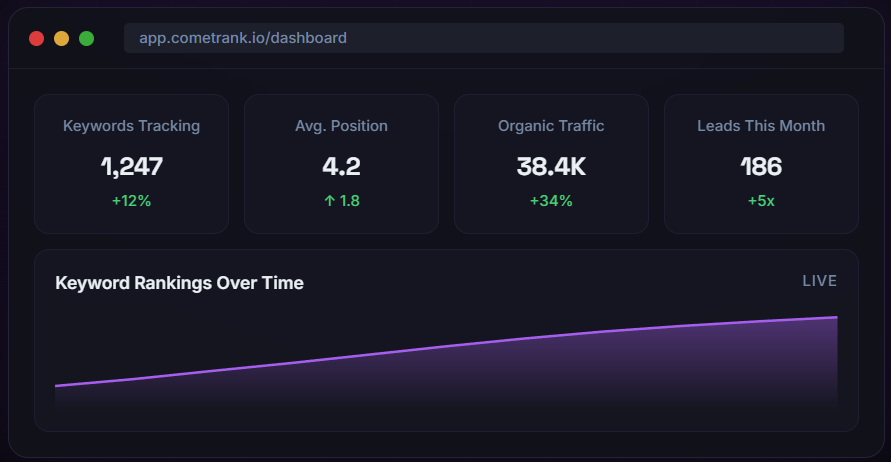
Modern AI SEO platforms like Cometrank help automate this process by identifying high-intent medical searches, generating optimized pages, and improving internal linking so clinics capture more local search demand.
The Future of Patient Acquisition Is Search Visibility
Healthcare marketing is shifting toward intent-driven discovery.
Patients increasingly rely on Google to:
- diagnose symptoms
- compare clinics
- evaluate treatments
- book appointments
Clinics that dominate local search results build a predictable patient pipeline that does not depend on paid advertising.
Those relying only on ads often face rising costs and unstable lead flow.
SEO turns search demand into long-term growth.