SEO agencies rely heavily on software to manage keyword research, reporting, and client deliverables. For years, white label SEO tools have been the standard solution for agencies that want branded dashboards and automated reports.
But a new category has emerged: AI SEO platforms. Instead of simply reporting SEO performance, these platforms identify ranking opportunities, generate content, optimize pages, and build authority signals automatically.
Understanding the difference between these two systems is critical for agencies deciding how to scale SEO services.
What Are White Label SEO Tools?
White label SEO tools are platforms that allow agencies to brand SEO dashboards, reports, and analytics as their own product.
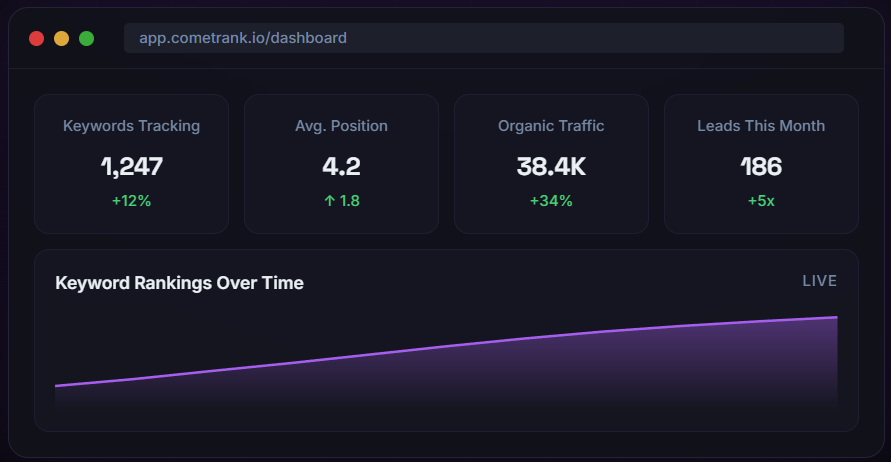
These tools typically provide visibility into SEO metrics but require agencies to manually perform most of the actual SEO work.
Common features include:
- Rank tracking
- Backlink monitoring
- Keyword tracking
- SEO reporting dashboards
- Client reporting portals
For example, an agency might use SEO tools for keyword research such as SEO tools for keyword research to discover keywords like:
“Tesla charger installation electrician in Los Angeles CA.”
The workflow typically looks like this:
- Find keywords using research tools
- Export data into reports
- Create SEO recommendations manually
- Send branded reports to clients
White label tools improve reporting, but they do not automate the execution of SEO.
What Is an AI SEO Platform?
An AI SEO platform goes beyond reporting. It actively executes SEO workflows using AI agents and automation.
Instead of only showing keyword rankings, the platform can:
- identify ranking opportunities
- generate structured landing pages
- optimize internal linking
- publish content at scale
- improve rankings over time
This approach aligns with Generative Engine Optimization, which focuses on creating content structures that rank in both search engines and AI systems. You can see a deeper explanation in what is generative engine optimization.
An AI SEO platform essentially acts as a system of SEO agents performing tasks that agencies normally do manually.
Why Most Agencies Hit a Ceiling With White Label SEO Tools
White label tools are useful for reporting, but they do not solve the biggest operational problem agencies face: scaling SEO work across multiple clients.
For example, consider an agency managing 25 SEO clients.
Each client requires:
- keyword research
- landing page creation
- blog content
- internal linking optimization
- performance monitoring
If each optimized page costs hundreds of dollars in manual work, scaling becomes difficult. A real breakdown of this issue can be seen in cost of manual SEO per page.
Manual workflows create three major problems:
1. Content Production Bottlenecks
SEO agencies often struggle to produce enough content to compete in search results.
For example, ranking for a keyword like:
“licensed electrician for panel upgrade in Tampa FL”
requires a page with sections such as:
- electrical panel upgrade signs
- panel capacity options (100A vs 200A)
- code compliance requirements
- upgrade cost estimates
- installation timeline
Producing dozens of these pages manually is slow and expensive.
2. Limited Keyword Coverage
Most agencies only target 10–20 keywords per client, even though competitors may rank for hundreds.
For example, a local electrician could target keywords such as:
- “Tesla charger installation electrician in Los Angeles CA”
- “24 hour emergency electrician in Houston TX”
- “licensed electrician for panel upgrade in Tampa FL”
Without scalable systems, agencies cannot create enough pages to capture this demand.
3. Reporting Instead of Results
White label tools often emphasize reports rather than outcomes.
Clients receive ranking dashboards but may not see meaningful growth in:
- search visibility
- organic leads
- inbound inquiries
The tool becomes a reporting layer instead of a growth engine.
How AI SEO Platforms Change the Workflow
AI SEO platforms restructure the entire SEO process using automated systems.
Instead of manual workflows, they operate as AI-driven SEO command centers.
A typical system may include:
Analyst
Finds ranking opportunities through search demand and competitor analysis.
Strategist
Prioritizes high-intent keywords based on commercial value.
Creator
Generates structured landing pages, blog posts, and comparison content.
Optimizer
Improves internal linking, page depth, and ranking signals.
Authority Builder
Builds backlinks and authority signals that strengthen domain rankings.
This architecture allows agencies to scale SEO campaigns across dozens or hundreds of pages simultaneously.
White Label SEO Tools vs AI SEO Platforms
| Feature | White Label SEO Tools | AI SEO Platform |
|---|---|---|
| Keyword research | Yes | Yes |
| Rank tracking | Yes | Yes |
| Client reporting | Yes | Yes |
| Content generation | No | Yes |
| SEO strategy automation | No | Yes |
| Internal linking optimization | No | Yes |
| SEO execution | Manual | Automated |
| Scaling across clients | Limited | High |
The key difference is simple:
White label tools report SEO performance.
AI SEO platforms perform SEO work.
When Agencies Should Use White Label Tools
White label SEO tools still make sense for agencies that:
- primarily sell SEO reporting services
- outsource most SEO execution
- manage a small number of clients
These tools are useful for client dashboards and branded reports, but they do not reduce operational workload.
Why AI SEO Platforms Are Replacing Traditional SEO Software
Agencies today compete in an environment where search visibility depends on content coverage and speed of execution.
The agencies that win are the ones that can:
- identify high-intent keyword opportunities
- create structured pages quickly
- improve internal linking and authority signals
- scale content production without increasing costs
AI SEO platforms enable agencies to move from manual SEO workflows to automated SEO systems.
Instead of spending weeks building pages and reports, agencies can focus on:
- client strategy
- business growth
- lead generation outcomes
The Strategic Shift: From SEO Reporting to SEO Execution
The biggest shift happening in the industry is moving from tools that measure SEO to platforms that run SEO.
White label SEO tools help agencies show results.
AI SEO platforms help agencies create results.
As search competition increases and AI search engines influence discovery, the agencies that adopt automated SEO systems will have a significant advantage in speed, scale, and lead generation.