Is your manufacturing website invisible when a procurement manager searches for a supplier like you? Most manufacturing sites lose these searches because they run on consumer-grade SEO tools built for retail keywords, not technical B2B queries. Generic tools miss the certification codes, spec terms, and application language your actual buyers type into Google and AI search.
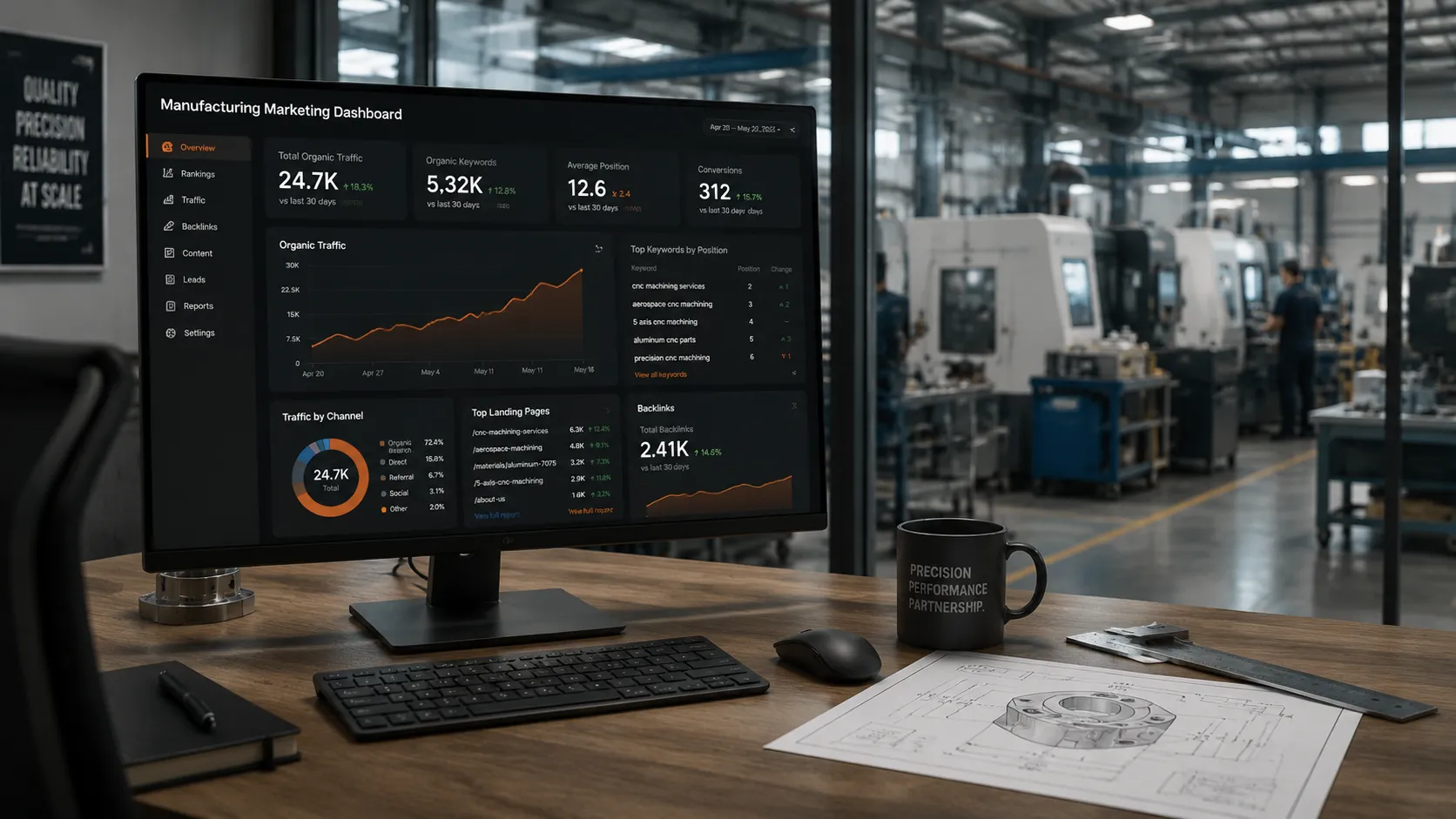
In this article, we cover the 9 best SEO tools for manufacturing websites, so you can rank for the exact searches procurement teams and engineers run before they ever contact you.
What Makes an SEO Tool Effective for Manufacturing SEO
Manufacturing SEO tools need to do more than track rankings. They need to show you how engineers, procurement teams, and operations managers actually search for suppliers, then close the gap between what you publish and what those buyers type into Google.
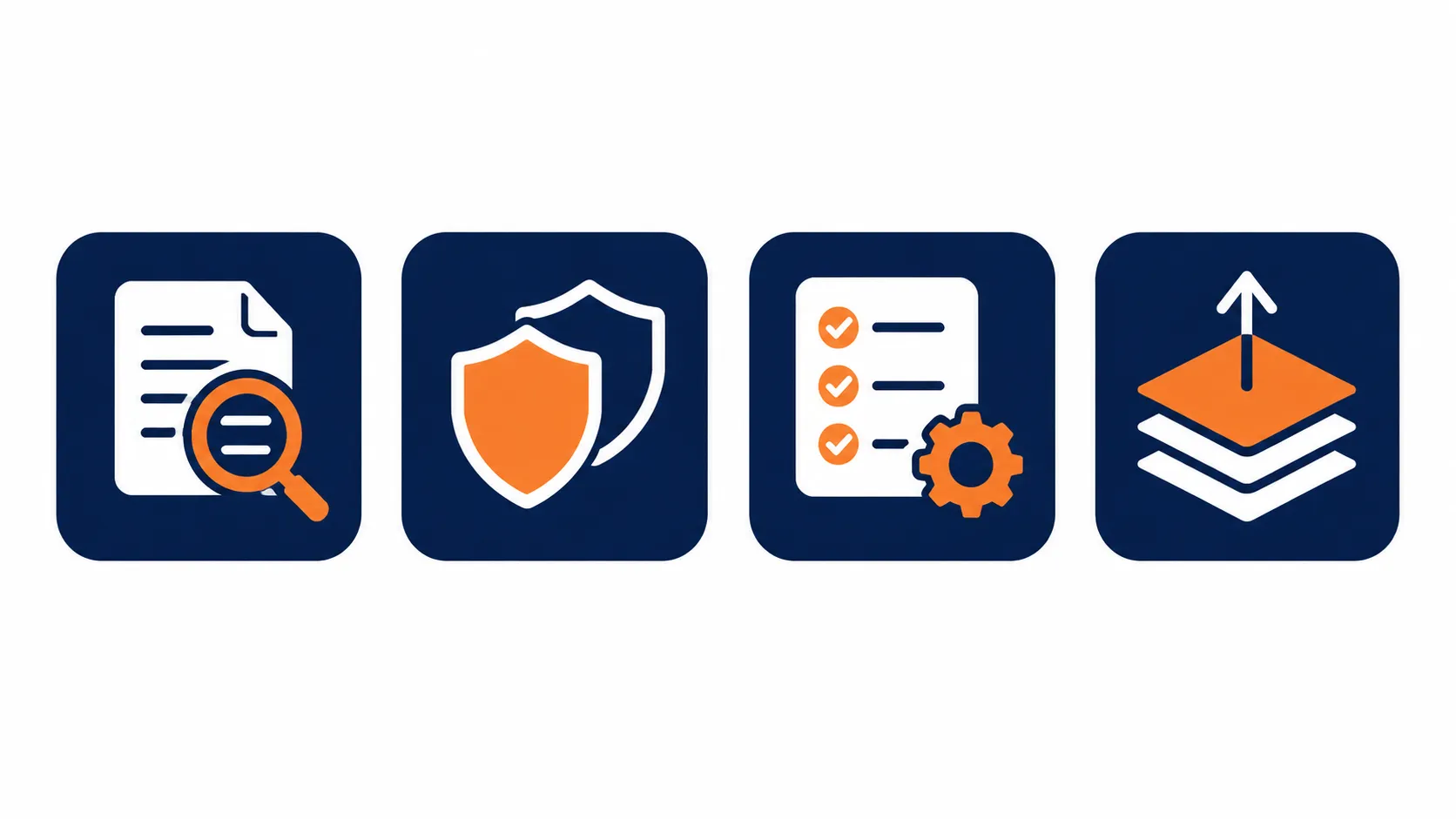
The best SEO tools for manufacturing websites support four core functions:
- Keyword opportunity discovery
- Competitor intelligence
- Technical site audits
- Scalable content planning
Together, these functions show you exactly where search demand exists and what to publish to capture it. This matters more for manufacturers than most industries because of catalog size. A distributor with 3,000 SKUs or a contract manufacturer with dozens of capability pages needs tools that can crawl, monitor, and flag problems at scale, not tools built for a ten-page brochure site.
A single broken spec table or missing schema tag on a high-traffic product page can quietly cost you rankings for months before anyone notices, and most teams only catch it after a quarter of lost RFQ traffic shows up in their reporting. Manufacturers that follow a structured manufacturing SEO strategy, instead of running one-off campaigns, are far more likely to rank consistently for technical, application-specific searches.
The 9 Best SEO Tools for Manufacturing Websites
1. CometRank
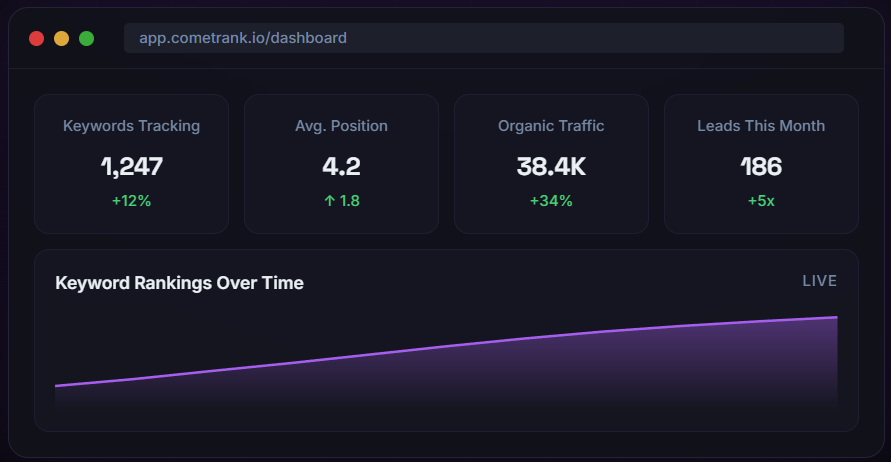
CometRank is an AI-driven SEO platform built to identify search opportunities and scale content creation for manufacturers. Instead of manual keyword research, it deploys a system of AI agents that continuously analyze search demand, competitor rankings, and contextual buyer queries.
For manufacturing websites specifically, this shows up in a few concrete ways:
- Surfaces technical, spec-driven keyword clusters engineers and procurement teams actually search for
- Builds structured pages around those clusters instead of generic product copy
- Maps opportunities into a content roadmap rather than a one-off keyword list
- Publishes optimized pages at scale, across dozens of product lines or capability areas
This matters most for manufacturers with dozens of product lines or capability areas that would otherwise take a content team months to cover manually.
2. Ahrefs
Ahrefs is one of the most widely used SEO tools for backlink analysis and competitor research. Manufacturers use it to identify which keywords competitors rank for and which sites link to their competitors’ content, plus long-tail technical queries tied to specific products or processes. Its Content Gap report is particularly useful for spotting spec-driven searches a competitor captures that your site currently misses entirely.
3. SEMrush
SEMrush is a full SEO toolkit covering keyword research, competitor analysis, and technical auditing. Its keyword gap tool shows search queries where competitors rank but your site does not, which often points directly to new landing page or blog opportunities. Manufacturing teams also use its position tracking to monitor how new product or capability pages perform against named competitors over time.
4. Screaming Frog
Screaming Frog is a technical SEO crawler built for exactly the problem large manufacturing sites have: hundreds of product pages that can quietly break. It scans your full site and flags missing metadata, broken links, and duplicate content before they cost you rankings. For catalogs with thousands of SKUs, running this crawl monthly catches issues long before they show up in a traffic drop.
5. Google Search Console
Google Search Console gives you direct data from Google on how your site appears in search. Manufacturers use it to track impressions, clicks, and ranking positions, and to see which queries are already sending traffic so you can expand those pages further. It’s also the fastest free way to confirm whether Google has indexed a newly published capability or spec page.
6. Surfer SEO
Surfer SEO analyzes top-ranking pages and recommends structure and keyword coverage to match. It compares your draft against high-ranking competitor content and suggests headings, terms, and length adjustments so technical pages match what search engines expect to see. This works well for manufacturers publishing process or application guides that need to compete against established industry publishers.
7. Clearscope
Clearscope focuses on semantic content optimization, helping writers cover every subtopic a search engine expects for a given process or product category. For technical manufacturing content, this closes the coverage gaps that keep otherwise solid pages from ranking for related queries, particularly on pages written by engineers rather than marketers.
8. Moz Pro
Moz Pro bundles keyword research, link analysis, and site audits into one suite. Manufacturing marketing teams use it mainly to track keyword rankings and monitor domain authority growth over time, alongside evaluating how competitive specific search terms are before committing content resources to them.
9. Google Analytics
Google Analytics is not a keyword tool, but it shows how organic traffic behaves once buyers land on your site. Manufacturers use it to see which pages attract the most visitors and whether those visitors convert into RFQs or demo requests, which is the number that actually matters for a manufacturing SEO program.
SEO Tools for Manufacturing Websites: Quick Comparison
| Tool | Best For | Manufacturing-Specific Edge |
| CometRank | Scaling content with AI agents | Publishes technical, spec-driven pages automatically |
| Ahrefs | Backlink and competitor research | Surfaces long-tail process and product queries |
| SEMrush | Full-stack keyword and site audits | Keyword gap analysis vs. named competitors |
| Screaming Frog | Technical crawls on large catalogs | Catches broken specs and duplicate product pages |
| Google Search Console | Free performance tracking | Shows exactly which technical queries already convert |
| Surfer SEO | On-page content optimization | Benchmarks pages against top industrial competitors |
| Clearscope | Semantic topic coverage | Closes subtopic gaps on process and product pages |
| Moz Pro | Rank tracking and authority growth | Tracks authority across a slow-moving industrial niche |
| Google Analytics | Traffic and conversion behavior | Ties organic visits to RFQ and demo conversions |
Why Manufacturers Choose CometRank Over Generic SEO Tools
Most SEO tools on this list hand you data and leave you to act on it. CometRank is built differently. We’re an AI SEO agency that pairs six specialized AI agents to research, plan, write, and publish at a pace no manual process can match:
- The Analyst, who tracks search demand and competitor rankings
- The Strategist, who maps opportunities into a content roadmap
- The Creator, who writes the pages
- The Optimizer, who tunes them for keywords and structure
- The Authority Builder, who handles backlinks and off-page signals
- The Quality Guardian, who checks everything before it moves forward
Every page still goes through a dedicated human SEO Captain before it goes live, so manufacturers get the speed of AI-driven content production without losing the accuracy technical, spec-heavy pages demand. That’s the model behind our AI SEO agency for manufacturing companies, built specifically around how industrial buyers search.
Curious what that would surface for your own site? Book a demo, and we’ll walk you through your opportunity map.
Conclusion
The right SEO tools for manufacturing websites depend on what’s actually slowing you down, whether that’s technical debt on a large catalog, weak backlink authority, or content that never gets published fast enough to matter. Most manufacturers land on a mix: one tool for research, one for technical health, and either a content team or an AI platform to keep pages shipping. Start with whichever gap is costing you the most RFQs today, and build the rest of your stack around it.
SEO Tools for Manufacturing Websites Frequently Asked Questions
1/ What is the best SEO tool for a manufacturing website?
There is no single best tool. Most manufacturers combine a keyword and competitor research tool like Ahrefs or SEMrush with a technical crawler like Screaming Frog, or use an AI platform like CometRank that handles discovery and content production together.
2/ How much do SEO tools for manufacturing websites cost?
Standalone tools like Ahrefs, SEMrush, and Moz Pro typically run $99 to $500 per month depending on the plan. AI-driven platforms that also handle content production, like CometRank, are usually priced as a bundled monthly service rather than a per-seat tool license.
3/ Do manufacturers need a technical SEO crawler like Screaming Frog?
Yes, if your site has more than a few dozen product or spec pages. Large catalogs break quietly, with duplicate pages, missing metadata, and broken internal links, and a crawler is the fastest way to catch these issues before they cost you rankings.
4/ Can AI SEO tools replace an SEO agency for manufacturers?
AI tools handle research and content production faster than manual work, but manufacturing content still needs human review for technical accuracy. CometRank pairs AI agents with a human SEO Captain for exactly this reason, rather than publishing AI output unchecked.
5/ How long does it take to see results from manufacturing SEO tools?
Most manufacturers see initial ranking movement in 60 to 90 days, with meaningful lead flow building over 4 to 6 months. Technical, low-competition keywords tend to move faster than broad, high-competition terms.
6/ Do I need to appear in ChatGPT and Google AI Overviews, or is Google search enough?
Google search alone is no longer enough. A growing share of procurement research now happens inside AI tools before a buyer ever runs a traditional Google search, so manufacturers need content structured for both channels, not just one.