
Why does your IT company never show up when buyers are ready to hire?
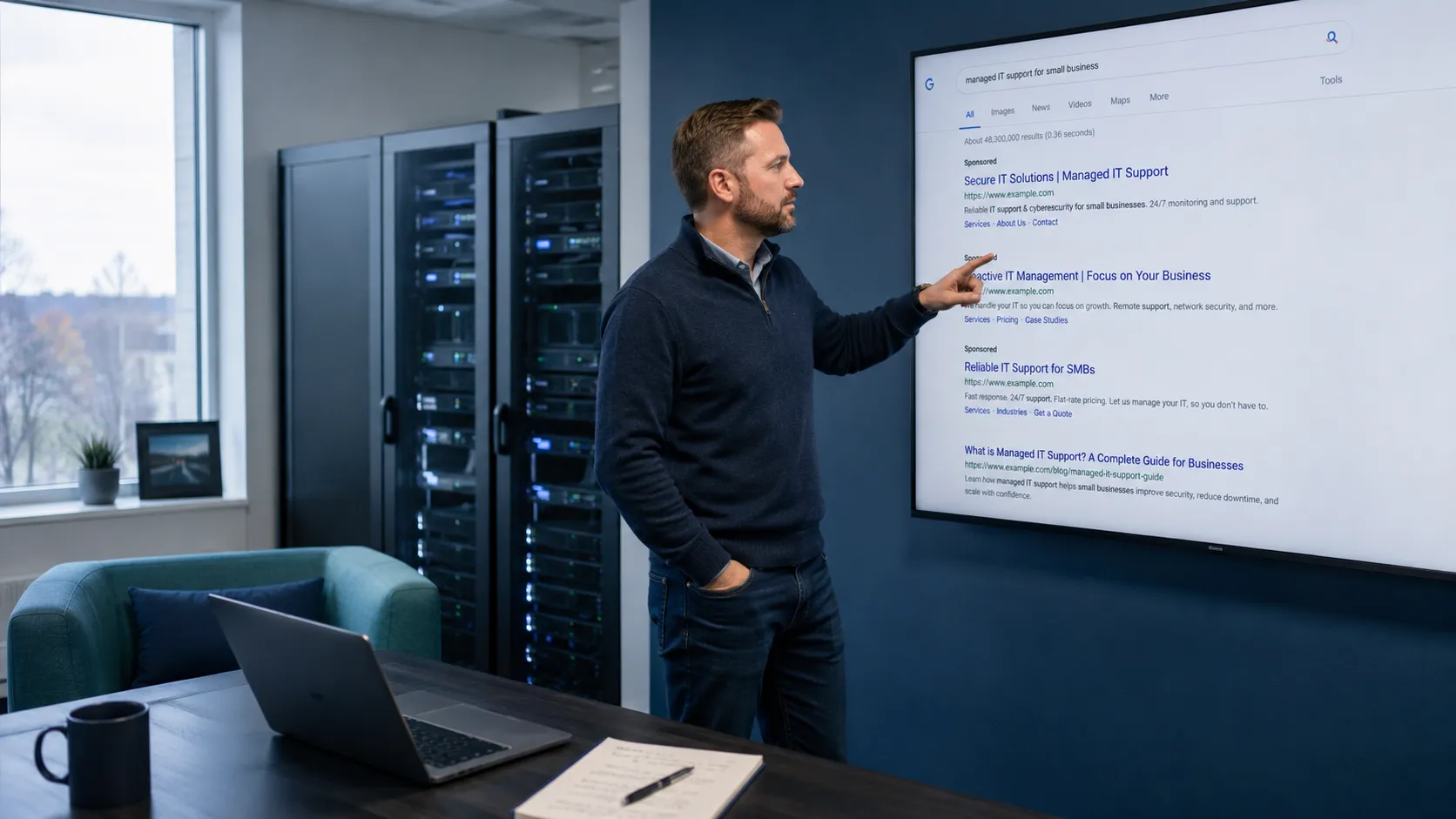
You rank for broad terms, traffic looks fine on paper, and the leads still go to a competitor whose page actually speaks to the buyer’s industry. Every month that gap stays open is search demand handed straight to someone else.
In this article, we cover how to do seo for it companies the right way, from intent-mapped service pages to long-tail keywords, backlinks that hold up, and showing up in AI search results.
Why Generic SEO for IT Companies Fails
Generic SEO chases traffic volume. IT buyers search in specifics, not volume, and that mismatch is why most IT websites rank for terms that never close a deal.
Ranking for “cloud computing basics” brings visitors who are learning, not buying. A managed cloud services provider needs the searcher who already knows what cloud computing is and wants a vendor for their healthcare practice or their 50-person law firm.
This mismatch shows up in three ways:
- You rank for informational keywords with no purchase intent
- You attract visitors who were never going to become clients
- Your traffic numbers look healthy while your sales pipeline stays empty
The fix is not more content. It is the right content, built around what buyers type into Google right before they call a vendor.
How Do IT Buyers Actually Search?
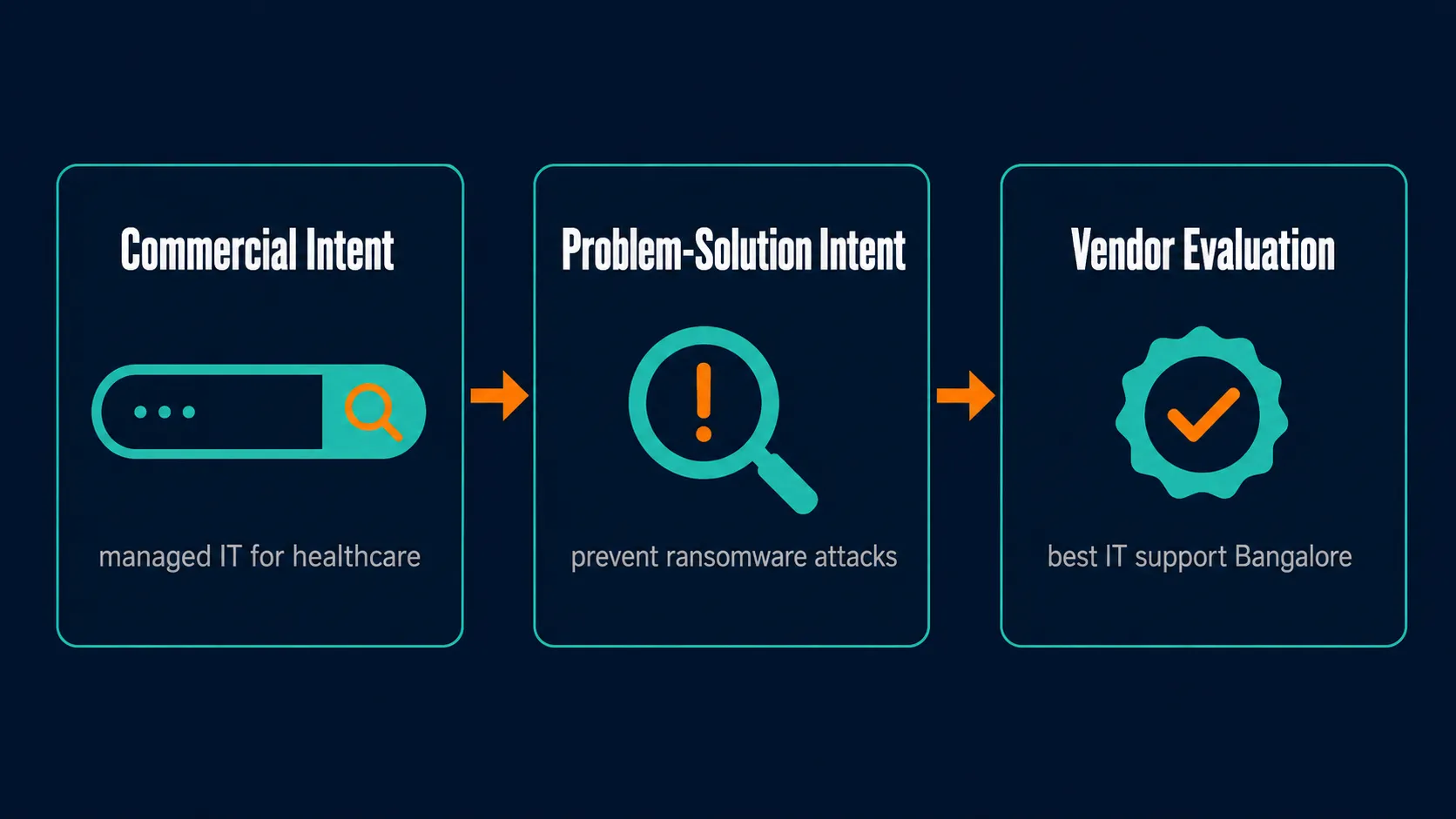
IT buyers search in three distinct intent stages, and each stage needs a different page on your site, not a single blog post trying to cover all three.
1/ Commercial Intent
Commercial intent looks like “managed IT services provider for healthcare” or “cybersecurity company for fintech startups.” This buyer already knows the category and is comparing vendors. They need a service page that names their industry by name.
2/ Problem-solution intent
Problem-solution intent looks like “how to prevent ransomware attacks for small business.” This buyer has a specific pain and is still researching, not ready to call yet. They need an in-depth article that earns trust before the pitch.
3/ Vendor evaluation intent
Vendor evaluation intent looks like “best IT support company in Bangalore for startups.” This buyer is close to hiring and wants proof, not theory. They need case studies, response time guarantees, and a clear next step.
Most IT company websites have one generic “Services” page trying to answer all three, which satisfies none of them. The companies pulling in consistent leads build a separate page for each intent stage, in each industry they serve.
Build Service Pages That Match Buyer Intent
A generic “Managed IT Services” page tells Google nothing about who you serve. A page built for “managed IT services for SaaS companies with 24/7 monitoring” tells Google exactly who should see it, and tells the buyer they are in the right place.
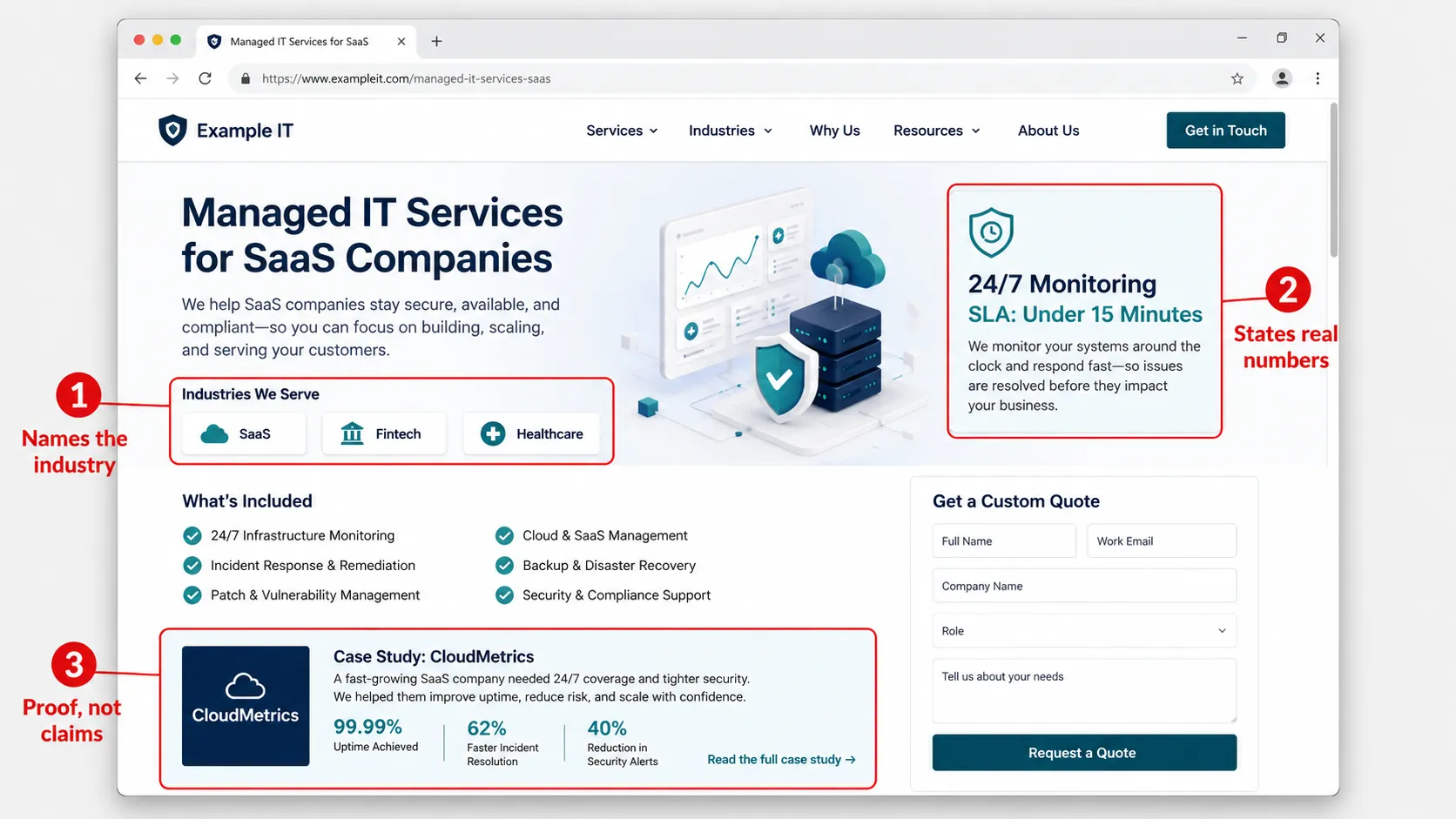
Every high-intent service page needs:
- The specific industries you serve, named directly (SaaS, fintech, healthcare)
- Your service scope in plain terms (monitoring, incident response, cloud management)
- SLAs and response times stated as numbers, not adjectives
- At least one case study or measurable outcome
- The exact technologies and platforms you support
This structure works because it mirrors how the buyer already thinks. They are not searching for “IT services,” they are searching for IT services for their specific situation, and a page that speaks to that situation converts at a far higher rate than a page that speaks to everyone.
Target Long-Tail Keywords Over Broad Terms
“IT services” sounds like the obvious keyword to chase, but it is also the keyword every competitor in your market is already fighting over, which makes it the slowest and most expensive way to get found.
Long-tail, high-intent phrases convert faster because the searcher has already filtered themselves:
- “outsourced IT support for law firms in Mumbai” instead of “IT services”
- “cloud migration services for eCommerce platforms” instead of “technology solutions”
Someone typing “managed IT services” could be a student, a competitor, or a buyer three years from purchasing, while someone typing “outsourced IT support for law firms in Mumbai” is one phone call away from hiring someone, which is why keyword research tools built for finding this kind of demand matter more than guessing which long-tail terms your buyers actually type.
Comparison keywords deserve attention too. Phrases like “best managed IT provider vs in-house team” or “[Competitor] alternatives” signal a buyer actively deciding, not browsing, and these searches close at a much higher rate than informational terms despite lower volume.
Build Topic Clusters That Earn Topical Authority
A single page about cybersecurity services tells Google you mentioned the topic once. A cluster of interlinked pages covering the topic from every angle tells Google you are the authority worth ranking first.
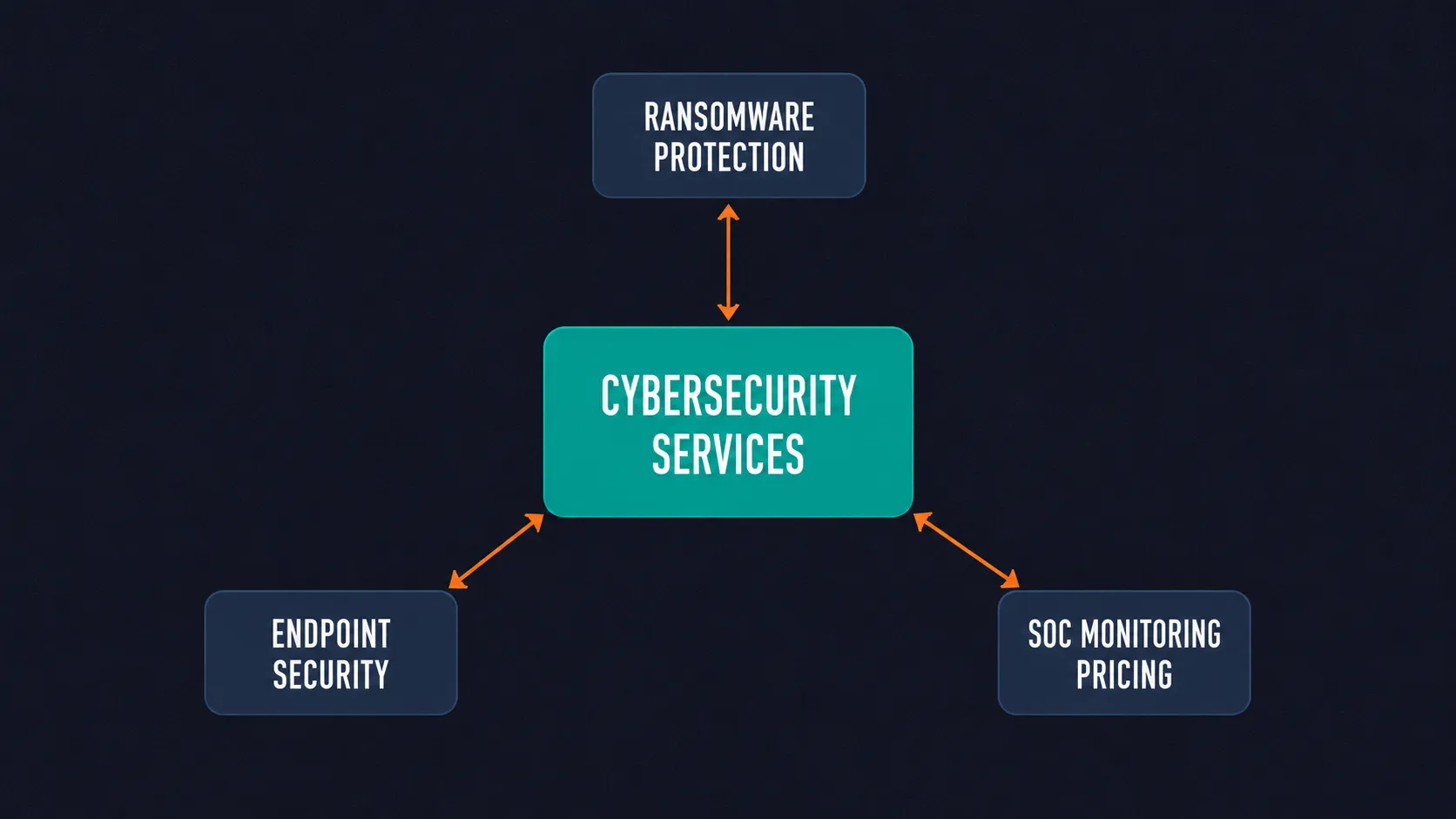
Take cybersecurity as an example. Your pillar page covers “cybersecurity services for mid-size enterprises” broadly. Supporting pages go deeper:
- Ransomware protection for healthcare providers
- Endpoint security for remote teams
- SOC monitoring services pricing
Each supporting page links back to the pillar, and the pillar links out to each supporting page. This structure helps Google understand your site covers cybersecurity comprehensively, and it gives every visitor a natural next page to read instead of bouncing after one article.
Fix the Technical SEO Gaps That Block IT Company Rankings
What does technical SEO actually mean for an IT company website? It means your site loads fast, search engines can crawl every page, and nothing blocks your content from being indexed in the first place.
None of the targeting and content strategy above matters if your site fails on the basics. The non-negotiables:
- Page load speed under 2 seconds
- Clean, descriptive URL structure
- Schema markup on every service and location page
- Full mobile optimization
- A crawlable site architecture with no orphaned pages
Most IT company sites get this technically right since the audience is technical, but the gap usually shows up in schema markup and structured data, the layer that helps Google and AI search tools understand what each page offers. This is the part of seo for it companies that gets skipped most often, not because it is hard, but because it stays invisible until a competitor outranks you on it, so run through a structured SEO checklist before any new site launch or redesign.
Build Trust Signals That Convert Skeptical Buyers
IT buyers spot thin content, recycled stock photography, and vague claims in seconds, and a site that feels generic loses their trust before the pitch even starts.
Trust signals that move the needle for IT companies:
- Named case studies with specific outcomes, not “we helped a client improve uptime”
- Author bylines on technical content, ideally from someone with real engineering or operations background
- Client logos and named partnerships where you have permission to show them
- A visible response time or SLA commitment on every service page
Recent research on B2B buyer behavior found that 94% of buyers now use tools like ChatGPT or Claude during their research, and 72% encountered an AI Overview during their last search, which means trust signals need to be readable by AI systems summarizing your page, not just by a human scanning it.
Backlinks for IT Companies: What Helps and What Hurts Rankings
| Link Source | Why It Helps | Effort Required |
| Industry directories (Clutch, G2, GoodFirms) | Sends topical relevance signals and stays live for years | Low |
| Guest posts on respected IT or business blogs | Builds authority and drives direct referral traffic | Medium |
| Unlinked brand mention reclamation | Recovers links you already earned but never claimed | Low |
| Original research or benchmark data | Attracts links naturally because journalists need sources | High |
Helpful Links to Pursue
Directory listings on platforms buyers already trust, like Clutch and G2, carry real weight because they combine a backlink with a review signal, and guest posts on respected industry blogs work the same way since the link matters less than the audience reading it.
Harmful Links to Avoid
Private blog networks and bulk-purchased link packages still show up in inboxes promising fast rankings, but they carry real penalty risk and rarely hold up over time. If a backlink offer cannot explain why a real reader would click it, skip it.
Show Up in AI Search Results, Not Just Google
Why does AI search visibility matter for an IT company? Because buyers increasingly ask ChatGPT or Perplexity to recommend a vendor before opening Google, and a site built only for traditional search misses that traffic entirely.
A question like “best managed IT services for a 50-person law firm” might show zero monthly search volume in a keyword tool, yet it is exactly the kind of question typed into an AI assistant every day. AI tools build their answers from clear, structured, fact-based content:
- Direct answers near the top of each page, written the way a person would actually ask the question
- Structured data and schema markup that make your services machine-readable
- Specific numbers and named outcomes instead of vague marketing language
- Consistent entity information (your company name, services, and locations) across your site and directory listings
IT companies that optimize for both channels capture buyers earlier in the decision, before competitors who only show up on page one of Google ever get the chance.
What a High-Performing seo for it companies Strategy Looks Like
Done right, seo for it companies includes:
- Service-specific landing pages built around real buyer intent
- Industry-focused content instead of generic “IT services” copy
- Long-tail and comparison keyword targeting
- Topic clusters with internal linking that builds authority
- Trust signals readable by both humans and AI search tools
- A backlink strategy built on relevance, not volume
- Continuous tracking of rankings, leads, and AI citation visibility
This combination is what separates IT companies generating real pipeline from those that just generate traffic.
How CometRank Handles This for IT Companies
Executing this properly means building intent-mapped service pages for every industry you serve, running topic clusters that compound over months, and staying visible in both Google and AI search results at the same time. Most IT companies do not have a marketing team built for that kind of sustained execution, and most agencies move too slowly to keep up with how fast IT buyer searches shift.
We’re an AI SEO agency that runs this entire workflow for clients using CometRank, our proprietary SEO software. CometRank runs six AI agents across intent mapping, content creation at scale, on-page optimization, and authority building, with a human SEO captain reviewing everything before it goes live. If you’re looking for an AI SEO agency for tech companies, this is what the execution actually looks like at scale.
To see how CometRank handles this for your IT company, book a demo and we’ll map out exactly which service pages and keywords would move your pipeline first.
Build the System Once, Let It Compound
seo for it companies works when it stops chasing broad traffic and starts targeting the exact searches your buyers run right before they pick up the phone. The IT companies winning in search are not the ones publishing the most content, they are the ones whose every page maps to a real buyer intent, backed by trust signals that hold up under scrutiny from technical audiences.
Start with one high-intent service page for your strongest vertical, build it the way this article outlined, and use it as the template for the next ten. The pipeline follows once the pages match how your buyers actually search.
SEO for IT Companies: Frequently Asked Questions
1/ How much should an IT company spend on SEO?
Most IT companies in the $1M to $5M revenue range spend $2,000 to $8,000 a month on SEO. Competitive markets and broader service areas push that number higher.
2/ How long does SEO take to show results for an IT company?
Technical fixes can move rankings within 4 to 8 weeks. Niche, intent-driven content typically takes 3 to 6 months to compound into consistent leads.
3/ Should an IT company handle SEO in-house or hire help?
Most IT companies lack a dedicated marketing hire, so tactical execution like keyword research and content production usually goes to an agency or platform. Case studies and positioning decisions still need input from inside the company.
4/ What makes SEO for IT companies different from other B2B SEO?
IT buyers research longer, compare vendors more carefully, and expect technical accuracy. Generic B2B content that skips industry specifics gets ignored by this audience.
5/ How important is AI search visibility for IT companies right now?
Very. Buyers increasingly ask ChatGPT and Perplexity for vendor recommendations before searching Google, so a site built only for traditional search misses a growing share of buyer research.