
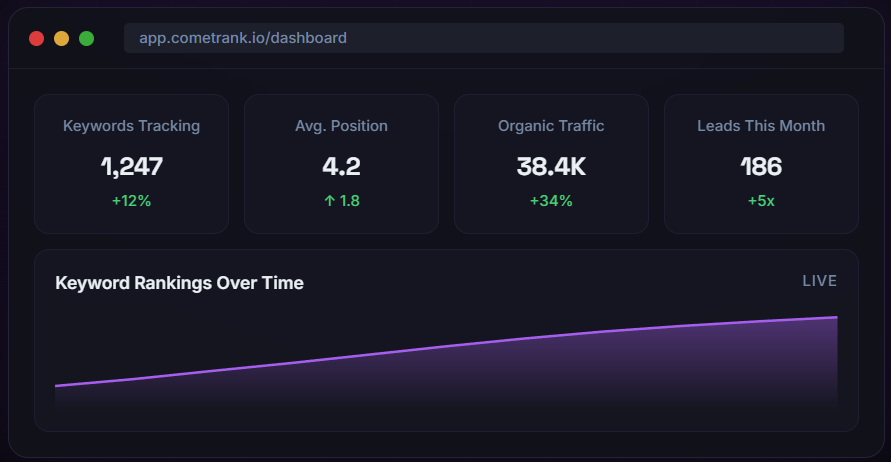
How are newer interior design studios outranking established firms on Google?
It’s not portfolio quality. It’s not referrals. It’s search structure. The studios showing up first built intent-matched service and location pages, optimized their Google Business Profile, and gave AI search tools enough detail to recommend them by name. In this article, we cover exactly what SEO for interior designers looks like in practice and how to replicate it so your next high-value project comes from search instead of your competitor’s inbox.

Why Most Interior Design Websites Fail to Rank
Most interior design websites are portfolio galleries with no keyword-targeted pages. That gives Google nothing to match against real client searches.
A beautiful site with no structure still loses to a plain site with the right pages. Common problems include:
- Only having a portfolio gallery with no keyword-targeted service pages
- Targeting broad terms like “interior designer” instead of high-intent local searches
- No dedicated location pages for each service area
- Thin service descriptions that never answer what a client actually wants to know
These issues mirror what happens across the broader renovation industry. Strategies used in seo for remodelers apply just as well to interior design firms working alongside contractors on renovation projects.
The result is a site Google cannot categorize. SEO for interior designers works when your website structure mirrors how clients actually search, not how your portfolio is organized.
How Interior Design Clients Search on Google
SEO for interior designers starts with matching page types to real search behavior. Interior design searches fall into three intent categories:
- Local Hiring Intent: clients ready to hire. Examples: “luxury interior designer in Dallas TX,” “modern kitchen interior designer Los Angeles.” These should land on local service pages built around the city and project type.
- Project-Specific Intent: clients searching for help with one space. Examples: “small apartment interior design ideas NYC,” “home office interior designer for remote work.” These belong on dedicated guides covering layout, furniture scaling, and lighting.
- Renovation Intent: clients searching mid-renovation. Example: “interior designer for kitchen remodel.” This overlaps heavily with contractor search demand, which is why the tactics in seo for home services apply directly here.
| Search Intent | Best Page Type | Example Keyword |
| Local Hiring Intent | Local service page | “luxury interior designer in Dallas TX” |
| Project-Specific Intent | Dedicated project guide | “small apartment interior designer in New York” |
| Renovation Intent | Service page plus supporting blog content | “interior designer for kitchen remodel” |
Mapping every page on your site to one of these three intents is the fastest way to fix a portfolio-only website.
Build Service Pages for High-Intent Design Searches
Every major project type your firm handles needs its own page, not a paragraph buried on a general services page.
- Kitchen design page (targeting “kitchen interior designer in Tampa FL”): design styles offered, cabinetry and material selection, appliance layout, lighting design, contractor collaboration
- Luxury home page (targeting “luxury residential interior designer Beverly Hills”): high-end materials, custom furniture sourcing, smart home integration
- Condo page (targeting “condo interior designer in Toronto”): space optimization, storage design, HOA considerations
- Commercial page (targeting “commercial interior designer near me”): workflow, brand alignment, and build timelines, using different language than the residential pages
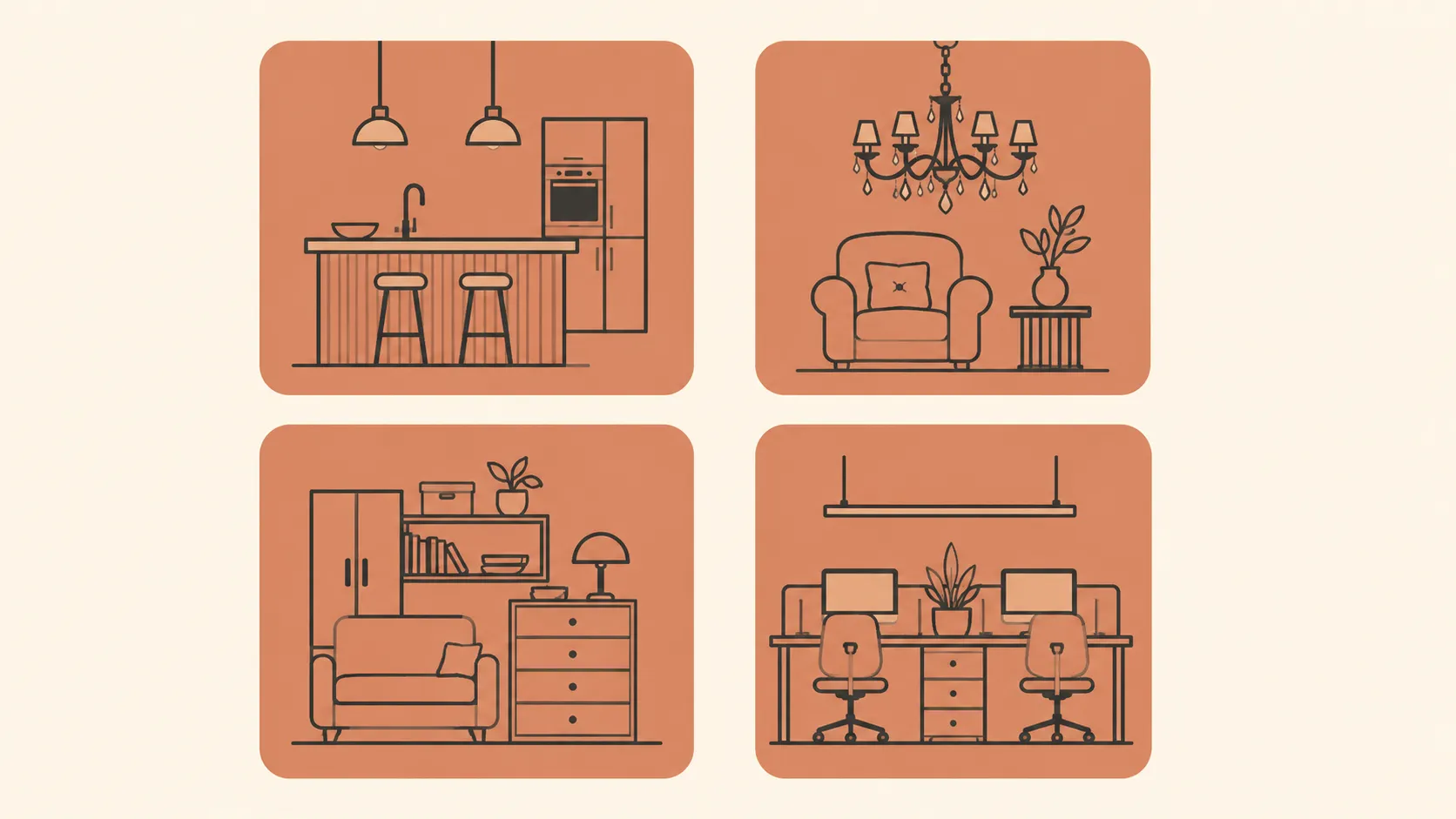
Each page should answer the exact question the client typed into Google, not a generic version of it. A common mistake is writing one service page and hoping it ranks for every project type.
Google rewards specificity. The firm with five focused pages will consistently outrank the firm with one broad page that tries to cover everything.
Turn Your Homepage and Location Pages Into Lead Generators
Your homepage is the page most interior designers underinvest in. It’s often the first thing both Google and a potential client evaluate.
A client should know your service area and design focus within the first few seconds of landing on your homepage, not after scrolling to the footer. A strong homepage weaves in:
- The neighborhoods and regions you serve
- How long you’ve worked in the area
- The specific design style you’re known for
Location pages need the same clarity. Build pages like “Interior Designer in Austin TX” or “Luxury Interior Designer in Miami FL,” and include:
- Local project examples
- Testimonials from nearby clients
- Clear consultation availability
Treat each location page as its own asset, not a copy-paste variation of the homepage with the city name swapped out.
Local visibility also depends heavily on your Google Business Profile, which many designers set up once and never touch again. Keeping it complete and current, with recent project photos and consistent service area details, directly affects whether you show up when a nearby homeowner searches. Our guide on google business profile for local seo covers the specific fields that move rankings.
Optimize Portfolio Images and Your About Page for Search
Interior design is a visual business, but unnamed image files and a thin About page give Google and AI tools nothing to work with.
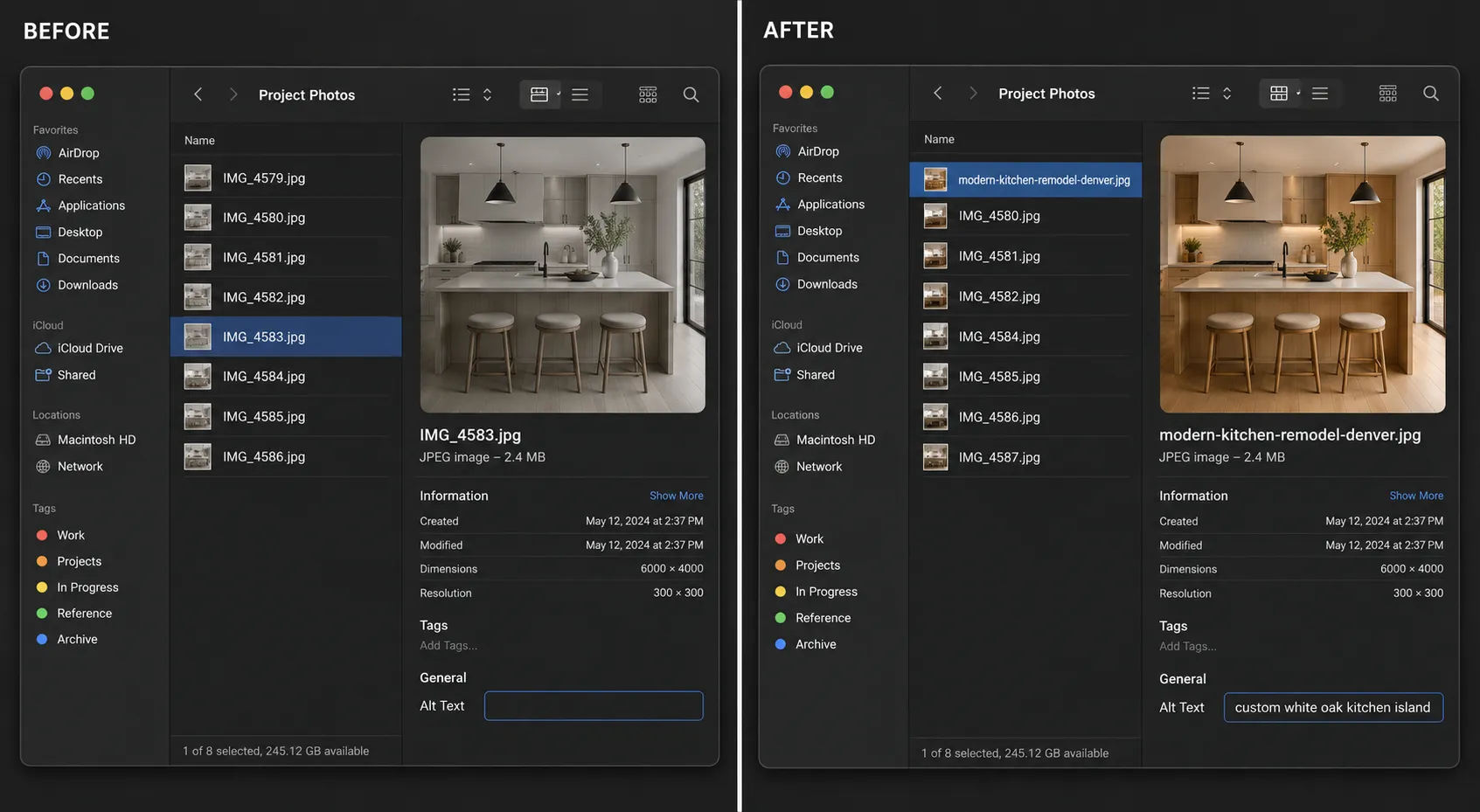
Project photos usually arrive from a photographer with file names like IMG_4583.jpg. Fix this with:
- Descriptive, hyphenated file names, such as modern-kitchen-remodel-denver.jpg
- Plain-language alt text, such as “custom white oak kitchen with marble island in a Denver residential remodel”
- Compressed file sizes, since interior design sites load slowly by default and a slow site loses both rankings and impatient visitors
Your About page carries more SEO weight than most designers realize. A page that only says “I love creating beautiful spaces” gives AI search tools nothing to cite.
A page that describes your design aesthetic in specific terms, the types of projects and clients you work best with, your process, and real numbers like years in business or projects completed gives both Google and AI tools something concrete to recommend.
Interior Design Content That Attracts High-Intent Searches
Blog content should focus on the planning and decision stage, before a client is ready to hire.
- A post targeting “how to plan interior design for a home renovation” should cover when to bring in a designer, how to work with contractors, and what the timeline looks like
- A post targeting “modern vs transitional interior design for luxury homes” should compare materials, finishes, and which style fits which property type
The most underused version of this tactic: treat each completed project like a blog post instead of a gallery entry. A detailed write-up covering the location, design choices, challenges solved, and materials used lets one project rank for multiple searches at once, and gives AI tools the specificity they need to recommend your firm by name.
Backlinks That Build Authority for Interior Design Firms
Directory and Publication Links That Strengthen Rankings
Backlinks from relevant, established sources tell Google and AI search tools that your firm is a real, credible business.
- A complete, active Houzz profile with project photos and reviews
- A current listing in the ASID directory if you hold membership
- A local Chamber of Commerce listing
- Referral relationships with local real estate agents who link to your site
- Features in local design or architecture publications
These build authority gradually. Each one strengthens both traditional rankings and how confidently AI tools cite your firm. Understanding how these mentions function is covered in our guide on what are citations in seo.
Link Sources That Damage Rankings
- Paid link networks or link farms unrelated to design or home services
- Generic directory spam with no real traffic or relevance
- Exact-match anchor text schemes built purely to manipulate rankings
A handful of relevant, earned links will outperform hundreds of low-quality ones every time.
How AI Search Tools Are Changing How Clients Find Interior Designers
Homeowners are no longer only searching Google. They’re asking ChatGPT, Perplexity, and Google AI Overviews to recommend a designer directly, and those tools pull from the same specificity that traditional SEO rewards.
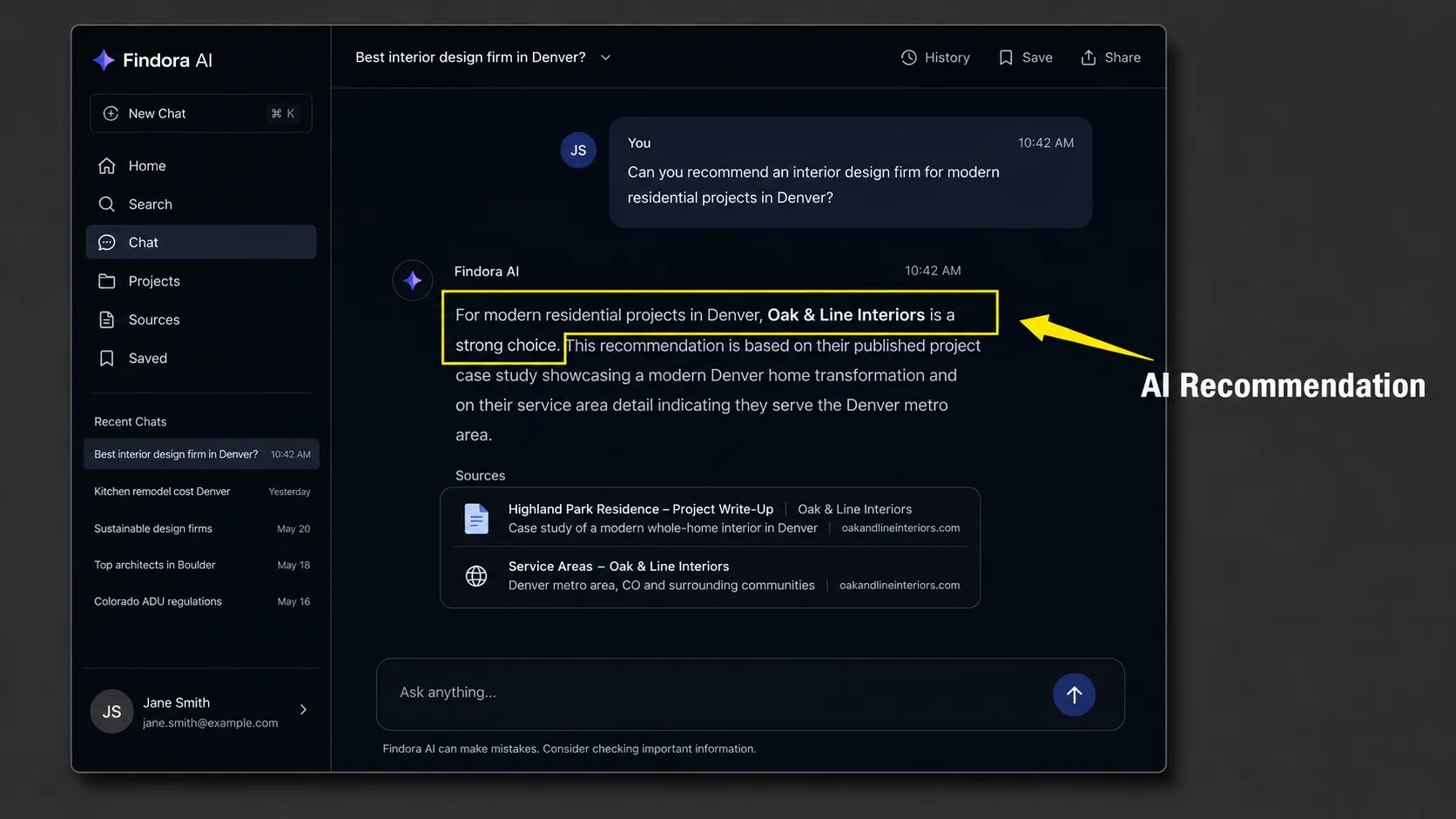
A thin homepage or a vague About page gives these tools nothing to work with. What gets pulled into an AI-generated recommendation:
- Detailed service pages
- Named project write-ups
- Consistent local details across your site and directory listings
When a client asks ChatGPT to recommend a modern kitchen designer in their city, the tool is scanning for firms whose websites already answer that exact question in specific, well-structured detail, not firms with a stylish homepage and nothing else.
This overlap between traditional search and AI search, often called generative engine optimization, is becoming just as important as your Google ranking.
Why Interior Designers Need Scalable SEO Systems
Most designers approach SEO for interior designers with a handful of blog posts or a basic keyword tool, and stall out once the real challenge becomes obvious.
The actual challenge is building complete coverage across:
- Service pages
- Location pages
- Project-specific guides
- Renovation content
- Image optimization, backlink building, and profile management, all running in parallel
Most firms simply don’t have the time to do all of it well while also running client projects.
Search behavior in home services keeps evolving. Clients now search by project type, by location, by design style, and by renovation stage, often within the same week. Design firms that structure their websites around these real behaviors capture more high-value projects. Firms that rely only on portfolios and social media stay invisible in search, no matter how good the work is.
How CometRank Handles SEO for Interior Design Firms
Everything above, intent-mapped pages, local SEO, image and About page optimization, backlinks, AI visibility, works. But building and maintaining all of it by hand is a full-time job most design firms don’t have room for. We’re an AI SEO agency that runs this entire workflow for clients using CometRank, our proprietary SEO software. Six AI agents handle it:
- Analyst: studies your firm and local market
- Strategist: maps client search intent to page types
- Creator: builds the service, location, and content pages
- Optimizer: keeps everything internally linked and formatted right
- Authority Builder: runs backlink outreach to design-relevant directories and publications
- Quality Guardian: checks every output against your standards before it goes live
A human SEO Captain reviews the work at every stage, so nothing publishes without a person checking it first. Book a demo to see how this applies to your firm’s specific market.
SEO for Interior Designers Is a Structure Problem, Not a Talent Problem
Your work speaks for itself once a client finds you. The gap most design firms face isn’t quality, it’s visibility.
Building pages around how clients actually search, from local hiring intent to renovation planning, is what turns Google from a place your projects go unseen into a consistent source of high-value inquiries. Start with your homepage and one location page, get those right, and expand from there.
Frequently Asked Questions About SEO for Interior Designers
1. Is SEO for interior designers different from SEO for other local businesses?
Yes. Interior design SEO depends more heavily on visual content, portfolio structure, and style-specific keywords than most local service businesses. A designer’s images, project write-ups, and About page carry more ranking and AI-citation weight than they would for a plumber or electrician.
2. Do interior designers still need a blog if they already have a strong portfolio?
Yes. A portfolio only ranks for the projects already listed. A blog and detailed project write-ups let a firm rank for planning-stage searches, style comparisons, and renovation questions that happen before a client is ready to hire.
3. How does Google Business Profile affect interior design search visibility?
Google Business Profile controls whether a firm appears in local map results and nearby searches. An incomplete or outdated profile is one of the most common reasons an otherwise strong design firm stays invisible in local search.
4. What should an interior design firm’s homepage include?
A homepage should state the service area, design focus, and years of experience within the first few seconds, backed by real project examples and enough substantive content for Google to understand what the firm offers.
5. How often should an interior design firm publish new content?
Consistency matters more than frequency. A few well-researched project write-ups or planning guides published monthly outperform frequent, thin posts, especially since AI search tools reward specificity over volume.