
Why does your plant stay busy this month but your pipeline look thin next quarter?
Most manufacturers know the pattern. A handful of accounts carry the revenue, sales chases a single RFQ for months, and new inquiries arrive in unpredictable bursts. When one buyer delays an order or moves production elsewhere, the forecast gap shows up within weeks.
In this article, we cover the 8 manufacturing lead generation challenges behind that pattern and what fixes each one.
Why Lead Generation Works Differently for Manufacturers
Manufacturing lead generation is harder because the buyer decides almost everything before you hear from them. Gartner research on the B2B buying journey puts the share of total buying time spent with all potential suppliers at roughly 17 per cent. The rest is committee discussion and independent research you never see.
Industrial buyers also carry more risk than most B2B buyers. A wrong supplier means requalification, retooling and line downtime, so they favour shops that look proven before the first conversation happens.
Here is how the two models compare.
| Factor | Standard B2B | Manufacturing |
| Sales cycle | Weeks to a few months | 6 to 18 months |
| People involved | 1 to 3 | 5 to 10 across engineering, procurement, quality and operations |
| First conversion action | Demo or free trial | RFQ, drawing upload or capability request |
| What triggers the deal | Budget cycle or renewal | Capacity change, supplier switch or a new program |
| What buyers check first | Pricing page and reviews | Tolerances, certifications, capacity and lead times |
| Cost of choosing wrong | Switch vendors next quarter | Line downtime and full requalification |
Those differences explain why tactics borrowed from software marketing rarely produce RFQs on a shop floor, and why the manufacturing sales process needs a structure built around how CNC machining and fabrication buyers actually make decisions.
8 Manufacturing Lead Generation Challenges That Drain Your Pipeline
1/ Overdependence on Referrals and Repeat Accounts
Referrals feel safe because they close well and cost nothing to generate. The problem is volume. You cannot decide to receive more of them next month, and they arrive on the customer’s schedule rather than yours.
The same limitation applies to listings, which is why manufacturers cannot rely on directories the way they once did.
When a major account reduces orders or reshores production, there is no second channel ready to replace that revenue. One customer decision moves an entire quarter.
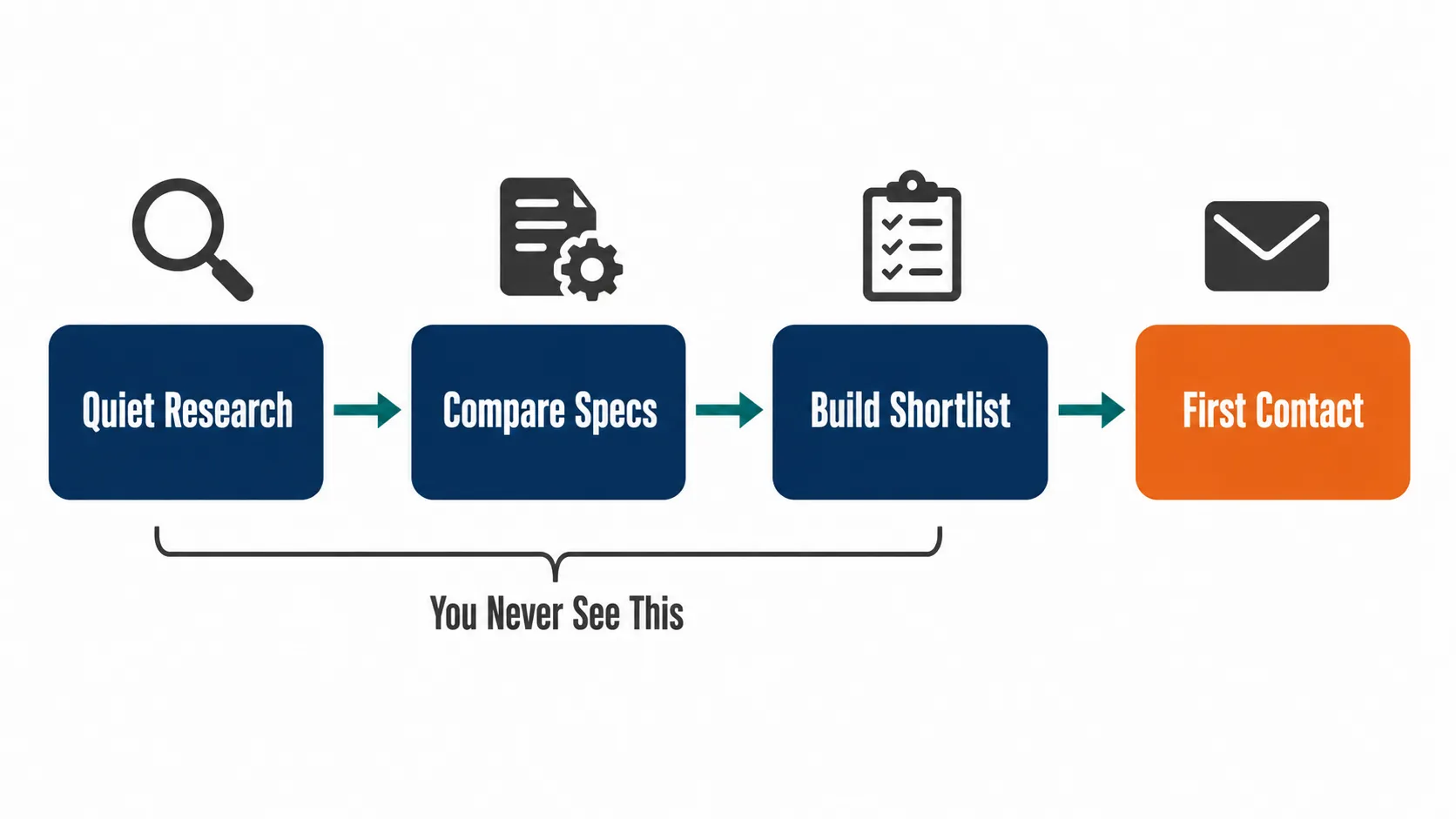
2/ Buyers Shortlist You Before They Ever Make Contact
Engineers and procurement teams research quietly. They compare capabilities, read spec pages and build a shortlist of three or four shops without contacting anyone. That research now happens across Google, ChatGPT and Perplexity, which is a problem when your manufacturing website is not showing up in ChatGPT.
If your capabilities are not findable during that window, you are never evaluated.
This is the most expensive challenge on the list because it is invisible. There is no lost deal to review, no quote to follow up. The inquiry simply never arrives.
3/ A Buying Committee You Cannot Reach Directly
A single supplier decision can involve design engineers, procurement managers, quality leads and operations heads. Each one weighs different criteria. The engineer cares about tolerances, procurement cares about landed cost, quality cares about certifications.
Reaching one contact does not move the deal forward.
Deals stall for months while internal consensus forms without your input, and the person you spoke to often has the least authority in the room.
4/ Sales Cycles That Stall Between Quote and Award
Manufacturing cycles commonly run 6 to 18 months because buyers must verify capacity, quality systems, certifications and supply chain reliability before committing production to a new supplier.
Most sales teams are not built for that rhythm. Two calls go out, nothing comes back, and the opportunity quietly leaves the forecast.
Pipeline value sits frozen instead of moving, and reps chase new quotes while awarded work slips to a competitor who stayed in touch.
5/ Capabilities That Look Identical to Every Competitor
CNC machining, fabrication and injection molding are described in almost the same words on hundreds of supplier sites. Same equipment lists, same quality claims, same stock photography.
Buyers see no reason to prefer one shop over another.
When nothing separates you, the conversation defaults to price. Margins compress on work you should have won on capability, and repeat orders go to whoever quotes lowest next time.
6/ An RFQ Path That Loses Interested Buyers
Many manufacturing sites bury the quote request behind a generic contact form that asks for company name and a message box, but never for part details, material, tolerance or volume.
Buyers who were ready to submit drawings abandon the form instead.
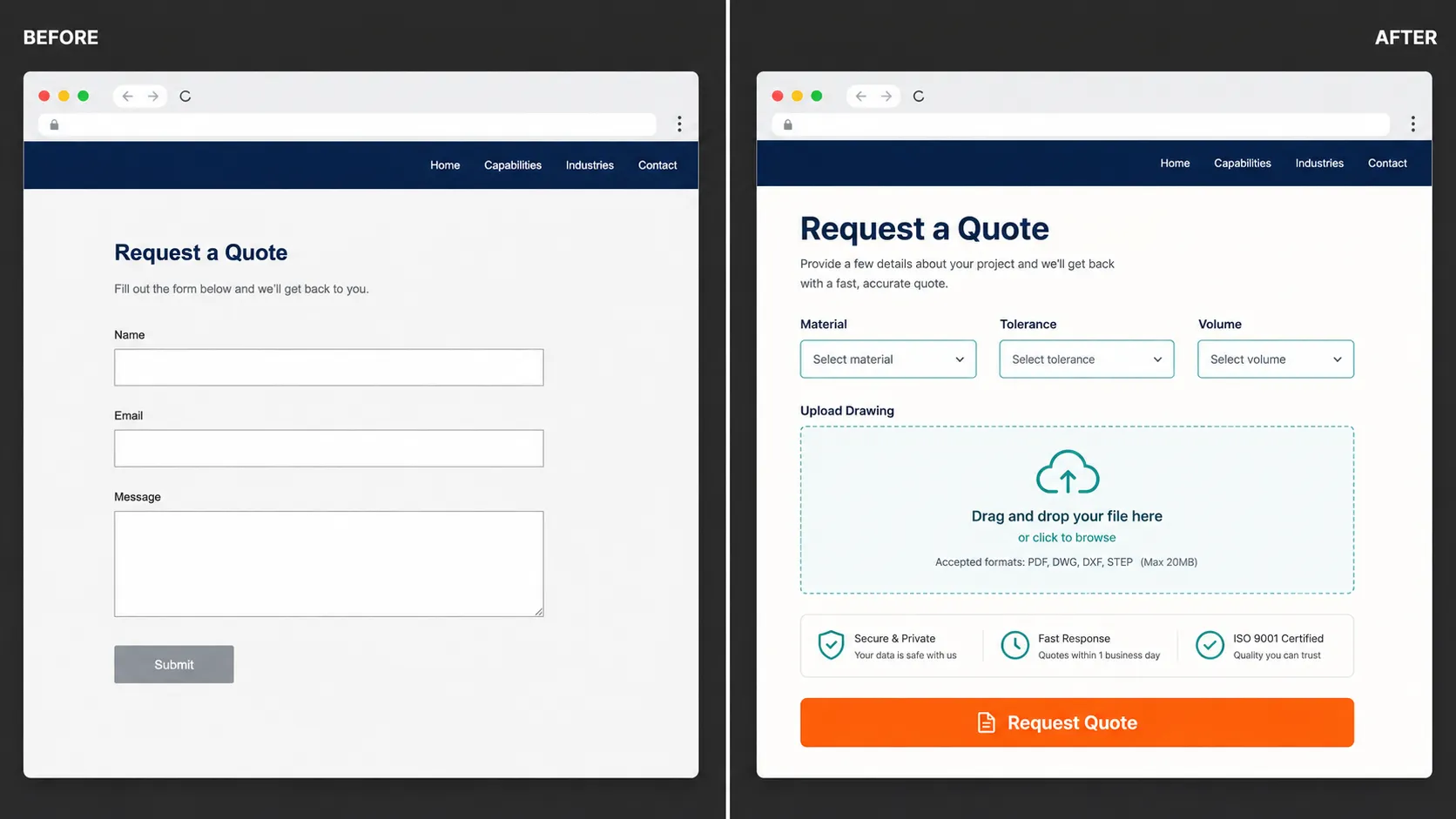
This is the cheapest leak to fix and the most costly to ignore, because it wastes demand you already earned. The buyer found you, shortlisted you, and left anyway.
7/ Slow Response Times That Remove You From the Shortlist
Industrial buyers evaluate a small number of suppliers and expect answers quickly. A quote that takes a week tells them exactly how you will handle an urgent production issue later.
Speed reads as capability in this market.
Slow replies remove you from consideration before your tolerances, certifications or capacity are ever discussed. You lose on responsiveness, not on merit.
8/ No Visibility Into Where Leads Actually Come From
Most shops cannot say which channel produced their last five customers. Phone inquiries go untracked, form submissions carry no source data, and trade show leads get typed into a spreadsheet nobody opens again.
Without that view, budget follows whatever felt busy last quarter.
Money keeps going to channels that produce activity instead of revenue, and the channels that actually work never get funded properly.
How to Fix These Manufacturing Lead Generation Challenges
Every challenge above traces back to one root cause. Buyers are doing the work of finding, comparing and shortlisting suppliers, and most manufacturers are absent from that entire process.
The fix is not more activity. Running more ads, adding another trade show or pushing sales harder does not close a visibility gap. It just makes the same gap more expensive.
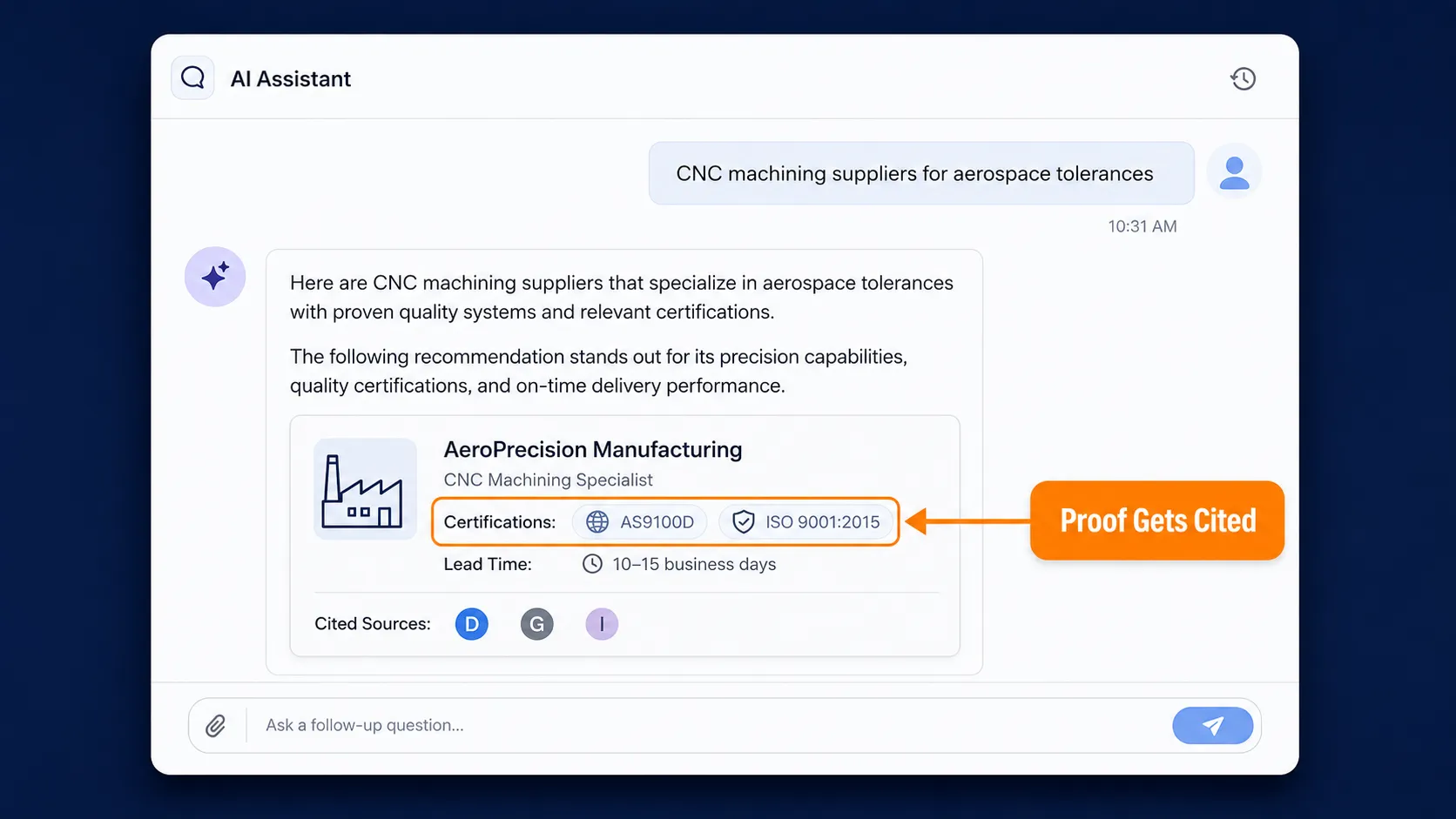
What works is building structure around how industrial buyers actually buy:
- Publish capability pages that name materials, tolerances, volumes, certifications and industries served, so a researching buyer can qualify you without a call
- Write for each committee role separately, since an engineer needs specifications while procurement needs lead times and pricing structure
- Rebuild the RFQ page to ask only what qualifies a job, then place it on every capability and product page
- Set a response standard your team can actually hold, then measure it, because speed decides shortlists more often than price does
- Track every inquiry to its source with call tracking and form attribution, then move budget toward what produced revenue
- Replace generic capability claims with proof, including part examples, audit results and named outcomes from similar programs
- Run a structured follow-up sequence across the full quote-to-award window instead of two calls and silence
Referrals and trade shows still belong in the mix, alongside the lead generation strategies that bring qualified buyers in on their own. They just cannot be the only two ways new revenue arrives.
Most shops do not need all seven at once. Start with the two that touch your largest leak, usually the capability pages and the RFQ path, then add the rest as they prove out.
How CometRank Solves These Manufacturing Lead Generation Challenges
We are an AI SEO agency, and we run this work using CometRank, our proprietary software. Six AI agents handle the execution:
- The Analyst finds the searches your buyers actually run
- The Strategist maps those searches to the capability pages that should rank for them
- The Creator writes the pages in language engineers and procurement teams trust
- The Optimizer improves whatever underperforms after it goes live
- The Authority Builder earns links from industrial sources that carry weight
- The Quality Guardian checks every technical claim before anything publishes
A human SEO Captain owns the strategy and reviews every output, so nothing goes live without someone who understands industrial buyers signing off on it. That is how AI SEO for manufacturing companies stays accurate enough to put in front of engineers. If you want your capabilities found during that research window, book a demo and we will show you where your buyers are searching and who is currently winning those searches.
Final Thoughts
The busy plant with the thin pipeline is not a sales problem. It is a visibility problem that shows up in the forecast one quarter late.
Manufacturing lead generation challenges get easier the moment buyers can find, compare and qualify you without a phone call. Fix that window and the RFQs start arriving from companies you never had to chase.
Frequently Asked Questions About Manufacturing Lead Generation Challenges
1/ Why is lead generation harder in manufacturing than in other industries?
Because the decision is made by a committee over a long period, mostly without supplier contact. Five to ten people across engineering, procurement, quality and operations evaluate capacity, certifications and lead times before anyone sends an inquiry.
2/ How long is the average manufacturing sales cycle?
Most industrial supplier decisions run 6 to 18 months from first research to awarded contract. Capital equipment and regulated programs sit at the longer end, since they add qualification audits and compliance review.
3/ Do trade shows still generate leads for manufacturers?
Yes, but they work best as a discovery channel rather than a full pipeline. Buyers who meet a supplier at a show still research that supplier online afterward, which is where most of the shortlisting actually happens.
4/ How much does a manufacturing lead cost?
Cost per qualified industrial lead varies widely by channel and deal size, ranging from tens of dollars for organic inquiries to several hundred for paid channels. Deal value matters more than lead cost, since one supplier relationship can run for years.
5/ What is the biggest challenge in manufacturing lead generation?
Invisibility during buyer research. Every other challenge is at least measurable, because an inquiry exists. When a buyer never finds you, there is no lost deal in the CRM to review.