
Chiropractic clinics rely heavily on local search visibility to generate new patients. When someone searches “chiropractor near me” or “chiropractor for sciatica treatment in Phoenix AZ,” they are usually ready to book an appointment.
However, many chiropractic websites fail to rank for these high-intent queries because they rely on generic pages like “Services” or “Chiropractic Care.” Search engines prioritize specific pages that match the exact patient problem and intent.
This guide explains how chiropractors can build a search strategy that attracts patients actively looking for treatment — and how modern AI systems like an AI SEO platform can automate much of the process.
Why Most Chiropractor Websites Fail to Rank for Local Search
Most chiropractic sites are structured around broad services rather than search intent. A typical clinic might have only:
- Home
- About
- Services
- Contact
This structure does not align with how patients search.
Patients usually search with specific pain problems, treatments, and locations. For example:
- “chiropractor for lower back pain in Dallas TX”
- “chiropractic treatment for sciatica near me”
- “sports injury chiropractor in Denver CO”
- “chiropractor for neck pain after car accident Tampa FL”
If your website doesn’t contain pages that directly match these searches, Google has little reason to rank it.
This is why many clinics invest in SEO but see little return.
A modern AI SEO company focuses on intent-mapped pages instead of generic website content, helping clinics capture searches that convert into booked appointments.
Mapping Chiropractor SEO Around Patient Intent
Effective SEO for chiropractors starts with understanding why someone is searching.
Search intent usually falls into four categories.
1. Pain-Specific Searches
Patients often search based on their condition.
Examples:
- “chiropractor for herniated disc in Chicago”
- “chiropractor for migraines treatment Seattle”
- “chiropractor for sciatica pain relief Austin TX”
Page strategy
Create condition-specific pages targeting each problem.
Example page:
Keyword:
“chiropractor for sciatica treatment in Phoenix AZ”
Page sections should include:
- Symptoms of sciatica
- How chiropractic adjustments help
- Treatment approach used in your clinic
- Recovery expectations
- Appointment CTA
This structure helps search engines clearly understand the page and match it to patient queries.
2. Treatment-Specific Searches
Some patients search by treatment type.
Examples:
- “spinal decompression chiropractor Los Angeles”
- “chiropractic adjustment for neck pain Houston”
- “chiropractor offering posture correction Miami”
Page strategy
Create treatment pages that explain the procedure.
Example page:
Keyword:
“spinal decompression therapy chiropractor San Diego”
Recommended page structure:
- What spinal decompression therapy is
- Conditions it treats
- Treatment process
- Benefits and recovery time
- Why your clinic specializes in it
This helps capture patients actively researching treatment options.
3. Local “Near Me” Searches
Local intent drives the majority of chiropractic leads.
Examples:
- “chiropractor near me open today”
- “emergency chiropractor in Las Vegas”
- “walk in chiropractor Chicago”
Page strategy
Create location pages if you serve multiple areas.
Example page:
Keyword:
“chiropractor in Mesa AZ for back pain treatment”
Page sections:
- Clinic introduction for Mesa patients
- Conditions treated
- Directions and map
- Local patient testimonials
- Appointment booking
These pages improve visibility in Google Maps and local search results.
Building Topic Clusters for Chiropractic SEO
Google favors websites that demonstrate authority on a topic, not just individual pages.
Chiropractors should build clusters around major treatment areas.
Example cluster:
Main topic: Back Pain Chiropractic Treatment
Supporting pages:
- “chiropractor for lower back pain treatment Dallas TX”
- “chiropractic care for herniated disc”
- “how chiropractors treat sciatica pain”
- “spinal decompression therapy for back pain”
This cluster signals to search engines that your site has deep expertise in treating back pain.
AI-driven systems such as AI SEO for healthcare services help identify these clusters automatically and generate structured content that matches real search demand.
Optimizing Google Business Profile for Chiropractors
For chiropractors, Google Business Profile (GBP) is just as important as the website.
Key optimization steps:
1. Accurate categories
Primary category should be:
- Chiropractor
Secondary categories can include:
- Sports injury clinic
- Pain management clinic
- Wellness center
2. Service listings
Add services such as:
- Sciatica treatment
- Neck pain adjustment
- Spinal decompression therapy
3. Patient reviews
Encourage patients to mention specific treatments in reviews.
Example review:
“Dr. Smith helped relieve my sciatica pain with spinal decompression therapy.”
This reinforces keyword relevance.
Creating Content That Attracts Chiropractic Patients
Beyond service pages, chiropractors should publish problem-solution content.
Example blog topics:
- “How chiropractic adjustments relieve sciatica pain”
- “Signs you need spinal decompression therapy”
- “Can a chiropractor help with migraines?”
Each article should link to relevant service pages, strengthening internal SEO structure.
An advanced AI SEO platform can automate this process by:
- identifying high-intent keywords
- generating structured content
- improving internal linking
- expanding topical coverage
Instead of manually planning dozens of pages, clinics can scale content faster while maintaining quality.
The Future of Chiropractic SEO: AI-Driven Search Visibility
Local healthcare SEO is becoming increasingly competitive.
Clinics that rely on basic blog posts or outdated SEO tactics struggle to rank against competitors publishing structured, intent-driven content at scale.
Modern AI-driven SEO systems combine:
- keyword opportunity discovery
- structured page creation
- internal linking optimization
- authority building
This approach transforms SEO from a slow marketing channel into a predictable patient acquisition system.
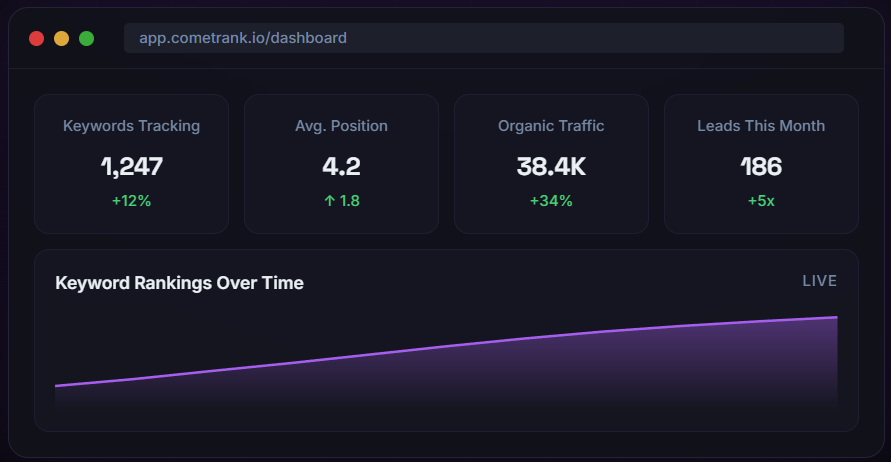
Platforms like CometRank act as a central command center where AI agents identify ranking opportunities, generate content, optimize pages, and build authority signals automatically.
For chiropractors, this means turning search visibility into consistent new patient bookings rather than unpredictable traffic.