
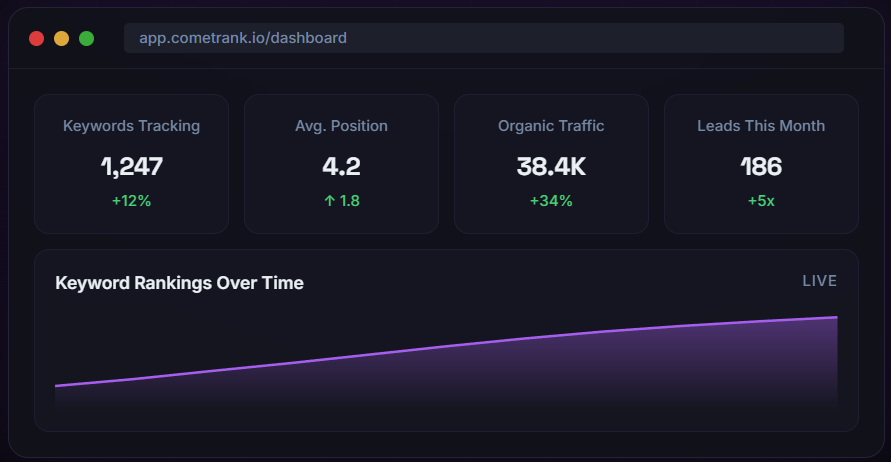
Why are smaller window and door contractors outranking you on Google?
Reviews and pricing rarely explain the gap. Page structure does. The contractors winning local search built specific, keyword-matched pages for every service and city they want jobs in, while most window and door websites still run on three generic pages and a contact form. In this article, we cover exactly what those top-ranking contractors do differently in marketing for window and door contractors, so you stop losing quote requests to whoever shows up above you.
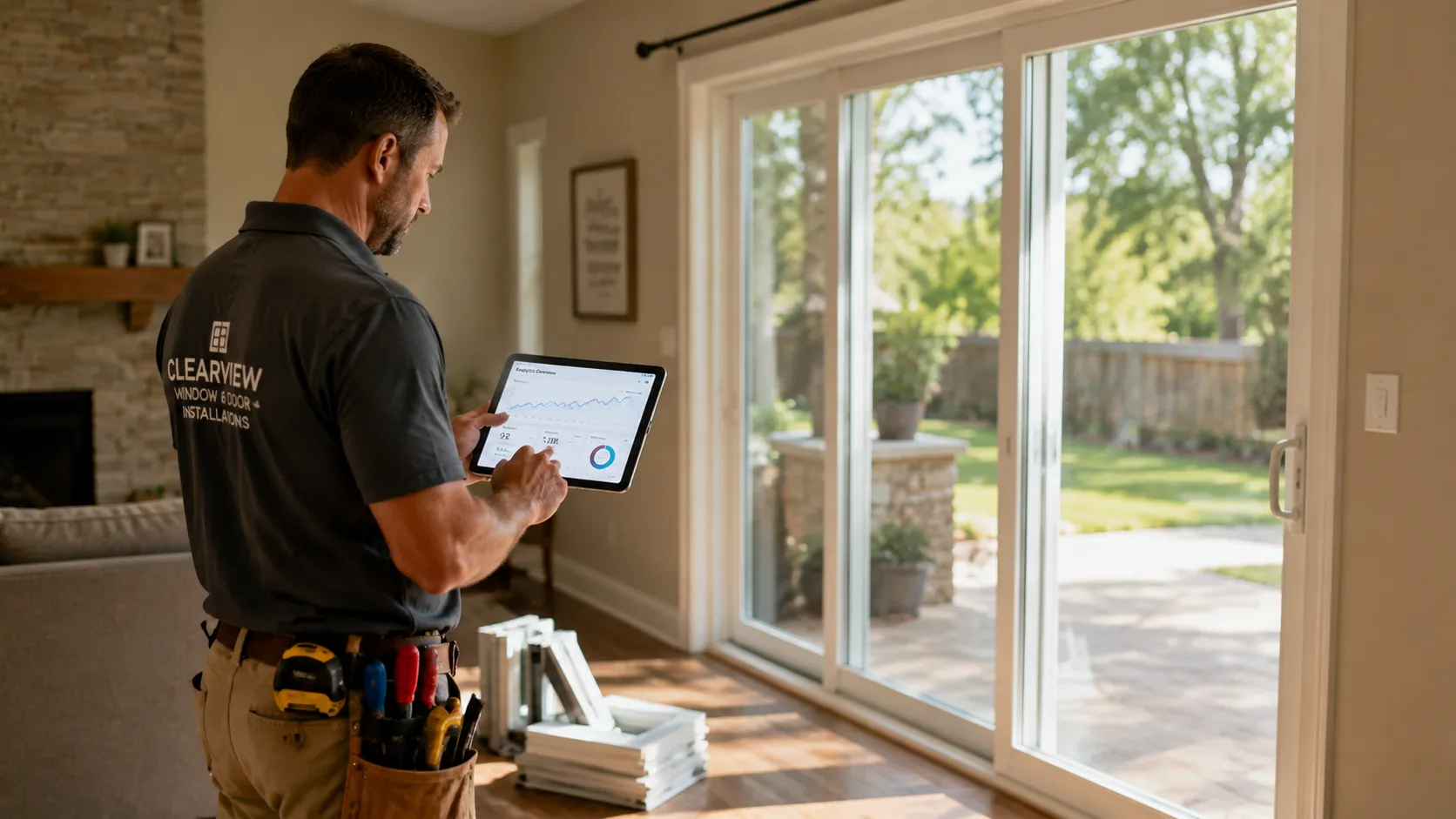
Why Most Window and Door Contractor Websites Fail to Rank
Most contractor sites target broad terms like “window installation” or “door replacement near me.” These terms are crowded and vague, so Google has no way to match your business to a specific buyer.
Homeowners search with more detail than that. They type things like “vinyl window replacement cost in Tampa FL” or “sliding patio door installation contractor in San Diego CA.” If your site has no page built around that exact query, you don’t show up. A competitor’s page does.
This is the real reason most window and door contractor websites fail to rank. Not weak content. Missing pages.
The fix isn’t more blog posts about “why windows matter.” It’s building the exact page a homeowner is searching for, before they land on a competitor’s site instead.
What Makes Marketing for Window and Door Contractors Different From Other Home Services
Window and door marketing costs more per lead than most home service categories because it’s a rare, high-value home improvement decision. According to NerdWallet’s cost data, replacing windows runs $300 to $2,500 per window, with full-home projects often reaching $18,000 to $20,000 or more. That price tag means homeowners research heavily before hiring, and it concentrates competition into two short buying windows each year:
- Spring, when homeowners start planning renovation projects
- Late summer to early fall, when energy efficiency upgrades get locked in ahead of winter
Contractors who build content and page structure around those two windows capture demand before competitors even start bidding on it. There’s also a brand problem unique to this trade. Local installers compete against national names like Andersen, Pella, and Window World, which spend heavily on brand awareness. A generic services page can’t compete with that budget. A page built around a homeowner’s exact search can.
The high project value changes how you should think about cost per lead, too:
- A $250 service call can’t justify spending much to win one search click
- A five-figure whole-home replacement can justify a much higher cost per lead, as long as the lead is genuinely ready to buy
This is why problem-driven, city-specific pages outperform broad keywords in this trade. They cost more to rank for, but they convert at a rate that makes the investment worth it.
Build Service Pages Around High-Intent Local Keywords
Instead of one “services” page, build a dedicated landing page for each service and city combination homeowners actually search for.
Window replacement page, targeting a keyword like “vinyl window replacement contractor in Houston TX,” should cover:
- types of vinyl windows installed
- energy efficiency ratings and insulation benefits
- installation process and timeline
- warranty details
- before and after project photos
- cost factors for replacement windows
- service areas across Houston
Patio door installation page, targeting “sliding patio door installation contractor in Los Angeles CA,” should cover:
- types of patio doors installed
- materials: aluminum, vinyl, fiberglass
- security and locking features
- energy efficiency benefits
- installation timeline
- local project examples
Pages structured this way match real homeowner intent instead of generic marketing copy, and this is one of the clearest local SEO tactics remodeling contractors use to win the exact same kind of high-ticket, infrequent-purchase searches.
Turn Your Google Business Profile Into a Lead Source
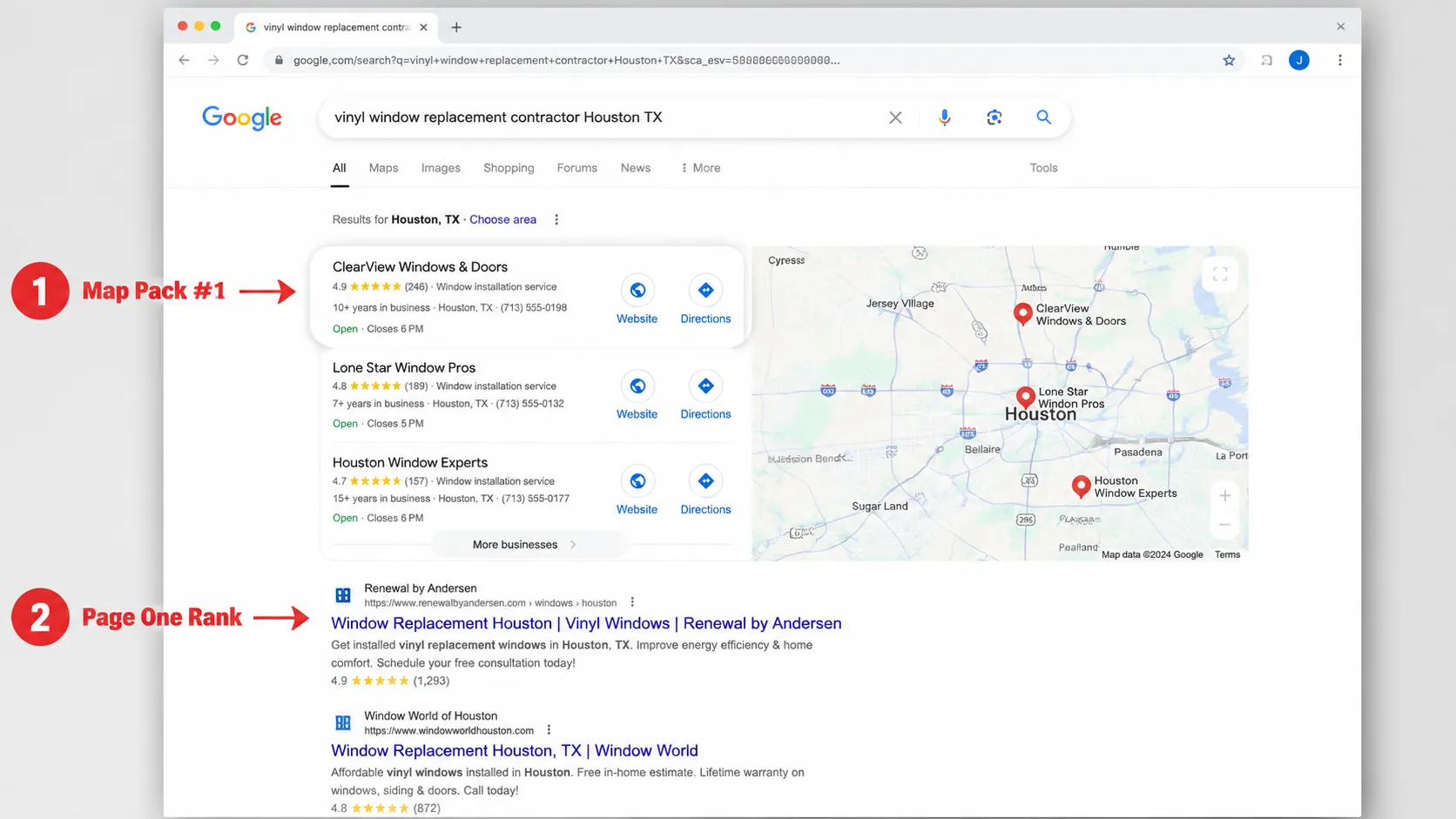
A complete, active Google Business Profile drives free local leads for window and door contractors because it shows up in the map pack before any organic result does.
Most contractors set up their profile once and forget it. That’s a mistake. Google rewards profiles with recent photos, accurate service areas, and a steady flow of new reviews with better local pack placement.
Update your profile weekly with photos from finished jobs. List every product category you install, not just “windows” and “doors.” Add casement windows, bay and bow windows, storm doors, and patio doors as separate service listings so you match more specific searches. Respond to every review, good or bad. This single habit does more for local visibility than most contractors expect, and our Google Business Profile optimization guide covers the five changes that move the needle fastest.
Create Content That Answers Pre-Purchase Questions
Before hiring a contractor, homeowners research cost, materials, and energy savings. Publishing informational pages captures that research traffic before your competitors do.
Cost guide page, targeting “cost to replace windows in Chicago IL,” should include:
- average price per window type
- labor versus material cost breakdown
- factors that affect price
- when replacement is worth it
- financing options
Energy efficiency guide, targeting “best energy efficient windows for hot climates,” should include:
- double pane versus triple pane comparison
- low-E glass benefits
- insulation ratings explained
- long-term energy savings examples
These pages capture informational intent early, which converts into installation jobs once the homeowner is ready to hire. The same logic applies to adjacent high-ticket trades. Our guide on SEO for home builders breaks down how to structure cost and buying-guide content for long sales cycles like this one.
Local Search vs. PPC vs. Local Services Ads: Which Should You Prioritize?
Most contractors run all three eventually, but each channel plays a different role depending on how fast you need leads and how much budget you have upfront.
| Channel | Speed to first lead | Cost per lead over time | Best for |
| Local SEO / service pages | Slow (2 to 4 months) | Drops steadily, compounds for years | Long-term, owned lead pipeline |
| Google Local Services Ads | Fast (days) | Pay per verified lead, stays steady | Filling immediate calendar gaps |
| PPC / Google Ads | Fast (days) | High and rises with competition | Short bursts around seasonal peaks |
Local Services Ads (LSA) place your business above standard paid results for searches like “window replacement near me,” with the Google Guaranteed badge attached. That badge builds instant trust, but you pay for every lead indefinitely.
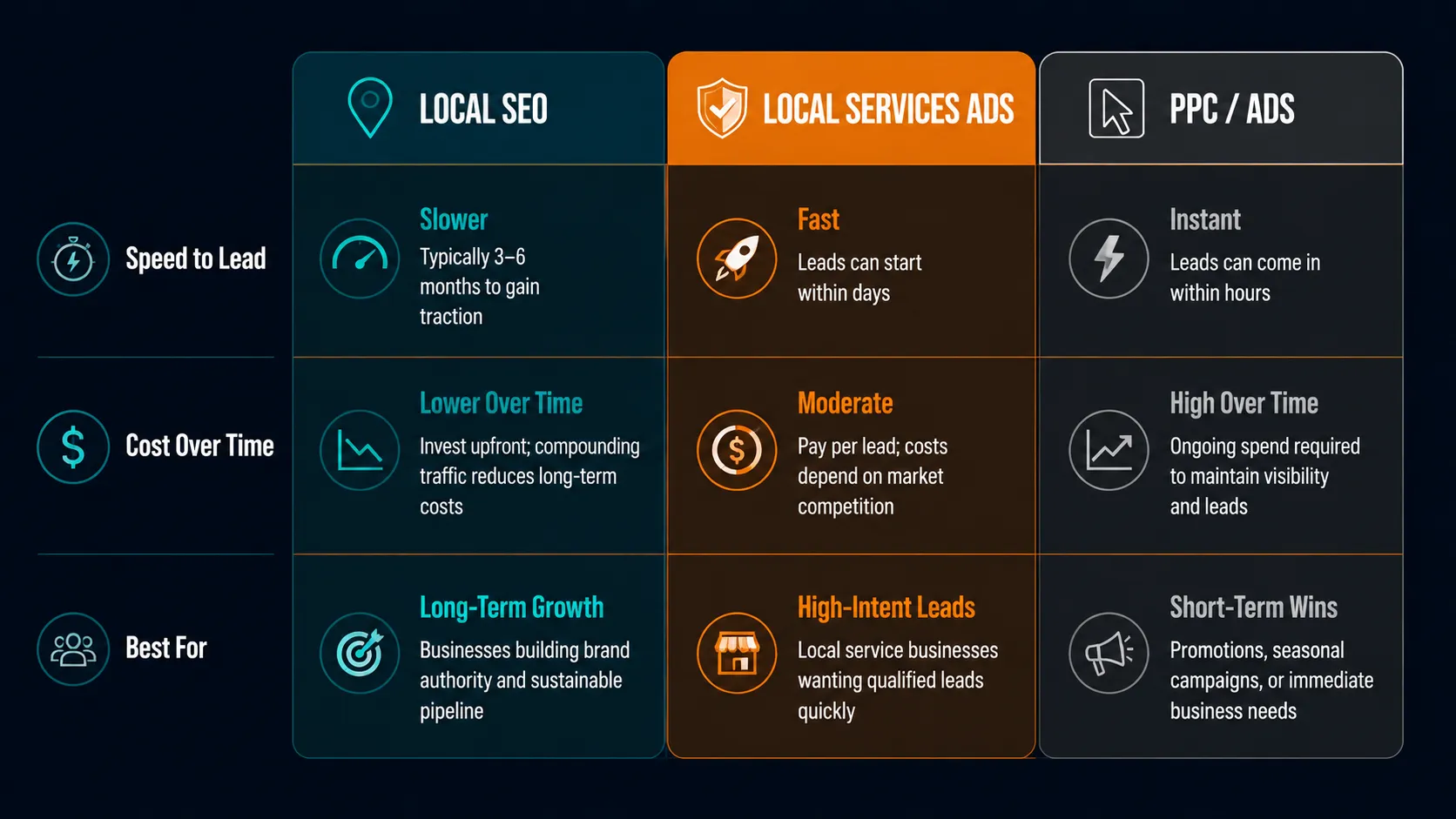
Service pages take longer to rank but keep generating leads at no additional cost once they do. Most contractors get the best result by running LSA or PPC during the two seasonal peaks while service pages build toward carrying the load year-round.
Build Backlinks That Actually Move Local Rankings
1/ Backlinks That Help Your Rankings
Local citations from home improvement directories, supplier and manufacturer partner pages, and mentions from local news or community sites all signal to Google that real, local sources trust your business. A link from your window manufacturer’s “find a dealer” page carries real weight because it confirms you’re an authorized installer, not just another listing.
Sponsoring a local home show, partnering with a real estate agent who links to your site, or getting featured in a local news story about a storm damage repair project all build the same kind of trust signal. These links are slower to earn than a directory submission, but they carry far more weight with Google.
2/ Backlinks and Practices to Avoid
Paid link networks, irrelevant guest posts on unrelated sites, and directory submissions with inconsistent business information do more harm than good. Inconsistent name, address, and phone number data across directories actively confuses Google’s local ranking algorithm and can suppress your map pack visibility.
Avoid buying links from generic “home services” link packages sold in bulk. Google can identify these patterns, and they put your entire domain at risk instead of helping it.
Use AI-Driven Keyword Discovery to Find Hidden Search Opportunities
Basic keyword tools show you search volume. They don’t show you which searches are close to converting into a booked estimate.
Modern SEO systems analyze competitor rankings, local search demand, and buyer intent patterns together. Our SEO tools for keyword research guide breaks down which platforms actually surface this kind of opportunity instead of just volume data.
For window and door contractors, that often means finding queries like:
- “impact resistant window installation in Miami FL”
- “soundproof windows for homes near highways”
- “modern front entry door replacement contractor in Austin TX”
These narrow, specific queries convert at a much higher rate than broad keywords, because the searcher already knows exactly what they want.
AI Search Visibility: Are You Showing Up in ChatGPT and AI Overviews?
Homeowners now ask ChatGPT, Perplexity, and Google AI Overviews questions like “best window replacement companies in Atlanta” or “how much does it cost to install double pane windows,” and most contractors have no idea whether their business gets mentioned in the answer.
AI systems pull answers from pages that give clear, structured information:
- real cost ranges
- direct explanations of the installation process
- specific service area details
A generic homepage rarely gets cited. A detailed cost guide or service page often does.
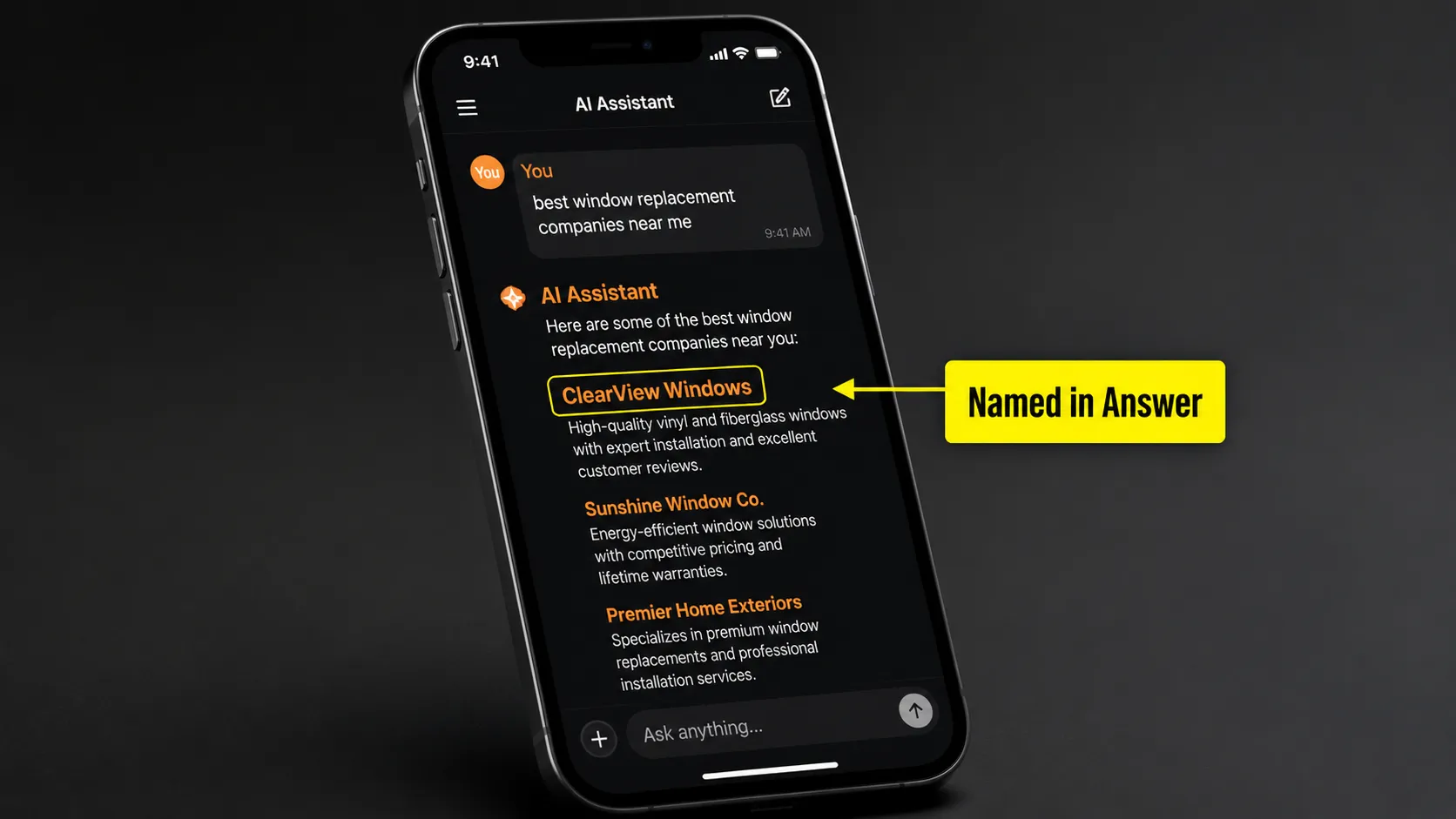
This matters because AI-generated answers increasingly skip the click entirely. If ChatGPT or an AI Overview recommends three contractors by name and yours isn’t one of them, that homeowner may never see a traditional search result at all. Structuring your content so it’s easy for AI systems to lift and cite is no longer optional. It’s becoming a second front door to your business, alongside the organic map pack.
Our AI search grader checks whether your business currently shows up across these AI-driven platforms, and our AI search monitoring guide covers what to track once you know where you stand.
How CometRank Handles This for Window and Door Contractors
Executing marketing for window and door contractors means building intent-matched service pages for every city and product line, keeping a Google Business Profile active, managing local citations, and tracking AI search visibility. Most window and door contractors don’t have the bandwidth to do all of it consistently, and most agencies move too slowly to keep up with seasonal demand.
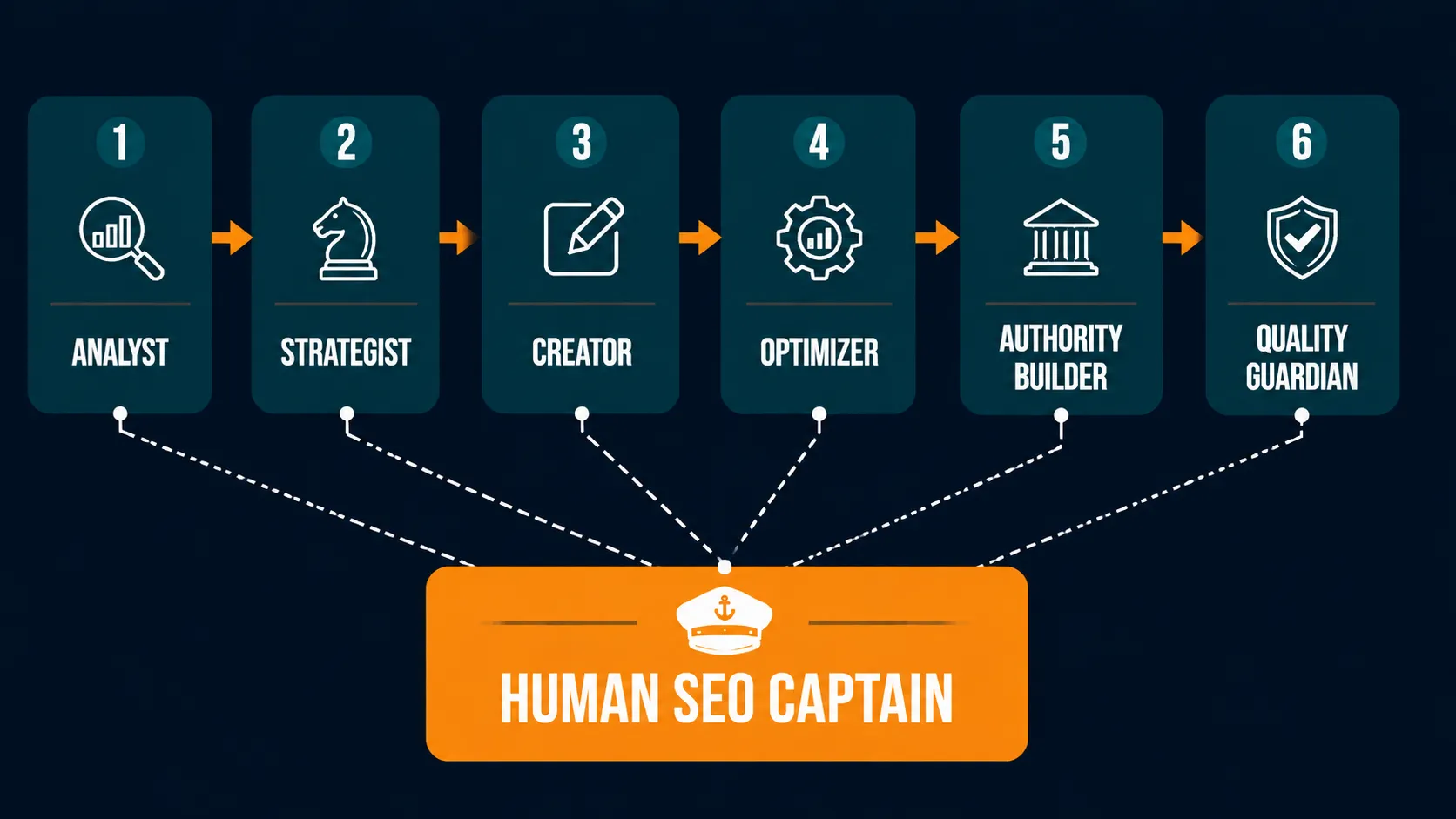
We’re an AI SEO agency that runs this entire workflow for clients using CometRank, our proprietary software. CometRank runs on six AI agents:
- The Analyst finds your local keyword and competitor gaps
- The Strategist builds the roadmap
- The Creator publishes service and guide pages at scale
- The Optimizer strengthens internal linking and rankings
- The Authority Builder grows your backlinks and citations
- The Quality Guardian checks accuracy and brand consistency
A human SEO Captain reviews everything before it’s live. To see how CometRank handles this for your contracting business, book a demo, and we’ll map out exactly which pages you’re missing before the call ends.
The Future of Marketing for Window and Door Contractors
The contractors winning search right now aren’t doing anything mysterious. They’ve simply built a page for every search a homeowner actually types, so Google has an easy match to make instead of a guess.
That’s really the gap between page one and page three: specificity, not budget. A vinyl window replacement page built for one city will consistently outperform a general services page, because it answers the exact question someone typed.
You don’t need fifty pages to see a difference. Start with one. Pick your highest-volume service and your busiest service area, build that page, and let it start ranking while you plan the next.
Frequently Asked Questions About Window and Door Contractor Marketing
1/ How much should a window and door contractor spend on marketing?
Most contractors budget between 6% and 10% of revenue on marketing, split between local SEO, Google Local Services Ads, and seasonal PPC. The right number depends on your average project value and how much of your calendar comes from referrals versus new search traffic.
2/ How long does it take to see SEO results for a window and door business?
Local SEO for a new service page usually takes two to four months to start ranking, with results building steadily after that. Local Services Ads and PPC generate leads within days, which is why most contractors run both while their organic pages grow.
3/ Do window and door contractors need Local Services Ads?
Local Services Ads help contractors capture immediate demand while their organic pages are still building rank. They’re not a replacement for SEO, since you pay for every lead indefinitely, but they fill the gap during the first few months of a new SEO strategy.
4/ What’s the average cost of a window replacement project?
Full window replacement projects typically run into the thousands of dollars per home, according to industry cost data, which is why a single booked job can justify a meaningfully higher marketing spend than lower-ticket home services.
5/ How is AEO different from regular SEO for window and door companies?
Answer Engine Optimization (AEO) focuses on getting your content selected as the direct answer inside AI tools like ChatGPT and Google AI Overviews, while SEO focuses on ranking in traditional search results. Both rely on clear, structured, specific content, but AEO puts more weight on direct, self-contained answers.