
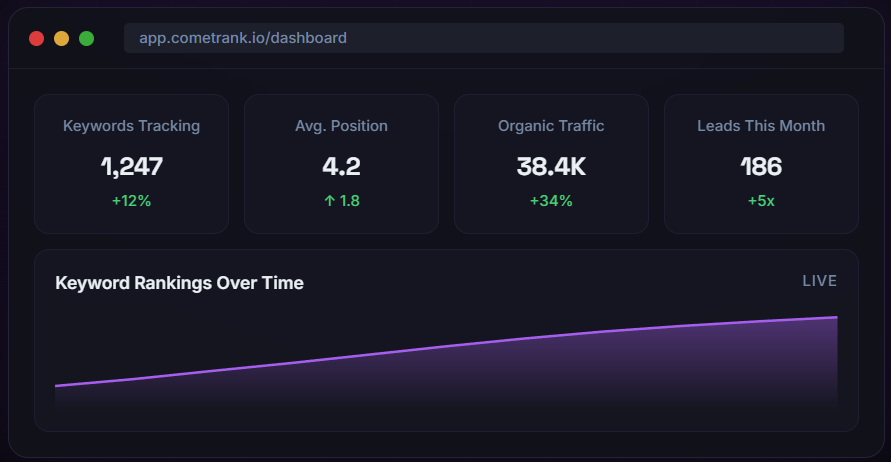
Most insurance websites generate traffic but struggle to convert visitors into actual policy inquiries. The issue is rarely traffic volume. The real problem is intent mismatch.
Individual insurance buyers don’t search broad terms like “insurance company.” They search specific life situations, risks, and policy needs.
Examples include:
- “best term life insurance for 35 year old male”
- “cheap car insurance for new drivers in California”
- “health insurance for self employed freelancers”
- “how much renters insurance do I need”
When insurance companies build SEO strategies around these real search behaviors, organic traffic becomes a consistent pipeline of policy leads.
An AI-driven system like an AI SEO platform helps identify these opportunities, build optimized pages around them, and scale visibility across thousands of individual insurance searches.
Why Most Insurance Websites Fail to Convert Search Traffic
Many insurance companies focus on high-volume keywords such as:
- “life insurance”
- “car insurance”
- “health insurance”
These keywords generate traffic but rarely convert because they reflect early-stage research, not buying intent.
Individual buyers typically search when they face a specific personal situation, such as:
- buying a home
- having a child
- starting a business
- moving to a new state
- purchasing a vehicle
For example, someone searching:
“term life insurance for new parents”
is far closer to purchasing a policy than someone searching simply “life insurance.”
SEO strategies that focus on life-event and situation-based searches generate far higher lead conversion rates.
High-Intent Keywords That Individual Insurance Buyers Search
The most valuable insurance SEO opportunities come from problem-driven or situation-driven queries.
Life insurance examples
High-intent searches include:
- “best term life insurance for parents under 40”
- “life insurance for diabetics over 50”
- “how much life insurance does a family need”
A landing page targeting
“life insurance for parents under 40” could include sections such as:
- why parents need life insurance
- recommended coverage amounts
- term vs whole life comparison
- average monthly cost
- policy examples for families
- instant quote form
This structure matches the user’s real concerns and naturally leads toward requesting a policy quote.
Auto insurance examples
Auto insurance searches often include driver type, vehicle type, or situation.
Examples include:
- “cheap car insurance for college students”
- “insurance for new drivers under 25”
- “Tesla insurance cost in California”
A page targeting “insurance for new drivers under 25” could include:
- risk factors insurers evaluate
- average premiums by age
- ways to lower insurance costs
- safe driver discount programs
- quick quote form
This kind of content directly answers the buyer’s questions while guiding them toward coverage.
Structuring Insurance Pages That Convert Visitors into Leads
Insurance SEO should not only focus on ranking. Pages must also guide visitors toward requesting a quote or speaking with an agent.
A high-converting insurance page typically includes four core sections.
1. The life situation
Start by explaining the specific scenario the buyer is facing.
Example keyword:
“health insurance for self employed freelancers”
Content sections might include:
- why freelancers need private insurance
- common coverage gaps
- typical monthly premium ranges
This signals relevance to both search engines and visitors.
2. Coverage explanation
Break down what the insurance policy includes.
For example:
- hospitalization coverage
- preventative care
- prescription benefits
- network coverage
This builds trust and reduces confusion around complex policies.
3. Cost expectations
Individual buyers almost always search with price in mind.
A page targeting “how much renters insurance costs in Texas” could include:
- average monthly premiums
- factors affecting pricing
- deductible options
- claim examples
Transparent cost explanations significantly improve conversion rates.
4. Quote or consultation CTA
Every high-intent page should end with a clear next step:
- instant quote calculator
- request a call from an advisor
- compare policy options
SEO traffic only becomes valuable when visitors take the next step toward buying coverage.
How AI SEO Systems Scale Individual Insurance Content
Insurance demand is extremely fragmented.
Search queries vary based on:
- age
- family situation
- location
- income
- health condition
- lifestyle
Manually building pages for all these variations is nearly impossible.
This is where AI-driven SEO systems become powerful.
A modern AI SEO system uses specialized agents to scale the process.
The Analyst
Discovers search opportunities such as:
- “life insurance for single mothers”
- “health insurance for remote workers”
- “best car insurance for electric vehicles”
The Strategist
Organizes these into scalable content clusters such as:
- life stage pages
- driver profile pages
- policy comparison pages
The Creator
Generates structured landing pages targeting each search intent.
The Optimizer
Improves internal linking, page structure, and rankings.
The Authority Builder
Builds authority signals that increase search visibility.
Together, this system turns SEO into a repeatable lead-generation engine rather than a slow manual marketing effort.
Content Types That Attract Individual Insurance Buyers
Insurance companies targeting individuals should build several types of search-driven content.
Life-stage pages
These capture searches tied to major life changes.
Examples include:
- “life insurance for new parents”
- “health insurance after leaving a job”
- “insurance planning for retirement”
Situation-based pages
These target people dealing with specific problems.
Examples include:
- “car insurance after an accident”
- “life insurance with high blood pressure”
- “health insurance for part-time workers”
Cost and comparison pages
Many buyers compare policies before choosing.
Examples include:
- “term vs whole life insurance cost”
- “best car insurance companies for young drivers”
- “average health insurance premium by state”
These pages attract high-intent comparison traffic.
Local insurance pages
Location-based searches are extremely common.
Examples include:
- “cheap car insurance in Dallas TX”
- “health insurance plans in Florida”
- “best life insurance providers in California”
These pages often convert well because buyers prefer local providers they trust.
If you want to see how structured search strategies generate leads in other industries, articles like Local SEO for Dentists show how service businesses turn search visibility into appointments. Similar frameworks apply to insurance lead generation.
The Future of Insurance SEO Is Intent-Driven
Search engines increasingly reward content that directly answers user intent.
Insurance companies that dominate organic search will focus on:
- life-event driven searches
- situation-based coverage pages
- cost transparency
- structured landing pages
AI-driven SEO platforms make it possible to discover thousands of these opportunities and publish optimized pages at scale.
Instead of chasing traffic, insurance companies can build a system that consistently converts search visibility into policy leads.