
Programmatic SEO has become one of the most effective ways for B2B SaaS companies to scale organic visibility. Instead of publishing a few blog posts each month, programmatic SEO creates hundreds or thousands of structured pages targeting high-intent search queries.
When implemented correctly, this strategy captures search demand across multiple intent stages: problem discovery, solution comparison, and buyer evaluation.
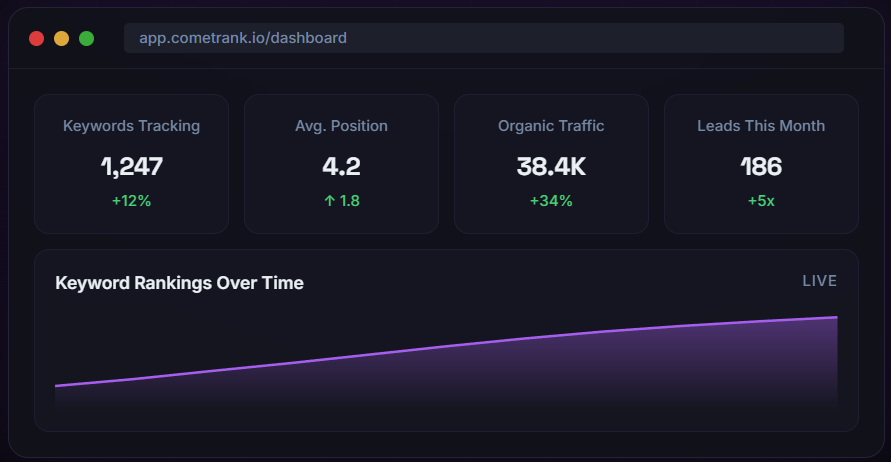
Platforms like Cometrank help companies identify these opportunities, generate structured pages at scale, and continuously improve rankings through AI-driven optimization.
This guide explains how B2B SaaS companies should approach programmatic SEO in 2026.
What Programmatic SEO Means for B2B SaaS
Programmatic SEO is the process of generating large sets of structured pages using templates and datasets, each targeting a specific long-tail keyword.
Instead of writing pages manually, companies define:
- a page template
- a dataset
- a keyword pattern
Then generate hundreds of pages automatically.
Example: SaaS Integration Pages
A SaaS platform offering integrations might target:
- “HubSpot Salesforce integration tool”
- “Slack Jira integration automation”
- “Shopify QuickBooks integration software”
Each page follows the same template:
Page structure
- Integration overview
- Use cases
- Setup steps
- Supported features
- Pricing
- CTA
The only variable is the integration name, but the intent remains the same: users searching for a specific integration solution.
This structure allows companies to scale pages without sacrificing relevance.
Why Programmatic SEO Works for B2B SaaS in 2026
B2B buyers rarely search generic keywords anymore. Instead, they search specific problems or use cases.
Examples:
- “GDPR compliant email marketing software for SaaS”
- “customer onboarding automation platform for fintech”
- “multi-location inventory management software for retail”
Programmatic SEO captures these queries at scale.
The key benefits include:
1. Coverage of Long-Tail Search Demand
Most B2B SaaS traffic comes from long-tail keywords with lower competition but higher intent.
Instead of targeting:
“project management software”
You capture queries like:
- “project management software for marketing agencies”
- “construction project management SaaS for subcontractors”
- “kanban project management software with time tracking”
Each query becomes a dedicated page.
2. Faster Content Production
Traditional content production is slow.
Companies often rely on:
- manual keyword research
- individual blog writing
- inconsistent publishing schedules
A structured approach supported by an SEO post calendar like the framework explained in this guide on
post calendar for seo helps organize large-scale publishing efforts.
Programmatic SEO allows teams to publish hundreds of pages within weeks instead of months.
3. Higher Commercial Intent
Programmatic pages often target solution-aware searches, which are closer to buying decisions.
Example keyword cluster:
- “HR onboarding software for remote teams”
- “employee onboarding automation for startups”
- “HR onboarding checklist software”
These searches indicate users actively evaluating solutions.
How to Identify Programmatic SEO Opportunities
The biggest mistake companies make is generating pages without understanding search intent patterns.
Programmatic SEO only works when there is a repeatable query structure.
Step 1: Identify Keyword Patterns
Look for keywords that follow predictable templates.
Examples for SaaS:
Use-case pattern
- “CRM for real estate agents”
- “CRM for insurance brokers”
- “CRM for mortgage lenders”
Comparison pattern
- “HubSpot vs Salesforce CRM”
- “Asana vs Monday project management”
Feature pattern
- “project management software with time tracking”
- “CRM with email automation”
Each variation can become a page.
Using advanced tools for keyword discovery is essential. Many marketers start with tools highlighted in
SEO tools for keyword research.
Step 2: Build a Structured Dataset
Once keyword patterns are identified, create datasets that power page generation.
Example dataset for “CRM for industry” pages:
| Industry | Pain Point | Key Feature |
|---|---|---|
| Real Estate | Lead tracking | Pipeline automation |
| Insurance | Policy renewal reminders | Workflow automation |
| Mortgage | Document tracking | Compliance management |
Each dataset row becomes a new page.
Step 3: Create a Scalable Page Template
Every programmatic page should follow the same structure.
Example template for “CRM for [industry]”:
Sections
- Overview of CRM for the industry
- Key challenges in that industry
- Features required to solve those challenges
- Example workflows
- Integration options
- Pricing considerations
- CTA
This keeps pages consistent and indexable.
Structuring Programmatic Pages for AI Search and Google
Search engines now prioritize structured, answerable content.
To rank programmatic pages, include:
Clear problem statements
Example:
Problem:
Real estate agents lose leads because follow-ups are inconsistent.
Solution:
A CRM with automated reminders and pipeline tracking.
Feature breakdowns
Example section:
Features for real estate CRM
- lead scoring
- automated property alerts
- deal stage tracking
- email automation
Implementation examples
Example:
A page targeting
“CRM software for insurance brokers” should include:
- policy lifecycle tracking
- renewal reminders
- commission reporting
- compliance documentation
Pages that address real workflows perform far better than generic pages.
Common Programmatic SEO Mistakes
Many SaaS companies fail with programmatic SEO because they focus on page volume instead of search intent.
Mistake 1: Thin Pages
Publishing hundreds of pages with minimal content leads to poor rankings.
Each page must contain:
- industry-specific problems
- real use cases
- actionable workflows
Mistake 2: Weak Internal Linking
Programmatic pages should link to:
- core product pages
- comparison pages
- educational guides
For example, monitoring search behavior across programmatic pages becomes easier with systems explained in
how can an ai search monitoring platform improve seo strategy.
Mistake 3: No Authority Signals
Even large programmatic sites need:
- backlinks
- industry content
- topical clusters
Companies often complement programmatic pages with strategic SEO partners. Resources like
Best SEO Companies for Small businesses highlight providers helping companies scale organic growth.
The Role of AI in Programmatic SEO
In 2026, AI has become central to programmatic SEO.
An AI-powered platform like AI SEO company can:
- identify keyword clusters
- generate structured content templates
- monitor ranking changes
- optimize internal linking
- scale content production
Instead of manually managing hundreds of pages, companies use AI systems to maintain performance.
This allows marketing teams to focus on strategy while automation handles execution.
Strategic Takeaway: Programmatic SEO Is a Growth Engine
Programmatic SEO is not just a content tactic. It is a search demand capture system.
B2B SaaS companies that implement it correctly can:
- capture thousands of long-tail searches
- dominate niche use-case queries
- generate consistent inbound leads
The key is combining intent mapping, structured templates, and scalable publishing systems.
Platforms like Cometrank help companies turn these opportunities into a predictable organic growth engine.
