
For years, many US manufacturers relied on platforms like ThomasNet to generate inbound leads. The logic was simple: list your company in a large industrial directory and buyers will find you.
But the B2B buying process has changed dramatically.
Today, procurement teams, engineers, and sourcing managers rarely start their research inside supplier directories. Instead, they search Google using high-intent queries tied to a specific problem, component, or industry use case.
As a result, relying solely on directories like ThomasNet for lead generation has become a risky strategy for manufacturers trying to build consistent pipeline.
Why ThomasNet Was Once a Powerful Lead Source
Historically, ThomasNet worked because it functioned as a centralized supplier database.
Engineers searching for vendors could browse categories such as:
-
CNC machining suppliers
-
metal stamping companies
-
plastic injection molding manufacturers
Buyers could filter by certifications, capabilities, or location.
This model worked well when procurement research started inside industrial sourcing directories rather than search engines.
But that behavior has shifted dramatically over the past decade.
Modern B2B Buyers Start With Google, Not Directories
Today, engineers and sourcing managers search for suppliers using problem-specific and application-specific queries.
Instead of searching inside ThomasNet, they use queries such as:
-
“precision CNC machining supplier for aerospace aluminum components”
-
“medical device injection molding company with ISO 13485 certification”
-
“industrial water treatment equipment manufacturer in the USA”
These searches reflect clear commercial intent and specific project requirements.
Manufacturers that rank for these searches capture high-quality inbound leads, while companies that rely only on directories remain invisible.
This shift in search behavior is one of the main reasons directory-driven lead generation is declining.
Directory Listings Limit Your Visibility
A listing on ThomasNet places your company inside someone else’s platform, not in the broader search ecosystem.
That means you depend on:
-
ThomasNet’s internal traffic
-
their ranking performance in Google
-
category placement inside their directory
Your brand does not build its own search visibility.
For example, a manufacturer specializing in aerospace machining should ideally rank for a page targeting:
“precision CNC machining supplier for aerospace components.”
A strong landing page for this keyword should include sections such as:
-
materials machined (titanium, aluminum alloys)
-
tolerance capabilities
-
aerospace certifications
-
typical component applications
-
quality inspection methods
-
request-a-quote CTA
A directory listing rarely provides the depth required to rank for these high-intent searches.
Directory Competition Creates Commodity Positioning
Another major limitation of platforms like ThomasNet is supplier commoditization.
Inside a directory category, buyers often see dozens or hundreds of suppliers listed together.
For example, the category:
“CNC machining suppliers in the USA”
may contain hundreds of listings.
Buyers often compare companies quickly based on:
-
location
-
certification badges
-
short descriptions
This turns manufacturers into interchangeable options rather than specialized suppliers.
Manufacturers that build their own search presence can instead create industry-specific landing pages, such as:
-
“CNC machining for aerospace aluminum components”
-
“precision machining supplier for defense contractors”
-
“medical implant CNC machining with ISO certification”
These pages attract buyers searching for very specific capabilities, which leads to higher-quality leads.
Search Visibility Creates Compounding Lead Generation
Unlike directory listings, SEO-driven visibility compounds over time.
When a manufacturer builds pages targeting multiple high-intent searches, each page becomes a potential lead entry point.
Examples include pages targeting:
-
“precision CNC machining supplier for aerospace components”
-
“tight tolerance machining for medical implants”
-
“custom titanium aerospace components manufacturer”
Each page attracts buyers actively searching for that exact capability.
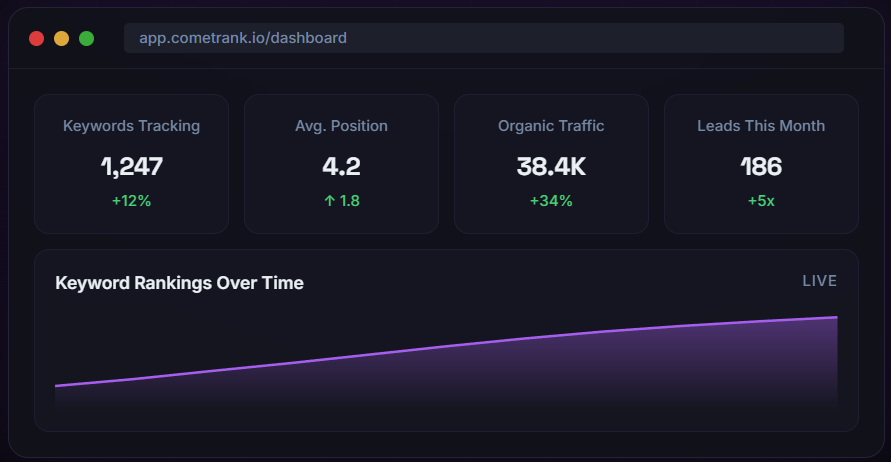
Modern AI SEO platforms like CometRank help manufacturers identify these ranking opportunities using a system of AI agents that analyze search demand, competitors, and buyer intent.
Instead of waiting for directory traffic, manufacturers can build their own lead engine through search visibility.
Why Manufacturers Need an SEO-Driven Lead Strategy
Directories like ThomasNet still have value for credibility and citations.
However, they should not be the primary lead generation strategy for manufacturers.
A modern approach focuses on:
-
ranking for high-intent search queries
-
creating capability-focused landing pages
-
building industry-specific content clusters
-
improving internal linking and authority signals
Platforms like CometRank, an AI SEO tool designed for manufacturers, automate much of this process by combining AI-driven opportunity discovery with human SEO strategy.
This allows companies to move beyond directory dependence and build predictable inbound lead pipelines from search.
The Future of Manufacturing Lead Generation
The collapse of directory-driven sourcing reflects a broader shift in B2B buying behavior.
Manufacturers that rely solely on platforms like ThomasNet will increasingly struggle to capture demand.
The companies winning today are those that own their search visibility, rank for high-intent queries, and build content that matches how modern buyers research suppliers.
Directories can still support discovery, but the real competitive advantage now comes from owning the search results where buyers start their journey.